
Fun Fact
Back in 2016, Mark Zuckerberg said AI would take “decades” to reshape social platforms. A decade later, he’s betting Meta’s entire future on proving himself wrong.
Mark Zuckerberg goes all-in on AI as the new foundation of social media
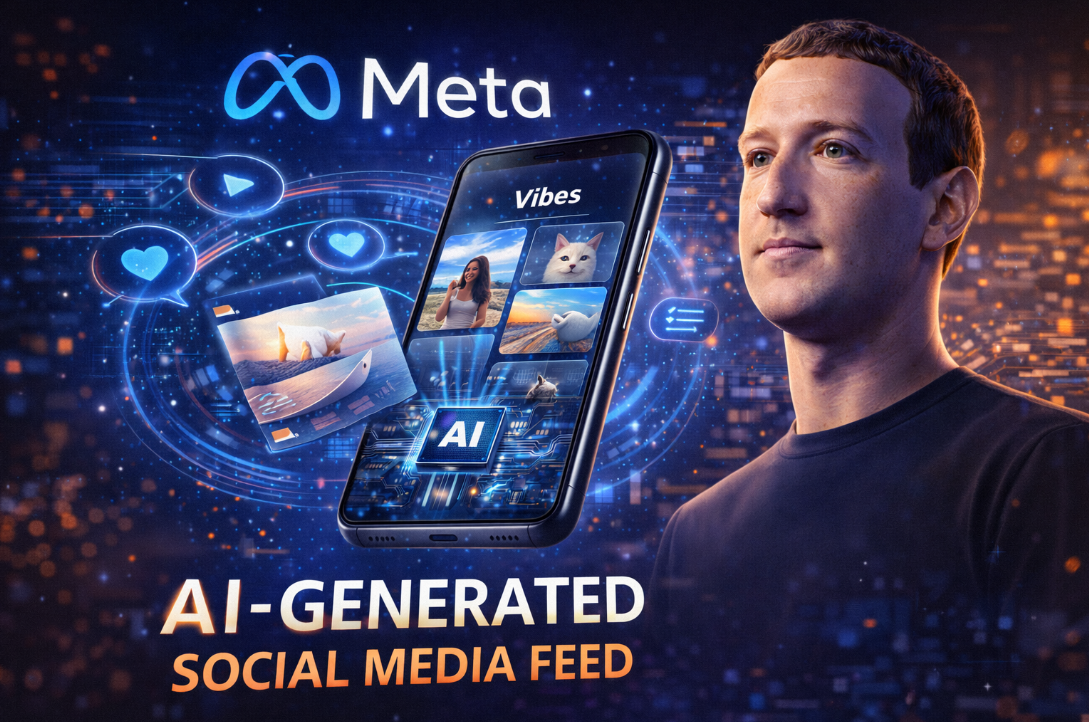
Meta is going all-in on Vibes AI Feed, its bold new approach to content creation. Artificial intelligence is no longer treated as a side feature. According to Zuckerberg, AI is becoming the core of what social platforms will look like over the next decade. During Meta’s latest earnings call, he made one thing clear: the company is moving away from algorithms that simply recommend content and toward systems that actively create it.
Enter Vibes, the new AI-generated feed inside Meta AI. No more waiting for influencers to drop their next skincare routine or your cousin’s blurry vacation pics. Instead, Vibes generates videos, images, and short clips on the spot — all based on what it thinks you want to see. No human needed. Just vibes.
I remember when Facebook feeds were full of FarmVille cows and angry political rants. Now the company wants to skip all that and just give you synthetic content that feels relevant without needing any actual people behind it.
A feed that doesn’t just recommend — it generates
For years, social media followed a familiar loop:
humans post things, the algorithm decides what wins. Simple.
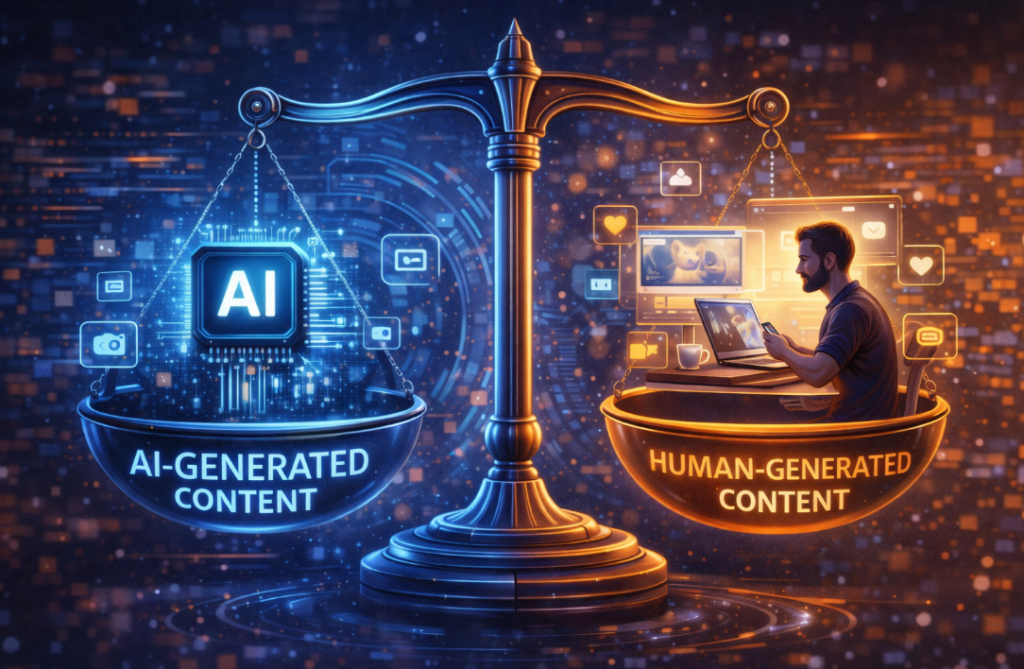
But now Meta wants to break the loop entirely. Zuckerberg talks about “human content enhanced by AI,” but let’s be honest — it’s more like AI content occasionally sprinkled with human leftovers. The idea is to create an endless scroll of dynamic, personalized media that adapts in real time to your behavior, mood, maybe even your eye twitches if you’re wearing Meta’s glasses.
Cool? Sure. Creepy? Also yes.
The upside (for Meta) is obvious:
- Infinite content supply
- Lower creator dependency
- Fewer moderation nightmares
- Fully adaptable ad formats
- Faster feature iteration
But let’s not pretend this is only about better UX. A feed that creates its own content also means Meta controls the entire pipeline — from input to output. No creators to pay. No post schedules to manage. No unexpected trends to chase. Just pure, manufacturable engagement.
So… why now?
It’s not just about tech progress. It’s also about cleaning up after past messes.
- Remember the metaverse?
Yeah, Meta spent billions building a virtual playground nobody asked for. AI, by contrast, exploded overnight and came with fewer headsets. - TikTok changed everything.
People stopped caring who made the content — they just want what’s addictive. Meta’s answer: what if we skip the creator part altogether? - Creators are unreliable.
They take breaks, ask for money, and — worst of all — have opinions. AI doesn’t complain (yet). - Ad revenue loves predictability.
An AI feed means ads that adapt to you instantly, without waiting for a campaign brief.
There’s also a bit of ego here. Meta doesn’t just want to follow trends anymore. It wants to set them. Or better yet, generate them.
To better understand the infrastructure and strategic pressures shaping the AI arms race, this deep dive into Nvidia Freezes $100B OpenAI Deal: What It Really Means explores why capital, compute, and control are becoming inseparable in next-generation AI development:
https://techfusiondaily.com/nvidia-freezes-100b-openai-deal-2026/
The real plan: AI everywhere, not just in your feed
Zuckerberg isn’t stopping at the timeline. Think AI-generated overlays in your Meta Ray-Bans. AI voice tools in your Quest headset. Maybe even AI shopping assistants whispering inside your future smart earbuds. It’s not just about “feeding” you content — it’s about embedding that content into your everyday world.
Premium subscriptions, real-time personalized ads, and AI-infused devices are just the surface. The business model isn’t changing — it’s mutating.
The parts Meta hopes you won’t question
Here’s where it gets murky:
- Creators might get ghosted.
If AI gets good enough, human influencers might lose relevance — or worse, become templates. - Moderation gets messier.
At scale, AI can generate things nobody anticipated — offensive, bizarre, or just plain weird. - Trust is already fragile.
Meta’s track record with privacy and transparency doesn’t exactly inspire confidence. Will they label AI content clearly? Or will it just blend in? - Too much personalization gets isolating.
When your feed knows you too well, it stops showing you anything outside your bubble.
At some point, you’re no longer using the feed — the feed is using you. And you won’t even notice.
The bottom line
Meta is trying to reinvent social media before someone else does it first. Zuckerberg’s vision is bold, weird, and — depending on your tolerance for synthetic media — kind of fascinating. If he’s right, the most popular content of 2027 won’t be made by creators. It’ll be generated by a machine, tailored just for you, and invisible in its origin.
Whether that’s innovation or dystopia… well, you’ll have to decide that while scrolling.
Sources
- The Verge
- Meta Q4 2025 Earnings Call (official transcript)
Originally published at https://techfusiondaily.com