
Fun Fact
Apple’s first Retina displays were manufactured by the same company it was suing at the time: Samsung. The lawsuits made headlines. The purchase orders kept moving.
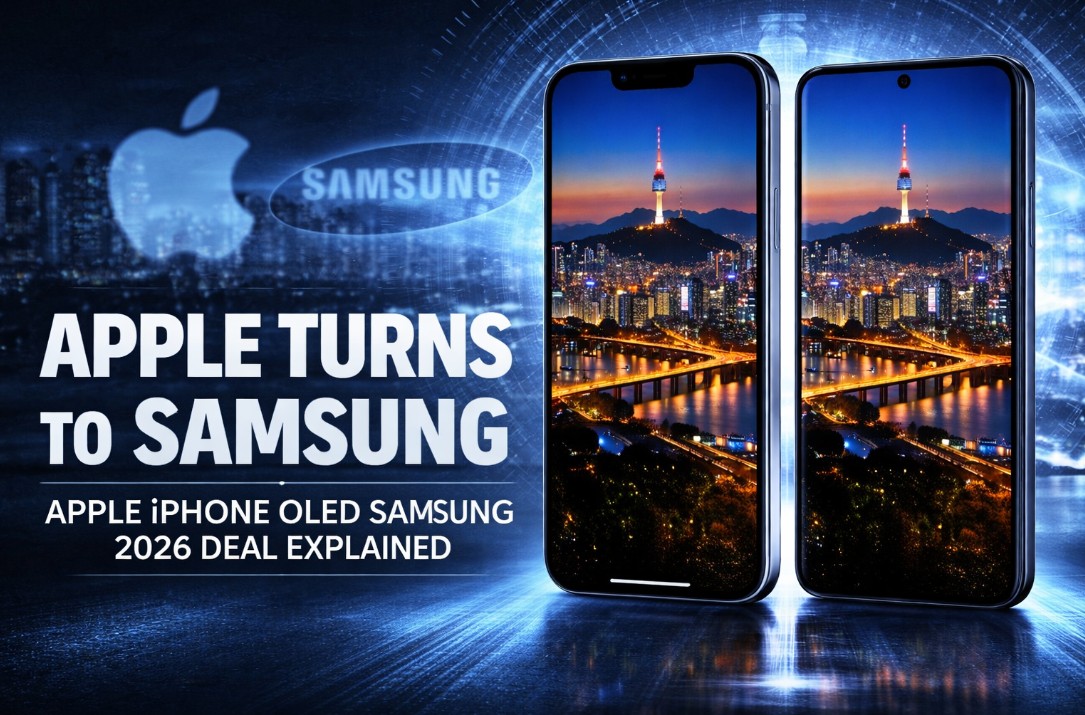
The Apple iPhone OLED Samsung 2026 supply agreement shouldn’t feel dramatic. The Apple iPhone OLED Samsung 2026 partnership is simply the latest chapter in a relationship built on rivalry, lawsuits, and cold operational discipline.
Public reaction always follows the same script: surprise, memes about “frenemies,” headlines about dependence. But hardware doesn’t run on emotion. It runs on yield rates, defect margins, and industrial scale.
This isn’t about reconciliation.
It’s about performance.
Apple isn’t conceding. It’s choosing what works.
Samsung Display remains the global leader in high-end OLED manufacturing. Not because of branding. Because of consistency. Because of volume. Because it can produce tens of millions of panels without uniformity drifting off spec.
Apple has tried alternatives before.
LG Display struggled with tint inconsistencies and scaling issues in early cycles. BOE faced yield challenges that reportedly led to rejected batches. Other suppliers simply couldn’t meet Apple’s volume requirements without compromising timelines.
Each attempt reinforced the same lesson.
When product margins are thin and launch windows are unforgiving, experimentation has limits.
This isn’t dependency.
It’s operational discipline.
Samsung doesn’t lose. Samsung invoices.
There’s a distinction people casually ignore.
Samsung Electronics competes with the iPhone.
Samsung Display sells to it.
Two divisions. Two balance sheets. Two incentives.
Every time Apple ships an iPhone using Samsung panels, Samsung Display posts substantial B2B revenue. It’s one of the most profitable supply relationships in modern consumer electronics.
Samsung doesn’t need the iPhone to stumble.
It needs the iPhone to ship — at scale.
And Apple doesn’t need Samsung to shrink.
It needs Samsung to stay technologically ahead.
This isn’t a rivalry story.
It’s supply chain pragmatism.
The user benefits — quietly.
Most iPhone buyers have no idea who manufactures the display.
They do notice:
- higher peak brightness
- improved battery efficiency
- better color stability
- reduced burn-in risk
OLED refinement is incremental. But incremental refinements at Apple scale matter. A 3% efficiency gain across hundreds of millions of units translates into tangible device longevity and thermal stability improvements.
What’s rarely said out loud is this:
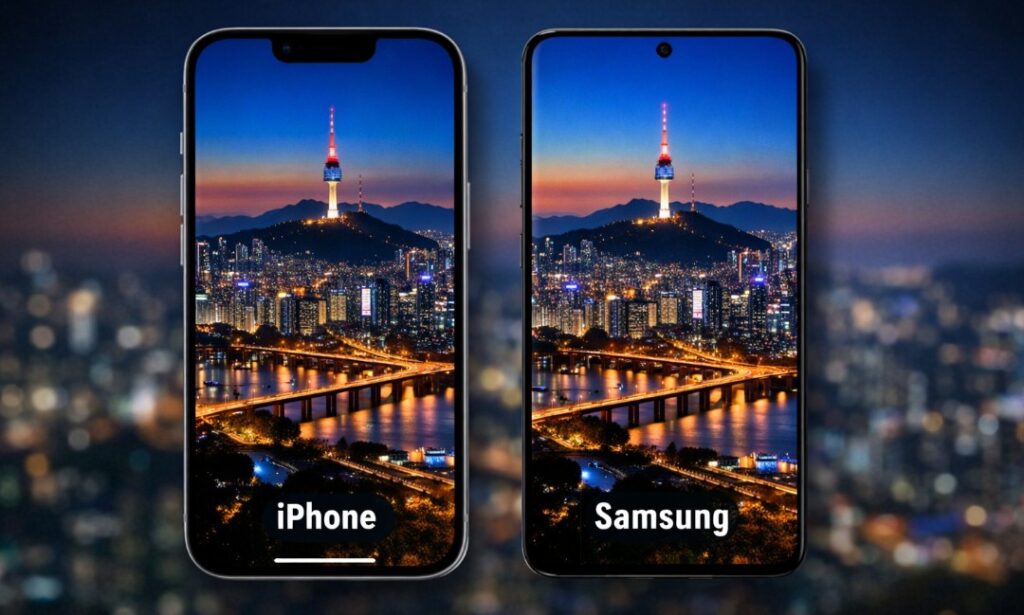
Some iPhones ship with display tuning that rivals — and occasionally surpasses — Samsung’s own flagship calibration.
That isn’t irony.
That’s contract leverage.
If you want the bigger picture behind why AI is colliding with physical limits, this companion piece explains why Ray-Ban Meta Gen 1 vs Gen 2: What Actually Changed This Year?:
https://techfusiondaily.com/ray-ban-meta-gen-1-vs-gen-2-what-changed/
But Apple still hates reliance.
Here’s where the tension lives.
For over a decade, Apple has invested billions attempting to reduce display dependence. MicroLED research. Internal fabrication pilots. Material science acquisitions. Long-term exploratory partnerships.
Apple wants vertical control.
Samsung knows that.
Which is precisely why Samsung keeps pushing panel efficiency, lifetime durability, and manufacturing yield higher. Staying indispensable is a strategy.
Cooperation exists.
Trust does not.
The patent war never really ended — it just moved layers.
Between 2011 and 2014, Apple and Samsung fought one of the most public patent battles in modern tech history. Billion-dollar claims. Accusations of copying. Courtroom theatrics.
Meanwhile, Samsung’s display engineers kept manufacturing panels for Apple.
I remember those years clearly. Headlines framed them as existential enemies. Inside the supply chain, shipments never stopped.
That contrast defines this relationship better than any press release ever could.
Conflict at the branding layer.
Collaboration at the component layer.
That’s how hardware ecosystems survive.
Stability beats symbolism.
In a market where a two-week delay can cost billions in lost momentum, supplier reliability is not negotiable. Samsung Display can deliver:
- scale
- consistency
- timeline certainty
- industrial maturity
Those qualities don’t trend on social media.
They sustain global product cycles.
The Apple iPhone OLED Samsung 2026 alignment isn’t a sign of weakness. It’s a recognition that in advanced hardware, specialization wins over pride.
The uncomfortable question
If even Apple — the company obsessed with control — still relies on Samsung for critical components, how realistic is the idea that total independence is a strength rather than a vulnerability disguised as ambition?
Sources
Samsung Display official materials
Apple supply chain disclosures
Originally published at https://techfusiondaily.com