


Fun Fact
The first time I saw a WhatsApp account banned that clearly shouldn’t have been was during a quiet Sunday rollout. Nothing dramatic. No press release. Just a ruleset pushed live that started flagging internal testers as “suspicious.” By Monday morning, half the QA team couldn’t send messages. The official response? “Expected behavior.” That phrase sounds harmless — until you’re the one locked out.
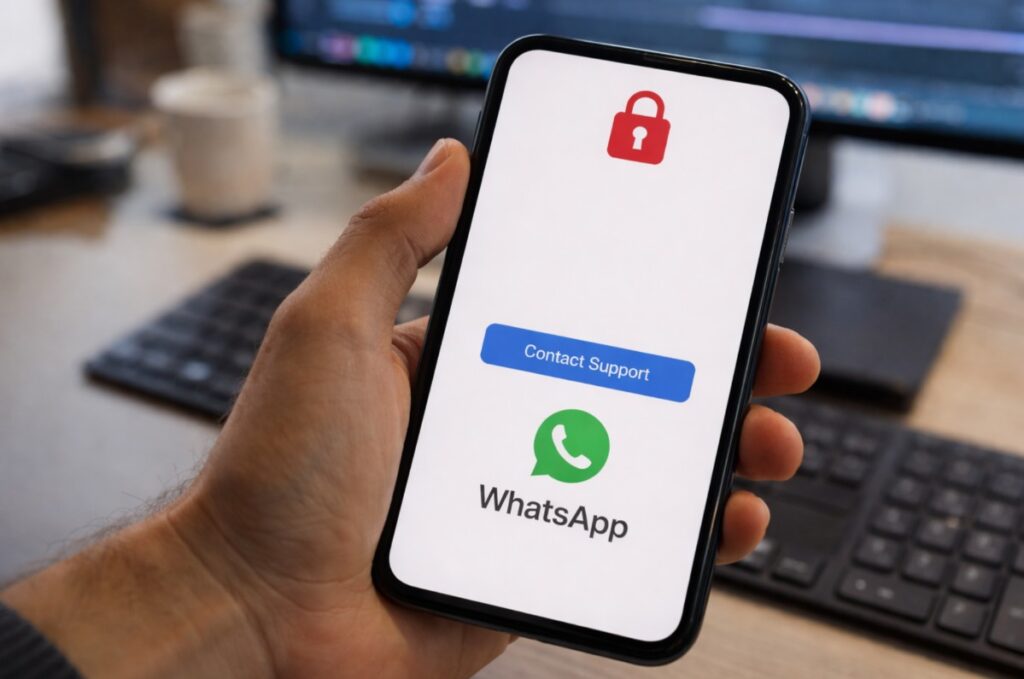
The WhatsApp anti-spam system is blocking real users, and this time it’s happening in real time.
Between February 13 and 14, 2026, reports began stacking up fast. Not speculation. Screenshots. Lock notices. Temporary bans hitting people who weren’t blasting phishing links or running automation farms. Just… using WhatsApp normally.
A few hours after the first reports surfaced, posts on X started accelerating. The tone shifted quickly from confusion to anger. Not beta curiosity. Real panic. People asking how to regain access to work chats, family groups, client threads.
And Meta? Silent so far.
When normal behavior trips the alarm
On paper, the update looks like a safety upgrade pushed by Meta. Stricter pattern detection. More aggressive anomaly scoring. Likely refinements to device fingerprinting and message velocity thresholds inside WhatsApp.
That sounds reasonable — until you see who’s getting flagged.
Users are reporting restrictions for:
- Sending messages too quickly during active conversations
- Joining multiple groups in a short window
- Reinstalling the app after a device reset
- Migrating to a new phone
- Forwarding non-viral content to small private lists
None of this reads like coordinated spam.
It reads like everyday usage.
But automated systems don’t interpret intention. They interpret deviation.
If your behavior spikes outside a statistical norm — even temporarily — the model doesn’t pause to ask why. It flags first. It justifies later.
Sometimes.
The Valentine’s problem
Last year I spoke with a small bakery owner in Miami who runs her entire seasonal marketing through WhatsApp broadcast lists. Valentine’s Day, Mother’s Day, graduation weekends — all handled through message lists. No email automation stack. No CRM platform. Just WhatsApp.
Now imagine that account getting flagged for “velocity” on February 13.
That’s not an inconvenience.
That’s lost revenue during the most important week of the quarter.
This is the part policy language never captures.
When the WhatsApp anti-spam system tightens thresholds, it doesn’t just catch spam. It interrupts real economic activity. Quietly. Automatically.
If the appeal process responds with a generic “platform integrity violation,” what exactly is that business owner supposed to do? Wait? Refresh? Hope the model reclassifies her?
Automation feels efficient — until it blocks payroll.
Infrastructure pretending to be a feature
We keep talking about WhatsApp like it’s a messaging app. It isn’t.
It’s infrastructure.
For entire regions, it replaces email. For small businesses, it replaces customer management. For families, it replaces every other communication channel.
When Meta adjusts detection models inside WhatsApp, it isn’t tweaking a cosmetic feature. It’s recalibrating a global communications backbone used by roughly 2.7 billion people.
That scale magnifies everything.
A 0.5% false positive rate looks harmless in a dashboard.
Multiply it.
Now it’s millions of accounts.
If you’re looking at how major networks are positioning themselves in 2026, this deep dive on Software stocks plunge on AI fears — the week the software industry blinked provides useful context for why software platforms are tightening enforcement and reshaping user trust at scale:
https://techfusiondaily.com/software-stocks-plunge-on-ai-fears/
Scroll the comments
If you scroll through community trackers and beta discussion threads right now, the mood isn’t curiosity. It’s frustration. Users aren’t debating UI changes. They’re sharing screenshots of lock notices.
There’s a difference between feature chatter and access panic.
You can feel it in the language. The urgency. The timestamps.
That shift rarely makes it into official messaging.
The power user paradox
Here’s the uncomfortable dynamic: the more actively you use WhatsApp, the more you resemble the behavioral profile of a spammer.
High message velocity.
Multiple groups.
Frequent device changes.
Heavy broadcast usage.
That’s not malicious behavior. That’s what freelancers, community organizers, remote teams, and small-scale entrepreneurs do daily.
But detection systems operate on patterns, not context.
If you look automated, you’re treated as automated.
And once classified that way, the burden flips. You must prove legitimacy to a system designed to distrust deviation.
Maybe I’m being cynical — but I’ve seen enough moderation rollouts to recognize this arc. Thresholds tighten under pressure. False positives spike. The company frames it as a necessary safety tradeoff.
The phrase “expected behavior” returns.
Automation without proportionality
Across the industry, platforms are leaning harder into:
- Automated moderation
- Automated trust scoring
- Automated enforcement
- Automated appeals
Appeals, in many cases, are just another algorithm wearing softer language.
Human review becomes an exception, not a guarantee.
The logic is simple: scale demands automation.
The flaw is just as simple: automation scales mistakes with the same efficiency.
And when enforcement becomes the default governance layer, acceptable behavior slowly shrinks to whatever the model comfortably tolerates.
That’s not hypothetical. It’s structural.
The silence matters
Meta hasn’t declared a crisis. There’s no acknowledgment of a miscalibrated model. No public explanation of threshold changes.
Maybe internally the metrics look fine.
Maybe the false positive rate is within tolerance.
But tolerance for whom?
For a dashboard, this is a percentage.
For a locked-out user, it’s isolation.
For a business, it’s operational risk introduced without warning.
Infrastructure isn’t supposed to guess.
It’s supposed to work.
The real question
If the WhatsApp anti-spam system can tighten silently and begin blocking legitimate users under the banner of “normal defensive behavior,” what happens when the next update nudges the thresholds just a bit further?
At what point does automated protection become automated suspicion?
And how many real users are considered acceptable collateral before someone decides that “expected behavior” is no longer an explanation — but an admission?
Sources
WABetaInfo — WhatsApp beta tracking
TechCrunch — WhatsApp moderation coverage
Meta Newsroom — Platform integrity policies
Originally published at https://techfusiondaily.com