
Fun Fact
Jony Ive’s last major hardware project at Apple was the HomePod. His first major post-Apple hardware collaboration? Another speaker — except this time, the intelligence inside it won’t be Siri.
The OpenAI Jony Ive smart speaker is not just a product rumor. The OpenAI Jony Ive smart speaker is a signal.
OpenAI isn’t experimenting with hardware for fun. It’s stepping into the most intimate space in modern tech: the home.
And this time, the device doesn’t just listen.
It watches.
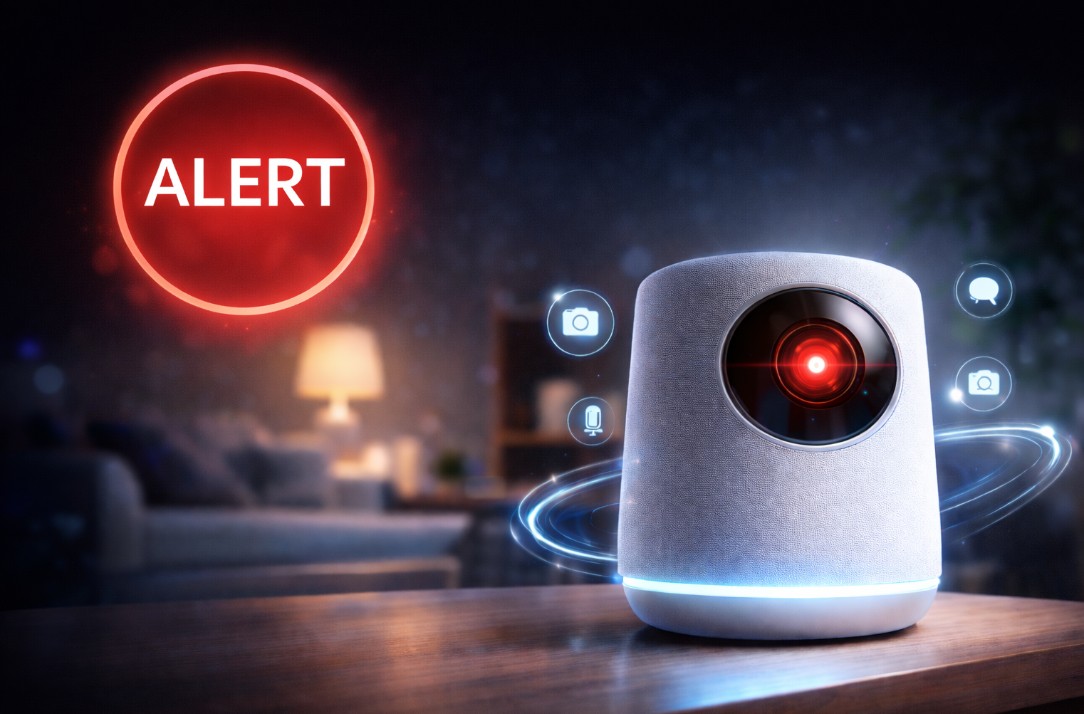
Not in a dystopian sense. Not in a tabloid sense. But in a literal, technical sense. A built-in camera. Face recognition. Environmental awareness. Proactive nudges based on what it sees and hears.
That’s not iteration.
That’s escalation.
A speaker that sees the room
Smart speakers have existed for over a decade. They’ve listened patiently from kitchen counters and living rooms, waiting for wake words.
This is different.
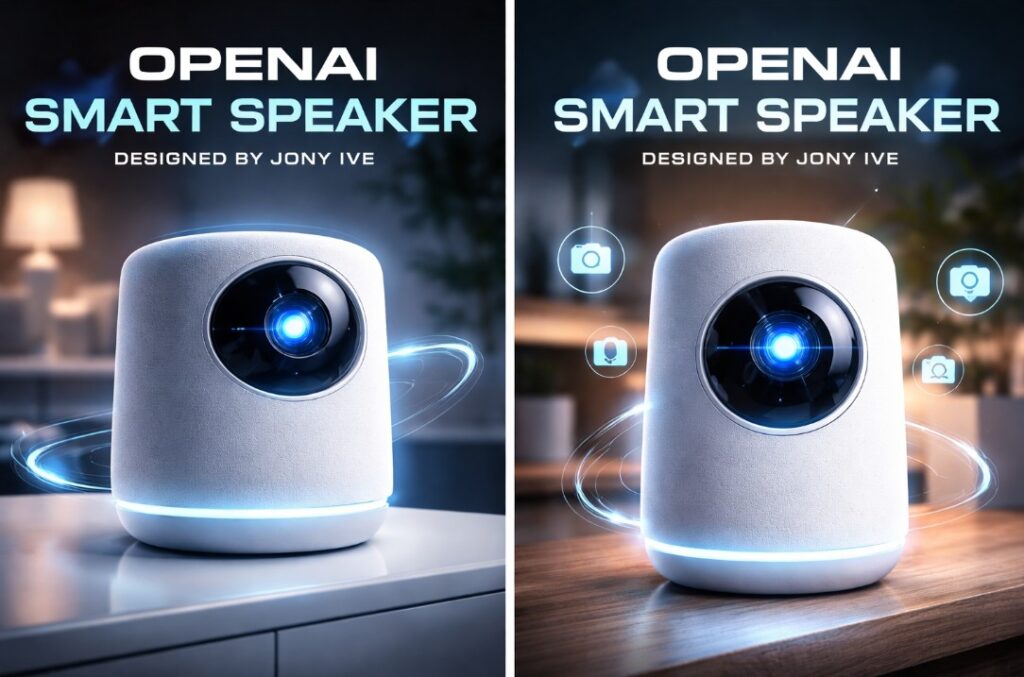
Reports suggest the device will include:
- a forward-facing camera
- Face ID–style authentication
- contextual awareness of who is present
- proactive assistance triggered by visual cues
This isn’t an assistant waiting to be asked.
It’s an assistant that observes first.
And observation changes the relationship.
When an AI can see you, not just hear you, the interaction shifts from command-based to context-based. The system doesn’t just respond. It anticipates.
Anticipation sounds helpful. It also shifts agency. If the system decides what matters in a room before you speak, it subtly reframes who initiates action.
That anticipation is where the real ambition lives.
Jony Ive is not a decorative addition
Ive’s involvement isn’t about aesthetics.
It’s about trust engineering.
For two decades, Ive designed objects people willingly placed in their homes and pockets without hesitation. Minimalism wasn’t just a style choice — it was psychological positioning. Calm surfaces make complex systems feel safe.
OpenAI understands something simple:
a camera-equipped AI device cannot look like surveillance.
It has to look inevitable.
Ive doesn’t just design hardware. He designs emotional acceptance.
And if OpenAI is going to introduce a device that quietly watches as much as it listens, emotional acceptance will matter more than specs.
This is also brand positioning. By attaching Ive’s name, OpenAI signals that this isn’t an experimental developer toy. It’s aiming for premium domestic presence — the kind that sits on a kitchen counter without explanation.
If you’re following how Meta’s ecosystem is evolving beyond software updates, this deep dive into Why AI Hardware — Not Models — Will Decide the Next Tech Cycle provides essential context for understanding the company’s broader hardware and platform strategy:
https://techfusiondaily.com/why-ai-hardware-not-models-next-tech-cycle-2026/
This is about interface control
For years, OpenAI has been the intelligence layer behind other companies’ hardware.
Now it wants to control the interface.
That shift is bigger than the speaker itself.
Owning hardware means:
- controlling user interaction patterns
- shaping ambient AI behavior
- defining how multimodal systems integrate into daily routines
Software scales fast. Hardware anchors behavior.
If OpenAI succeeds, it won’t just have the most advanced consumer AI model. It will have a physical gateway into homes designed specifically for that model.
That’s strategic gravity.
It also reduces dependency. As long as OpenAI lives inside someone else’s ecosystem, it negotiates access. With its own device, it defines the rules of engagement.
Privacy isn’t the real tension. Normalization is.
A speaker with a camera sounds controversial.
So did always-on microphones.
So did Face ID.
So did smart speakers in general.
History suggests something uncomfortable: convenience erodes resistance.
The OpenAI Jony Ive smart speaker isn’t betting that people won’t notice the camera. It’s betting that the utility will outweigh the discomfort.
When systems move from reactive to proactive, the boundary between assistance and monitoring blurs. Not dramatically. Gradually.
Gradual shifts are the ones that stick.
And once a behavior becomes normal inside the home, it rarely reverses.
The competitive layer is inevitable
OpenAI entering hardware means stepping into ecosystems dominated by Amazon, Google, Apple, and Meta.
But OpenAI’s angle is different.
This isn’t retrofitting AI into an existing speaker.
This is building a speaker around AI from day one.
There’s a difference between adding intelligence to hardware and designing hardware for intelligence.
The latter changes everything.
It means firmware, sensors, microphones, camera positioning, even speaker acoustics are tuned around model behavior — not the other way around.
That level of integration signals ambition beyond experimentation.
The uncomfortable question
If OpenAI can make a camera-equipped AI device feel calm, helpful, and ordinary, how long before constant machine perception becomes the default layer of domestic life — and will we even recognize the moment it crosses from tool to presence?
Sources
MacRumors — Jony Ive’s first OpenAI device will be a smart speaker with a camera
tbreak — OpenAI’s first hardware device will include Face ID–style recognition and proactive AI
Originally published at https://techfusiondaily.com