

Fun Fact
Nvidia’s earliest AI accelerators weren’t designed for AI at all — they were built for gaming. The company’s pivot toward data-center GPUs in the mid-2010s is now considered one of the most successful strategic shifts in tech history, transforming Nvidia from a gaming-focused chipmaker into the most influential supplier in the global AI hardware race.
A quiet freeze with loud geopolitical implications
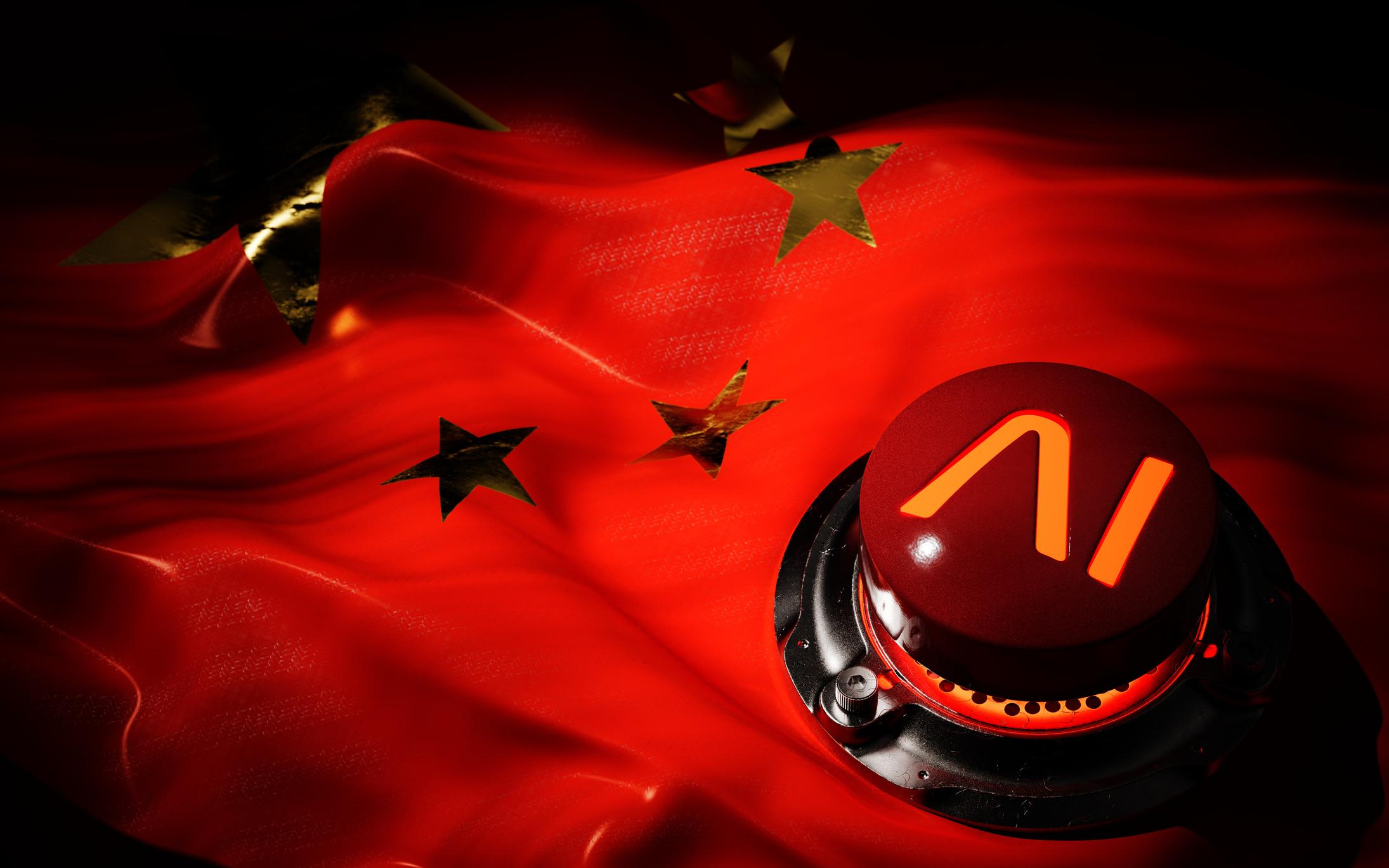
Nvidia’s China AI chip sales have quietly stalled — not because demand has cooled, but because Washington has pressed pause.
Shipments of Nvidia’s next-generation H200 accelerators to China are effectively frozen as the U.S. government conducts a national security review that has left customers, suppliers, and investors in limbo. There’s no formal ban. No new regulation. Just an unresolved review process with very real consequences — the kind that turns waiting itself into a cost.
Earlier this year, a China-compliant version of the H200 had already cleared export approval. But that clearance is no longer the final word. A broader interagency review is now assessing whether even restricted versions of Nvidia’s most advanced accelerators pose unacceptable security risks.
Until that review concludes, Chinese customers aren’t placing orders — and Nvidia isn’t shipping anything.
Why this matters: China is too big to ignore
Nvidia’s leadership has been unusually transparent about China’s importance, describing it as a potential $50 billion annual AI market over the long term. Even under export restrictions, the company expected strong demand for downgraded but compliant accelerators.
Instead, uncertainty has frozen purchasing decisions.
Chinese cloud providers and AI labs are reportedly holding back orders until they know whether the H200 — even in its limited configuration — will be allowed in. No one wants to commit millions of dollars to hardware that could be blocked indefinitely. For a company used to setting the pace of AI infrastructure, being forced to wait may be the hardest part.
That hesitation is already rippling through Nvidia’s ecosystem. Some suppliers have slowed production. Partners are rethinking capacity plans. In a business built around scale and momentum, delay carries its own price tag.
Inside Washington’s internal tug-of-war
What makes this situation unusual is not the restriction itself, but the lack of alignment behind it.
Different parts of the U.S. government appear to be pulling in different directions. One side prioritizes export compliance and economic competitiveness. Another sees any advanced AI silicon reaching China as a strategic risk.
This friction has been building since 2022, as AI chips moved from commercial products to geopolitical assets. The H200 review is less about a single GPU and more about drawing a moving line around what China should — or shouldn’t — be allowed to access. For companies caught in the middle, that line keeps shifting.

To better understand how long-term infrastructure bets are reshaping modern technology platforms, this deep dive into SpaceX Wants to Launch 1 Million Solar-Powered Data Centers Into Orbit explores why scale, energy, and timing are becoming decisive factors in the future of computing:
https://techfusiondaily.com/spacex-orbital-data-centers/
Nvidia’s strategic dilemma
Nvidia didn’t ask to be a geopolitical actor, but its dominance makes neutrality impossible.
The company has already redesigned multiple products to comply with U.S. rules, absorbing cost and complexity in the process. Yet compliance no longer guarantees certainty. Reviews can expand. Timelines can stretch. Decisions can reverse.
The longer this pause lasts, the more Nvidia risks losing momentum in a market it once considered predictable — pushing customers toward domestic alternatives, introducing uncertainty into its own roadmap, and giving rivals time they otherwise wouldn’t have had.
China waits — and accelerates alternatives
Chinese companies are not rushing to panic. They’re waiting, watching, and quietly accelerating domestic options.
Hardware like Huawei’s Ascend series is gaining traction as a local substitute, even if it still trails Nvidia at the high end. Every delay in U.S. approvals strengthens the incentive to close that gap.
In the short term, Chinese firms are simply avoiding risk. In the long term, the pause reinforces a strategic reality: dependence on foreign AI hardware is no longer acceptable.
A supply chain built on certainty feels the strain
AI infrastructure depends on predictability. When that disappears, the entire chain feels it.
Component suppliers hesitate. OEMs delay builds. Cloud providers rethink expansion. Startups struggle to plan around hardware availability. Even without a formal ban, ambiguity alone is enough to slow momentum in an industry where timing is everything.
What this signals about the global AI race
The stalled H200 shipments reveal something deeper than a regulatory delay.
The AI race is no longer just about innovation speed. It’s about control, access, and leverage. Governments are shaping outcomes as much as engineers are.
The U.S. wants to preserve an advantage. China wants independence. Nvidia wants to sell to everyone. Those goals no longer align — and the cracks are starting to show.
A pause that raises a bigger question
Nvidia didn’t choose this standoff. China didn’t either. But the consequences are reshaping how AI hardware moves across borders.
The larger question now isn’t just about one chip or one market:
If national security reviews become routine, can Nvidia continue to dominate a global AI industry that’s fragmenting along geopolitical lines?
Sources
Financial Times — reporting on U.S. national security review affecting Nvidia’s China-bound H200 chips
Reuters — confirmation of stalled shipments and interagency review details
Investing.com — analysis of supply-chain and China market implications
Originally published at https://techfusiondaily.com



One thought on “Nvidia’s China AI Chip Sales Stall Amid U.S. National Security Review”