


Fun Fact: GTA 6’s internal economy is so advanced that Rockstar reportedly built a custom simulation tool to test inflation, scarcity, and neighborhood collapse before a single line of it ever made it into the game.
Introduction: Rockstar Wants Money to Matter
GTA 6 isn’t just aiming to be a bigger or prettier game — it’s aiming to be smarter. According to multiple leaks, developer notes, and insider analysis, Rockstar is building the most reactive and interconnected economy ever seen in an open-world title. This time, money isn’t just a resource — it’s a system that shapes the world around you.
In GTA 5, the economy was mostly cosmetic. Prices were fixed, stores never ran out of stock, and NPCs went about their day completely indifferent to the chaos around them. You could burn down a neighborhood and five minutes later everything looked exactly the same.
GTA 6 changes that completely.
Vice City will operate like a living organism, where your actions, world events, and NPC behavior all feed into a constantly shifting economic simulation. The result is a city that evolves, reacts, and sometimes even collapses — all depending on what you do within it.

Prices That React to You
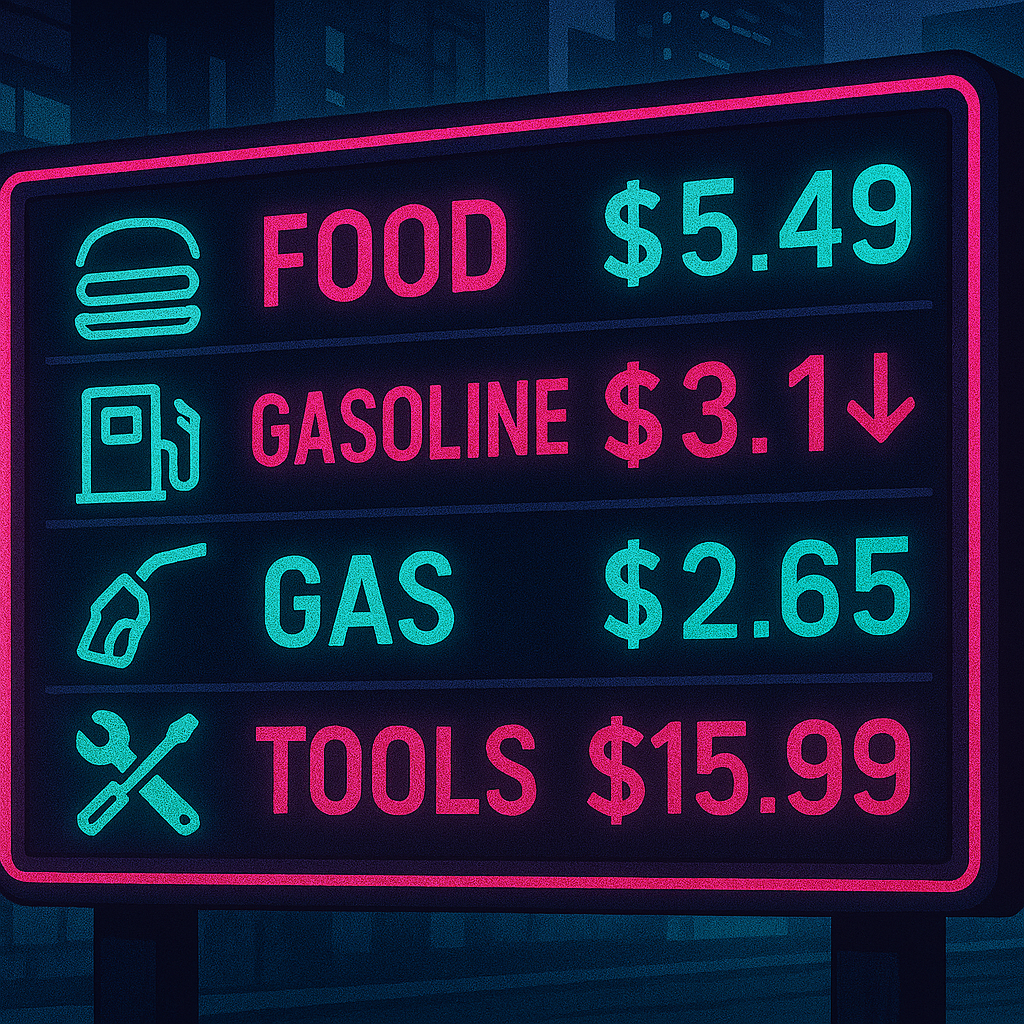
One of the most groundbreaking features coming to GTA 6 is dynamic pricing. Instead of static values, every product and service in the game can fluctuate based on supply, demand, and risk — much like a real economy would.
Here’s how it works:
- High crime = higher prices. Rob enough stores in a district and shopkeepers will raise prices to offset their losses.
- Gang conflict = business closures. When violence spikes, some businesses won’t just struggle — they’ll shut down entirely.
- Player intervention = economic recovery. Clear out criminals or help NPCs and you can actually lower prices and attract new businesses to the area.
- Infrastructure damage = scarcity. Take out delivery trucks or supply depots and you’ll feel it in store shelves across the city.
- Police crackdowns = black market inflation. The harder law enforcement pushes, the more expensive illegal goods become on the streets.
No two playthroughs will feel the same, because the economy isn’t scripted — it adapts to you.
NPCs That Understand Economics
Rockstar is also rethinking how NPCs interact with the world around them. Rather than serving as background decoration, they’ll behave like actual consumers making real decisions.
NPCs will:
- Choose where to shop based on price and safety
- Avoid dangerous or overpriced neighborhoods
- Travel to wealthier districts when local options dry up
- React to shortages by crowding stores or forming lines
- Adjust their daily routines based on economic conditions
- Relocate entirely if their neighborhood becomes too unstable
This means your actions don’t just affect a single block — they can trigger population shifts that ripple across the entire city.
A few real examples of how this plays out:
- Repeatedly hit delivery trucks and NPCs will start struggling to find basic goods.
- Destabilize a wealthy district and residents may abandon it, dragging property values down with them.
- Clean up a rough neighborhood and new businesses may move in, bringing life and foot traffic back to the area.
Vice City won’t just be a backdrop. It’ll be a social ecosystem that responds to everything you do.
Events That Shake the Economy
Beyond player actions, Rockstar is introducing a system of dynamic world events that can throw the economy into chaos at any moment. These can be random, scripted, or directly triggered by what you’ve been doing in the game.
Some examples:
- Tropical storms that shut down ports and create supply shortages across the city.
- Power outages that force businesses to close or hike their prices overnight.
- Labor strikes that grind public transportation and delivery services to a halt.
- Police lockdowns that choke movement and send black market prices soaring.
- City festivals that bring in tourism and temporarily drive prices down.
- Fuel shortages that make travel more expensive and slow NPC movement across the map.
- Industrial accidents that contaminate entire areas or break supply chains for extended periods.
Each event carries real economic consequences that can last minutes, hours, or even days of in-game time — and they don’t reset neatly when it’s over.
This is a world where the economy breathes on its own, constantly shaped by forces both inside and outside your control.
Compared to GTA 5: A Generational Leap
It’s one thing to describe these systems in isolation — but seeing them side by side with GTA 5 makes the scope of what Rockstar is building truly sink in.
| Feature | GTA 5 | GTA 6 |
|---|---|---|
| Prices | Static | Dynamic & Reactive |
| Store Inventory | Unlimited | Limited, Scarce, Variable |
| NPC Behavior | Basic | Economically Driven |
| Neighborhoods | Unchanging | Evolving Based on Player Actions |
| Black Market | Simple | Complex, Volatile, Influenced by Police |
| World Events | Scripted | Systemic & Procedural |
| Player Impact | Minimal | High, Persistent, City-Wide |
GTA 5 was a masterpiece for its time — but its world was ultimately a stage, and you were just performing on it. GTA 6 flips that entirely. Every decision you make leaves a mark, and the city remembers.
This isn’t just an upgrade. It’s a redefinition of what an open-world economy can actually be.
Neighborhoods with Unique Economies
Vice City won’t feel like one uniform world — it’ll be a collection of districts, each with its own economic identity and personality.
Every district will have:
- Different wealth levels and price ranges
- Exclusive items or services you won’t find elsewhere
- Varying crime rates that affect how businesses operate
- Distinct NPC demographics and business types
- Unique vulnerabilities to world events
A wealthy beachfront district might offer premium goods and relative safety, while an industrial zone could have cheap prices but constant gang pressure. The contrast between neighborhoods won’t just be visual — you’ll feel it in your wallet and in how the world treats you.
What makes this truly exciting is that these districts aren’t locked in place. A struggling neighborhood can turn around if crime drops and businesses start investing. A affluent area can spiral into decline if violence goes unchecked or shortages hit too hard.
Your actions can literally redraw the city’s economic map over time.
Rockstar’s Vision: A City That Reacts to You
Rockstar’s goal has always been to create worlds that feel real — but with GTA 6, they’re going further than ever before. The economy is the backbone of that vision. By making money meaningful and tying it directly to how the world behaves, they’re building a game where every decision carries weight.
Whether you’re building a criminal empire, looking out for the people around you, or just moving through the city at your own pace — Vice City will respond to your presence in ways that feel natural, logical, and occasionally surprising.
This isn’t a game that resets when you walk away. It’s a city that remembers.
GTA 6’s Criminal Economy: Banks, Black Markets, and AI
Dynamic Banking System
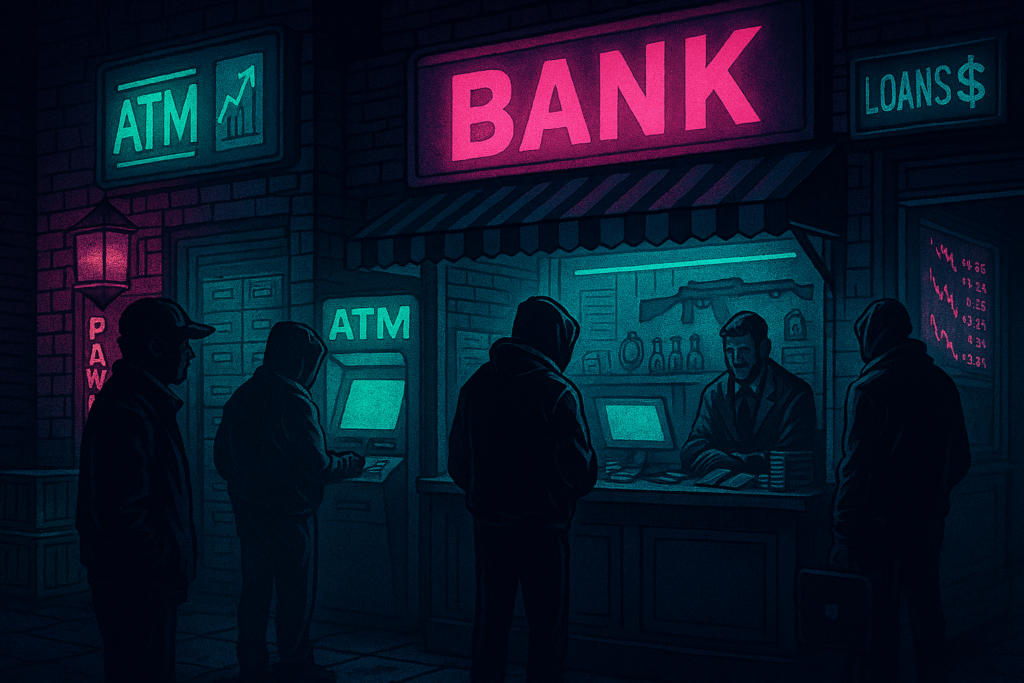
In GTA 6, banks won’t just be heist targets — they’ll be active players in a living financial system. Rockstar is introducing banking mechanics that mirror real-world behavior in ways no open-world game has attempted before.
Features include:
- Variable interest rates tied to district stability
- Loan systems connected to mission progress and reputation
- Digital accounts that can be hacked, frozen, or manipulated
- Branch-specific services that vary depending on neighborhood wealth
- Security upgrades triggered by player activity or NPC robberies
Players will be able to open accounts, transfer funds, take out loans, invest in local businesses, and launder money through shell companies — turning financial management into a core part of how you play.
The strategic layer this adds to criminal operations is significant. Want to fund a gang war? You’ll need capital. Want to scale your empire? You’ll need clean money first.
Black Market Mechanics: Prices That React to Chaos
The black market in GTA 6 won’t operate on fixed prices — it’ll be a fully reactive system that shifts based on what’s happening across the city.
Prices will respond to:
- Police presence and recent crackdowns
- Supply chain disruptions and smuggling route interference
- Player demand and buying patterns
- Neighborhood risk levels
- Recent raids, arrests, or gang activity
Here’s what that looks like in practice:
- Flood a district with violence and weapon prices spike — demand goes up, and so does the risk of doing business.
- Clean up a neighborhood and drug prices drop as dealers relocate or shut down.
- Disrupt smuggling routes and contraband becomes scarce, driving prices through the roof.
- Take out rival gangs and you don’t just eliminate competition — you control the flow and set the prices yourself.
This is a criminal economy where the smartest player isn’t always the most violent one — it’s the one who understands how markets move.
Neighborhoods with Economic Identity
Vice City won’t just look different from district to district — it’ll feel different in your wallet, in how NPCs treat you, and in how much power you can gain or lose depending on where you operate.
Each zone carries its own economic profile:
- Wealthy districts with high prices, luxury goods, and tight security
- Middle-class zones with balanced markets and active, predictable NPCs
- Low-income areas with cheap goods, high crime, and volatile black markets
- Industrial zones with specialized items and deep smuggling networks
- Tourist hubs with seasonal price shifts and mission opportunities that come and go
Every neighborhood has its own price index, exclusive black market items, unique NPC behavior, and a distinct vulnerability to outside influence. Destabilize a rich district and watch it unravel. Invest time in a struggling zone and watch it come back to life.
Your actions don’t just affect a single block — they redraw the entire economic map.
NPCs React to Scarcity and Opportunity
NPCs in GTA 6 won’t just populate the world — they’ll respond to it. Scarcity, inflation, and market shifts will trigger real behavioral changes across the population.
Expect to see:
- Panic buying during shortages
- Mass migration away from destabilized zones
- Street protests against price hikes
- Underground networks forming when official markets fail
- Civilians turning to crime when the cost of living spikes
- Vendors adjusting inventory in real time based on local demand
The result is a city that doesn’t wait for you to act — it reacts, adapts, and sometimes spirals on its own.
Your Decisions Shape the Entire City
In GTA 6, you’re not just a criminal. You’re an economic force.
Your choices can:
- Crash local economies and inflate prices across districts
- Trigger city-wide police crackdowns through financial crime
- Empower or dismantle NPC-run businesses
- Create monopolies in illegal trade
- Manipulate banking systems from the inside
- Reshape NPC migration patterns across the map
Every mission, every robbery, every act of sabotage sends a signal through the city’s economic system. Rockstar wants players to feel the full weight of their empire — not just in the money they accumulate, but in how Vice City responds to their presence.
Impact on Missions, Roleplay, and Progression
The economy won’t just exist in the background — it’ll shape how you play from start to finish.
- Mission rewards will fluctuate based on current market conditions
- Progression paths will include routes built around economic dominance
- Side quests may involve market manipulation, bank fraud, or supply chain sabotage
- NPC allies can offer discounts, loans, or insider information based on your reputation
This opens the door to genuinely different playstyles. You could be:
- A ruthless monopolist who corners illegal markets
- A benevolent fixer who stabilizes neighborhoods for long-term gain
- A chaotic destabilizer who profits from the fallout
- A stealthy investor who manipulates systems from the shadows
- A black market kingpin who controls supply across the entire city
Community Predictions: What Players Expect
The GTA community has been theorizing for months about how deep the economy could actually go. The most widely discussed predictions include stock market integration tied to in-game companies, crypto-style currencies built for laundering, NPC-run businesses that directly compete with players, and online economy wars in GTA 6’s multiplayer mode.
Some expect district-wide economic collapse as a real consequence of player abuse — a mechanic that would make Vice City genuinely punishing for those who burn everything down without a plan.
If even half of these systems make it into the final release, GTA 6 could become the most economically complex mainstream game ever made.
Did You Know? GTA 6’s internal economy reportedly uses a modified version of Rockstar’s RAGE engine to simulate inflation, scarcity, and NPC migration in real time — making it the first open-world game to model economic feedback loops simultaneously across multiple districts.
Sources
IGN – GTA 6 Everything We Know
IGN’s ongoing coverage compiles confirmed details, leak analysis, and developer insights around GTA 6’s gameplay systems, including early references to dynamic NPC behavior and world economics.
ign.com/articles/gta-6-everything-we-know
Rockstar Games – GTA 6 Official Trailer & Announcements
Rockstar’s official communications have confirmed Vice City as the setting and hinted at systemic world reactivity as a core design pillar.
rockstargames.com
Last Updated: February 27, 2026
Originally published at https://techfusiondaily.com


3 thoughts on “GTA 6’s Dynamic Economy Will Change Everything”