
Fun Fact
The original Vision Pro shipped with 12 cameras, 5 sensors, and 6 microphones. Early prototypes of the Vision Pro 2 reportedly exceed 20 total sensing components.
Apple’s Next Headset Is Taking Shape — And It Looks Much More Mature
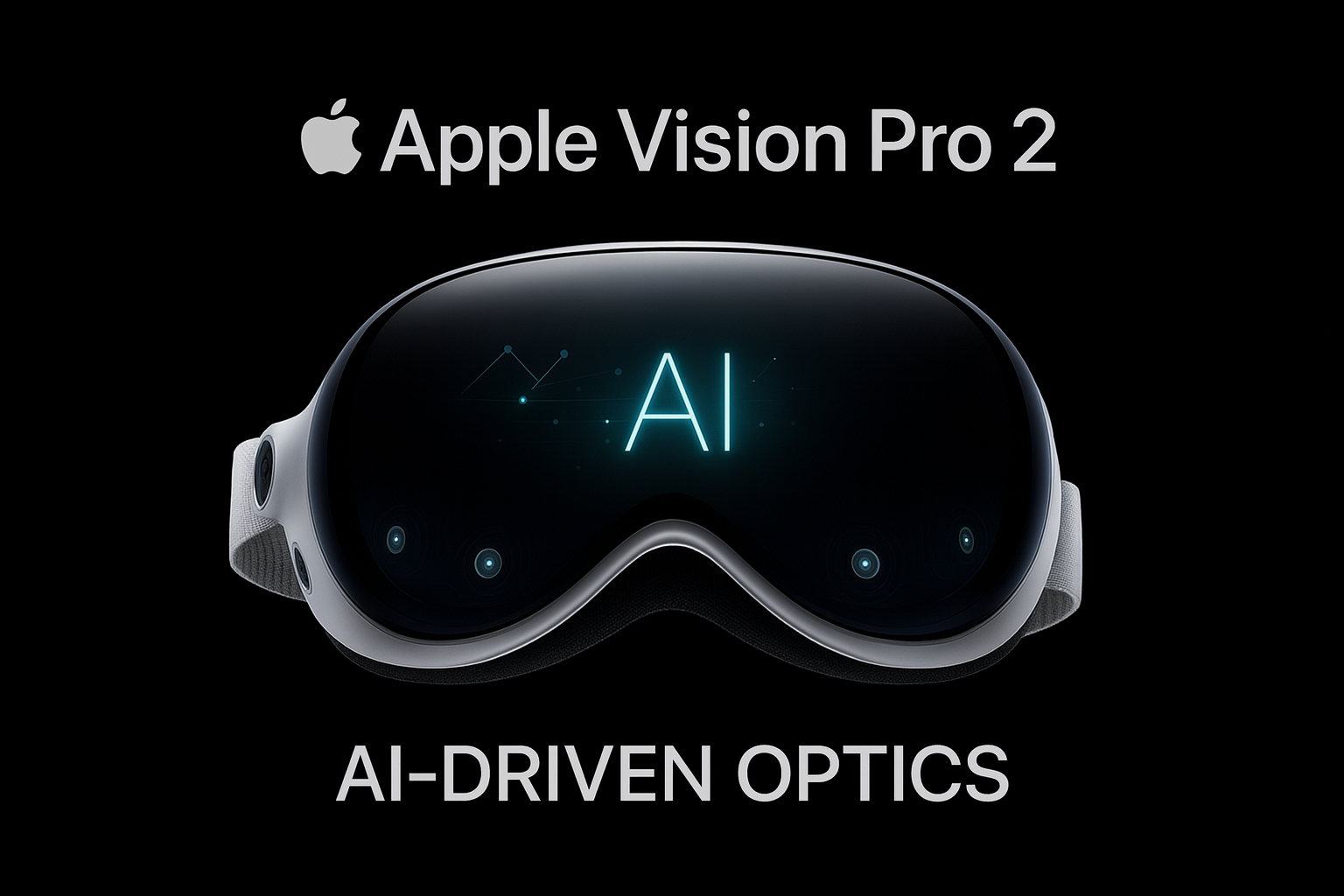
New leaks from Apple’s supply chain suggest the Vision Pro 2 is moving toward a more refined, mainstream‑ready design. While the first Vision Pro felt like a bold experiment, this second‑generation model appears to be Apple’s attempt at turning spatial computing into a real consumer category.
From a redesigned sensor array to AI‑adaptive optics, the Vision Pro 2 is shaping up to be the most ambitious mixed‑reality device Apple has ever built.
This time, Apple isn’t just iterating. It’s correcting, optimizing, and—if the leaks are accurate—finally preparing the headset for everyday use.
A New Sensor Architecture: Precision Without the Power Drain
According to early engineering reports, Apple is testing a next‑generation LiDAR module with longer range and lower latency. Combined with upgraded passthrough cameras and dual‑aperture depth sensors, the Vision Pro 2 could deliver smoother hand‑tracking, more stable spatial anchoring, and more natural interaction.
In classic Swisher style: Apple seems to be fixing the things people actually complained about.
From an Evans perspective, this is Apple doubling down on the idea that spatial computing is not a gimmick—it’s a platform shift that requires hardware maturity.
Battery Life Finally Gets the Upgrade Users Wanted
Battery life was the Achilles’ heel of the first Vision Pro. Apple appears ready to address that with:
- A redesigned external battery pack
- 30–40% higher capacity
- A new low‑temperature charging system
- AI‑based power management
If these numbers hold, the Vision Pro 2 could cross the threshold from “demo device” to “daily driver.”
This is where O’Reilly’s lens matters: better battery life isn’t just convenience—it’s what unlocks new behaviors. People only adopt new computing paradigms when the friction disappears.
AI‑Driven Optics: The Most Radical Upgrade
The standout leak is Apple’s work on AI‑adaptive lenses capable of:
- Real‑time optical correction
- Personalized clarity profiles
- Dynamic field‑of‑view adjustments
- Automatic lighting compensation
This is not just a spec bump. It’s a philosophical shift.
The headset doesn’t just show you digital content—it learns how you see and adapts the world accordingly.
Evans would call this “the beginning of personalized optics.”
O’Reilly would call it “the merging of human perception with machine intelligence.”
Swisher would probably call it “Apple finally doing something weird and interesting again.”
A Slimmer, Lighter, More Wearable Vision Pro
Leaks indicate Apple is testing:
- A thinner front glass panel
- A lighter aluminum frame
- A new ventilation system
- Softer, breathable face padding
The goal is clear: reduce the “helmet effect” and make the Vision Pro 2 feel more like a premium wearable than a sci‑fi prop.
This is the kind of refinement that signals Apple is preparing for scale, not just headlines.
visionOS 3: Spatial AI Takes Center Stage
The Vision Pro 2 is expected to debut alongside visionOS 3, featuring:
- AI‑generated spatial environments
- Smarter multitasking
- New immersive FaceTime modes
- Better integration with iPhone and Mac
- Adaptive UI elements based on posture and lighting
This is where O’Reilly’s influence shines: software that responds to the user’s environment, not the other way around.
Will Apple Finally Lower the Price?
Rumors suggest Apple may introduce:
- A premium Vision Pro 2
- A more affordable “Vision” model with fewer sensors
If true, this could be Apple’s attempt to turn spatial computing into a mainstream product line—just like the iPhone, iPad, and Watch.
Conclusion
If these leaks are accurate, the Vision Pro 2 won’t just refine Apple’s first mixed‑reality headset—it will redefine what spatial computing can be. The real question is whether Apple can turn this ambitious hardware into a device people actually use every day, or if it will remain a futuristic luxury waiting for its moment.
Sources
1. The Information — Apple Vision Pro 2 Sensor and Hardware Roadmap (2026)
Early engineering leaks and supply‑chain insights into Apple’s next mixed‑reality headset.
2. Bloomberg — Mark Gurman’s Power On: Vision Pro 2 Development Updates (2026)
Reports on Apple’s internal testing, battery redesign, and AI‑driven optical system.
Originally published at https://techfusiondaily.com