

Fun Fact:
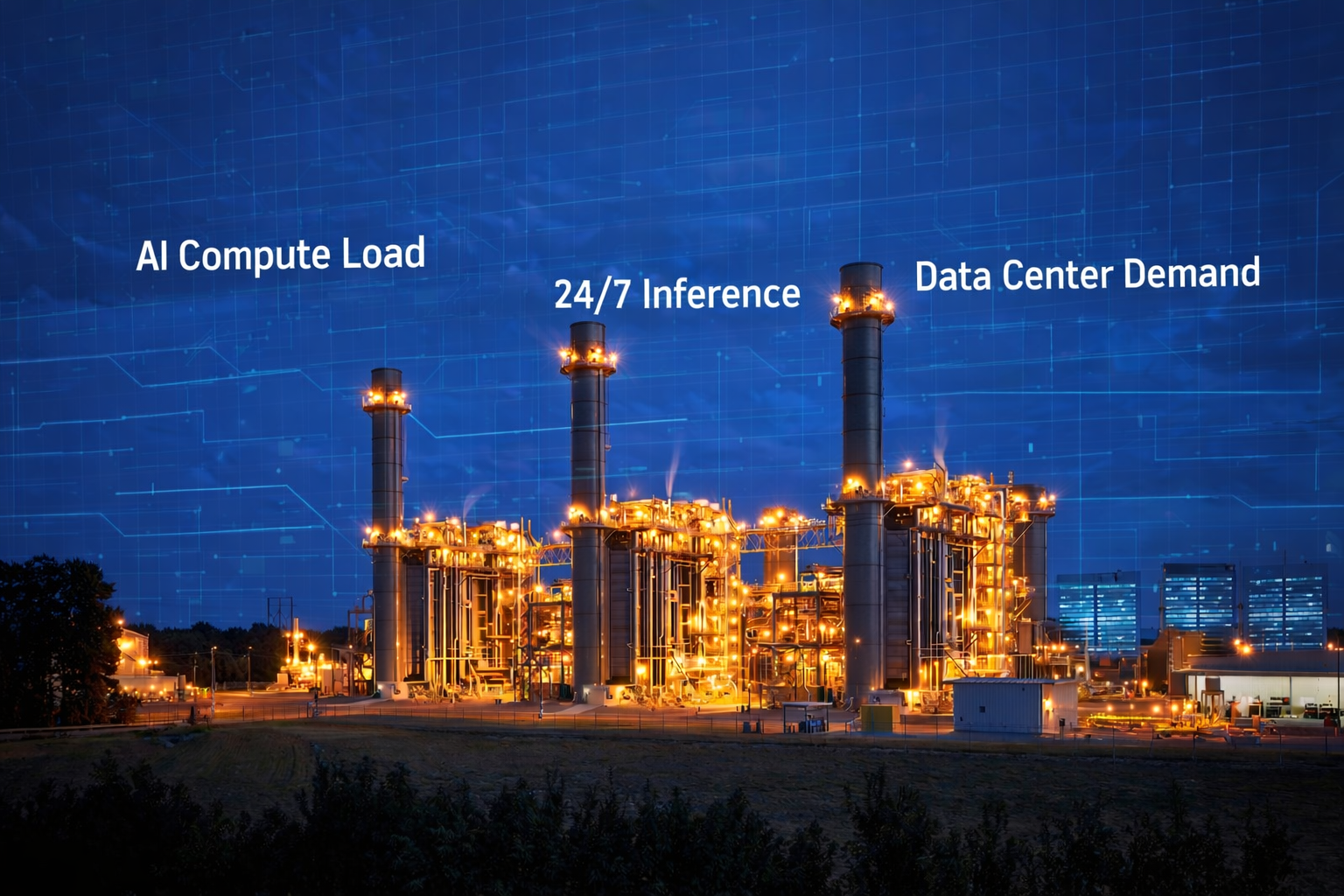
There’s an uncomfortable number floating around inside some infrastructure teams right now. By 2026, a single advanced AI query can quietly burn roughly the same amount of electricity as leaving a LED bulb on for nearly three hours. On its own, that sounds harmless. Multiply it by billions of users, automated agents, background processes, and retraining cycles… and suddenly entire cities start feeling the load.
The End of the Magic: When AI Stops Feeling Weightless
The AI energy crisis arrived quietly — not as a headline, but as a hard limit that showed up in planning meetings, permit denials, and power contracts that suddenly mattered more than model benchmarks.
For a long time, AI felt abstract. Intangible. Something that lived somewhere above us, floating safely inside the cloud. That illusion is gone. Over the past year, something very physical has asserted itself: actual, measurable constraints rooted in electrons, copper, transformers, and heat. If silicon is the brain of modern AI, electricity is its blood. And right now, the circulatory system is under stress in ways the industry didn’t fully plan for — and the AI energy crisis is forcing a reckoning that no benchmark can paper over.
This is what people are starting to call the Electric Wall. Not because innovation stopped. But because physics finally asked for its share.
When Power Density Becomes the Real Metric
The industry loves talking about smaller nodes. Two nanometers. Dense memory stacks. Exotic packaging. All of it sounds like progress, and to be fair, it is.
But the conversation rarely stays on what actually matters once you cross a certain threshold: power density.
Packing more transistors into microscopic spaces doesn’t just increase capability. It concentrates heat, raises current demands, and amplifies the consequences of every inefficiency. Each new generation may be more efficient per operation, but the total number of operations has exploded far faster than efficiency gains can compensate for.
This is Jevons Paradox playing out at industrial scale. The cheaper and faster computation becomes, the more we consume it — until efficiency stops saving us and starts accelerating the problem.
At this point, the limiting factor for cutting-edge infrastructure isn’t how many GPUs you can buy. It’s how much power your building, block, or region can safely deliver without collapsing something else.
Data Centers Aren’t Abstract Anymore — They’re Territorial
By 2026, AI-focused data centers are burning through more than 1,000 terawatt-hours of electricity annually. That number alone doesn’t shock people until you frame it correctly.
That’s national-scale consumption.
This is where the problem stops being technical and starts becoming political. Entire regions are hitting capacity ceilings. In places like Northern Virginia or Dublin, new data center permits are being delayed or denied outright — not because the technology isn’t impressive, but because the grid simply can’t stretch any further without consequences for residents.
And yes, some of the tradeoffs sound absurd until you realize they’re real: cooling homes versus running training clusters. Peak residential demand versus inference at scale. These are no longer hypothetical debates inside think tanks. They’re planning meetings with hard deadlines.
The quiet result of this pressure is something few predicted a decade ago: corporate energy sovereignty. The largest AI players aren’t just buyers of electricity anymore. They’re securing generation rights, locking long-term supply contracts, and behaving more like utilities than software firms.
Because when your entire business runs on uninterrupted power, uptime stops being a service-level metric and starts being existential.
Sustainability Runs Into Reality
For years, the industry showcased renewable commitments with genuine pride. Solar. Wind. Carbon offsets. And none of that was fake.
But AI has a cruel requirement that marketing decks tend to avoid: baseload power. Continuous, predictable, non-negotiable energy. AI systems don’t pause politely when the sun sets or the wind slows down. They either run, or they fail.
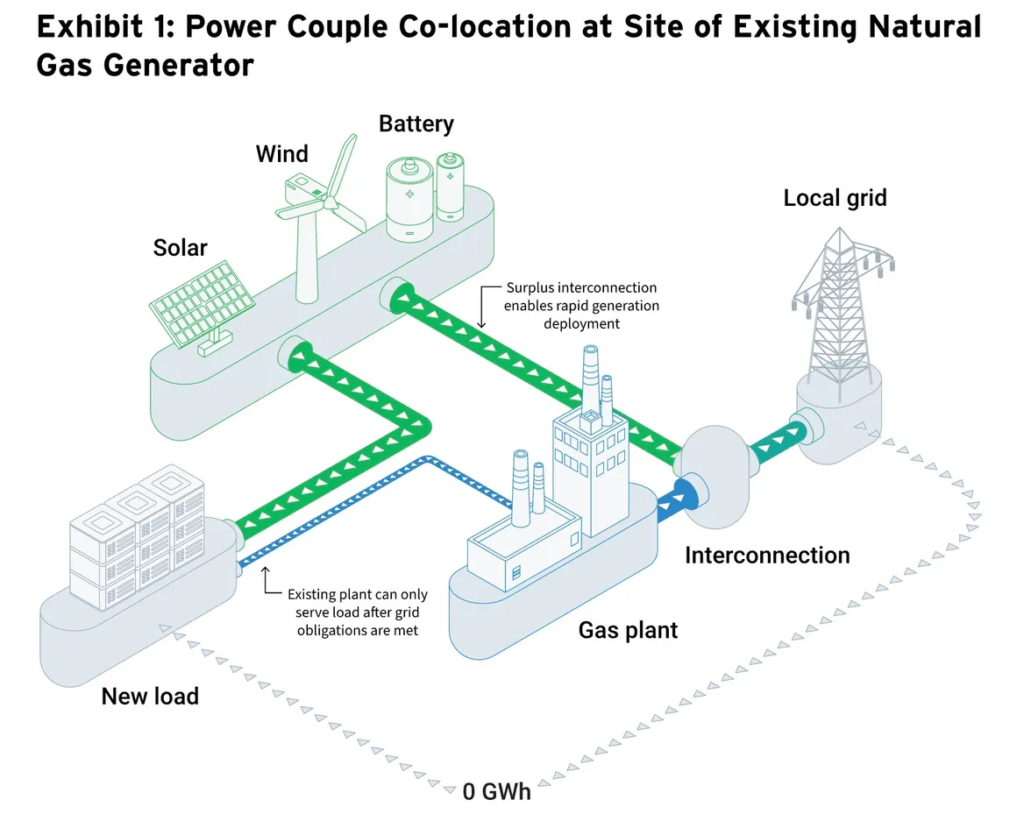
That tension has pulled the conversation in uncomfortable directions. Nuclear energy, once treated as politically radioactive, is quietly re-entering the picture. Small modular reactors are being discussed — and in some cases installed — near data center campuses to guarantee round-the-clock supply.
Natural gas, meanwhile, never really left. Despite public commitments, it remains the emergency backbone that keeps clusters alive during seasonal spikes and grid instability.
None of this feels like a clean narrative. But it is the one playing out.
If you want the bigger picture behind why AI is colliding with physical limits, this companion piece explains why AI hardware—not models—is deciding the next tech cycle:
https://techfusiondaily.com/why-ai-hardware-not-models-next-tech-cycle-2026/
Heat: The Problem That Doesn’t Trend on Social Media
Power isn’t the only invisible constraint. Heat is the silent one.
Modern AI hardware operates at thermal levels that would have sounded absurd a few years ago. Traditional air cooling simply can’t keep up at high densities. Liquid cooling — immersion systems, cold plates, complex heat exchangers — has shifted from exotic to mandatory.
And here’s the part that often gets missed: a non-trivial share of energy consumption inside modern data centers isn’t going into computation at all. It’s going into keeping the hardware from destroying itself.
Pumps. Chillers. Thermal management systems. All of them draw power, generate heat, and require maintenance. At this point, companies that truly understand thermodynamics are becoming just as strategically important as those designing chips.
The bottleneck isn’t intelligence. It’s temperature.
The Grid Was Never Built for This
Even if we assume infinite generation — which we don’t have — there’s another brutal constraint waiting underneath everything: transmission.
Electrical grids were not designed for hyper-localized, gigawatt-scale consumers that appear almost overnight. AI clusters don’t behave like factories or neighborhoods. They demand massive, sustained power flows in very specific locations, often near fiber hubs rather than generation sources.
This has forced governments and utilities into uncomfortable, expensive upgrades. High-voltage transmission lines. Smart grid rerouting. Substation rebuilds. All slow. All political. All necessary.
Some data centers are experimenting with becoming partial grid stabilizers themselves, storing energy during low-demand periods and feeding it back during peaks. It helps, but it doesn’t solve the fundamental mismatch between where power is generated and where AI wants to live.
Moving electrons, it turns out, is harder than moving data.
Who Actually Wins in This Cycle
If there’s one lesson emerging from 2026, it’s that the winners of the AI era won’t be crowned by benchmarks alone. They’ll be defined by their relationship with physical reality.
Countries with surplus energy have an edge. Regions that invested early in resilient grids have breathing room. Teams building smaller, more efficient models are suddenly far more relevant than they looked during the era of brute-force scaling. Companies like Microsoft are already securing long-term energy contracts and nuclear partnerships precisely because they understand that the AI energy crisis isn’t a future problem — it’s a present one.
The industry is quietly rediscovering an old truth: efficiency matters again. Not theoretical efficiency. Practical, deployable, system-level efficiency that keeps lights on and costs predictable.
A Personal Moment of Déjà Vu
I remember sitting through infrastructure reviews years ago where power budgets felt like a formality. Something you filled in after the real decisions were made. Compute first. Scale later. Electricity would figure itself out.
It didn’t.
Now power planning happens early. Sometimes before model architecture discussions. Sometimes before site selection. That reversal alone tells you how far the conversation has shifted.
This didn’t happen because innovation failed. It happened because innovation worked too well.
AI didn’t hit a wall because we ran out of ideas.
It hit a wall because the world it runs on has limits.
And unless we rethink how we generate, move, and consume electricity, those limits will decide how far intelligence can scale — no matter how elegant the code looks on paper.
So the real question isn’t what your AI can do.
It’s whether you can afford to keep it switched on when everyone else wants power too.
Sources
TechFusionDaily
Original editorial analysis
Originally published at https://techfusiondaily.com


One thought on “The AI Energy Crisis: Why 2026 Is the Year of the “Electric Wall””