
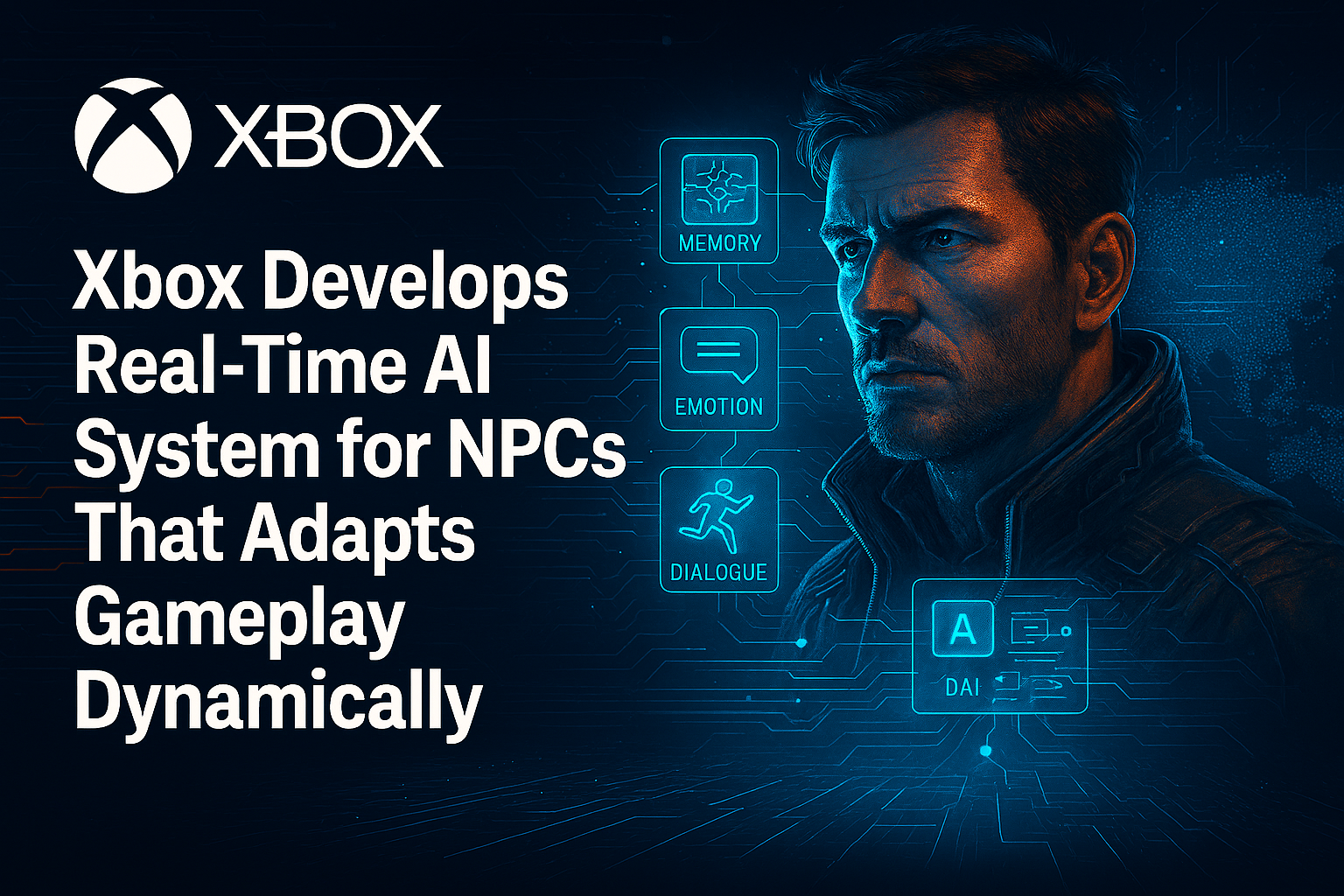
Xbox is quietly working on one of the most ambitious AI systems ever attempted in gaming: a new framework that allows NPCs to react, adapt, and evolve in real time based on player behavior. According to internal sources and early technical documentation shared with developers, this system could redefine how open‑world games, RPGs, and shooters are designed over the next decade.
The project, internally referred to as “Project Prometheus”, aims to bring dynamic, AI‑driven decision‑making to every layer of NPC behavior — from dialogue and combat to exploration and world simulation. If successful, it could mark the biggest leap in game AI since the introduction of physics‑based engines in the early 2000s.
A New Era of NPC Intelligence
Traditional NPCs operate on scripted behavior trees. They follow predefined patterns, react to limited triggers, and rarely deviate from their programmed roles. Xbox’s new system attempts to break that model entirely.
The AI framework uses:
- Large‑scale behavior models trained on thousands of gameplay scenarios
- Real‑time decision engines that adjust NPC actions based on player choices
- Memory layers that allow NPCs to “remember” interactions
- Dynamic emotional states that influence reactions
- Procedural dialogue generation for unscripted conversations
Instead of repeating predictable loops, NPCs would behave more like living agents inside the game world.
How It Works Behind the Scenes
Developers familiar with early prototypes describe a system that blends cloud‑based AI processing with on‑device inference. The goal is to keep latency low while allowing complex decision‑making.
The system includes three core components:
1. The Perception Layer
NPCs continuously analyze:
- Player movement
- Combat style
- Dialogue choices
- Environmental changes
- Other NPC behavior
This allows them to form a “situational awareness” similar to real players.
2. The Decision Engine
This is where the magic happens. The AI evaluates multiple possible actions and selects the one that best fits the NPC’s personality, goals, and emotional state.
For example:
- A guard who previously lost a fight against the player may become more cautious.
- A merchant who was robbed may hire protection or raise prices.
- A companion character may change tactics based on how the player fights.
3. The Memory System
NPCs can store short‑term and long‑term memories, influencing future interactions.
This means:
- Characters can hold grudges
- Factions can evolve based on player actions
- Towns can change depending on how players treat them
It’s a level of persistence rarely seen in modern games.
What This Means for Gameplay
If implemented at scale, this AI system could transform game design in several ways.
1. Truly Dynamic Worlds
Open‑world games could feel alive in ways that go far beyond scripted events. NPCs would:
- Form alliances
- Start conflicts
- Build or abandon settlements
- React to global events
All without developer scripting.
2. Unpredictable Combat Encounters
Enemies could adapt to the player’s strategies:
- Snipers reposition
- Bosses change attack patterns
- Groups coordinate ambushes
- Weak enemies flee or call for reinforcements
Every encounter becomes unique.
3. Evolving Storylines
Narrative designers could create branching stories that react to emergent behavior instead of fixed choices.
A simple decision — like sparing an enemy — could ripple through the world in unexpected ways.
4. More Human Companions
Companion characters could:
- Learn from the player
- Develop preferences
- Comment dynamically on events
- Change their relationship over time
This could push RPG immersion to new heights.
Developers Are Already Testing It
Several Xbox Game Studios teams reportedly have early access to the technology, including:
- Obsidian Entertainment (RPG specialists)
- The Coalition (Gears of War)
- Bethesda Game Studios (open‑world systems)
Obsidian is said to be experimenting with the system for future RPG prototypes, while Bethesda is exploring how it could enhance faction behavior in large open worlds.
Challenges Ahead
Despite the excitement, developers note several challenges:
1. Performance Constraints
Real‑time AI decision‑making is computationally expensive. Balancing fidelity with performance will be critical.
2. Narrative Control
Writers must find ways to maintain story coherence while allowing emergent behavior.
3. Player Expectations
Not all players want unpredictable worlds. Some prefer structured, curated experiences.
4. Ethical Considerations
AI‑generated dialogue and behavior must avoid inappropriate or unintended content.
Xbox is reportedly building strict guardrails to ensure safe and consistent NPC behavior.
Why Xbox Is Betting Big on AI
Microsoft has been investing heavily in AI across all its platforms — Windows, Azure, Office, and now gaming. Integrating advanced AI into Xbox games aligns with the company’s long‑term strategy:
- Differentiate Xbox from PlayStation and Nintendo
- Enable new types of gameplay not possible on other platforms
- Attract developers looking for cutting‑edge tools
- Future‑proof the Xbox ecosystem for the next decade
If successful, this could become a defining feature of the next Xbox generation.
When Will Players See It?
Sources suggest that the first games using this AI system may appear:
- In late 2026 for small‑scale features
- In 2027–2028 for full‑scale implementation
- As a core feature of the next Xbox console generation
Microsoft has not officially announced the project, but insiders expect a reveal once the technology is stable enough for public demos.
Conclusion
Xbox’s AI‑driven NPC system could mark a turning point in gaming. By giving characters memory, personality, and adaptive behavior, Microsoft aims to create worlds that feel alive, reactive, and deeply immersive.
If the technology delivers on its promise, it could redefine what players expect from open‑world games, RPGs, and narrative experiences — and set a new standard for the industry.
Fun Fact
The first game to use dynamic AI behavior trees was Halo: Combat Evolved in 2001 — a title published by Microsoft, making this new AI system a full‑circle evolution of Xbox’s legacy in game AI.