

Fun Fact
If global data centers were a country, they’d rank among the top energy consumers on Earth — right next to nations with tens of millions of people. And the curve isn’t slowing down; it’s going vertical.
The Reality Check: A Planet at its Limit
SpaceX orbital data centers may sound like science fiction, but they are emerging as a serious response to Earth’s growing energy and compute limits. Global data centers already gulp down more than 3% of the world’s electricity. To put it bluntly: our collective obsession with 4K streaming, crypto, and AI prompts is outstripping the power grids of entire nations. We are hitting a physical wall where the Earth can no longer sustain the heat and energy our digital lives demand. SpaceX’s pitch is as elegant as it is audacious: take that crushing energy demand and dump it somewhere the planet doesn’t have to carry the bill.
It sounds like a clean break from our environmental guilt. Simple on paper. Absolutely mental in practice.
A New Kind of Cloud Is Taking Shape
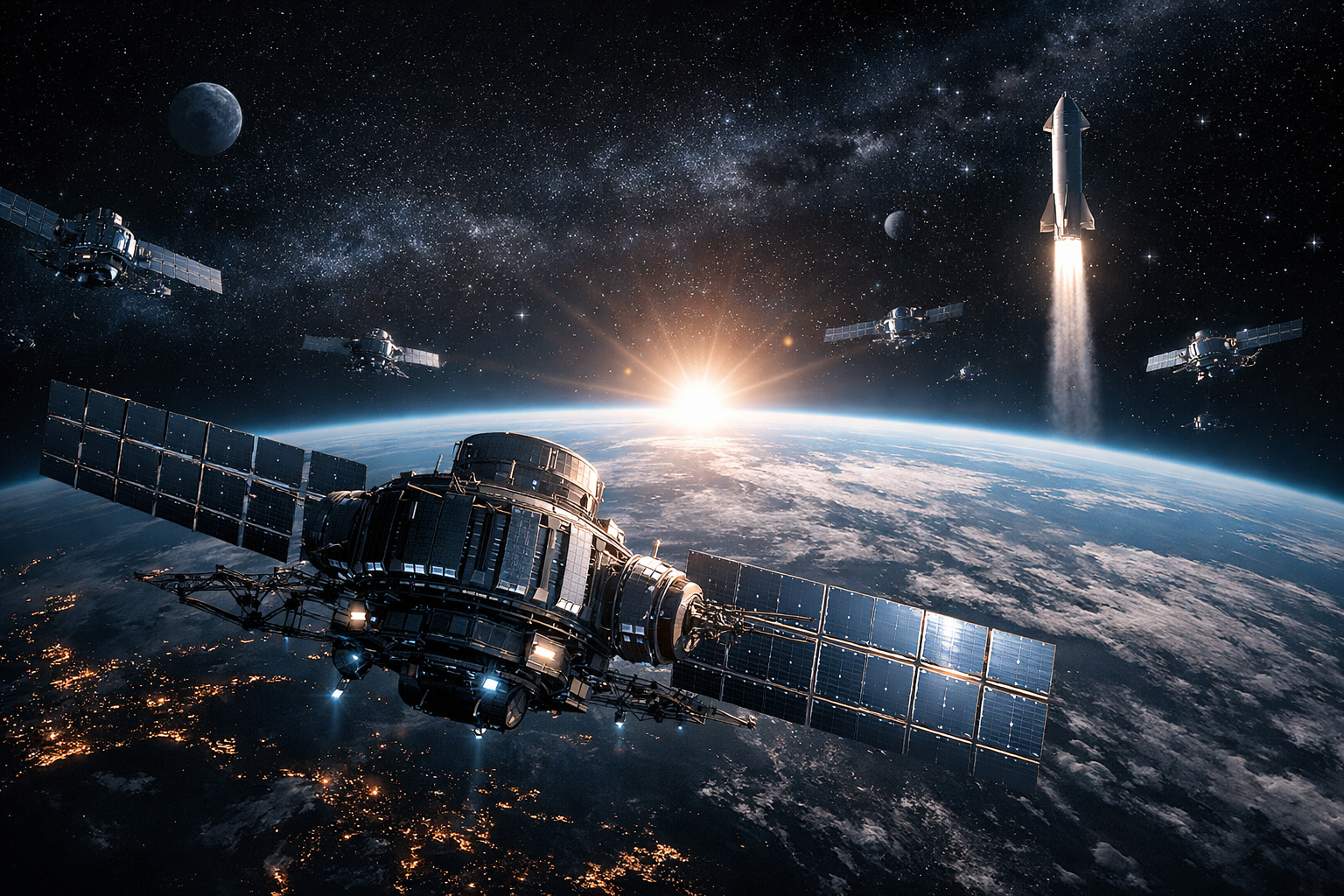
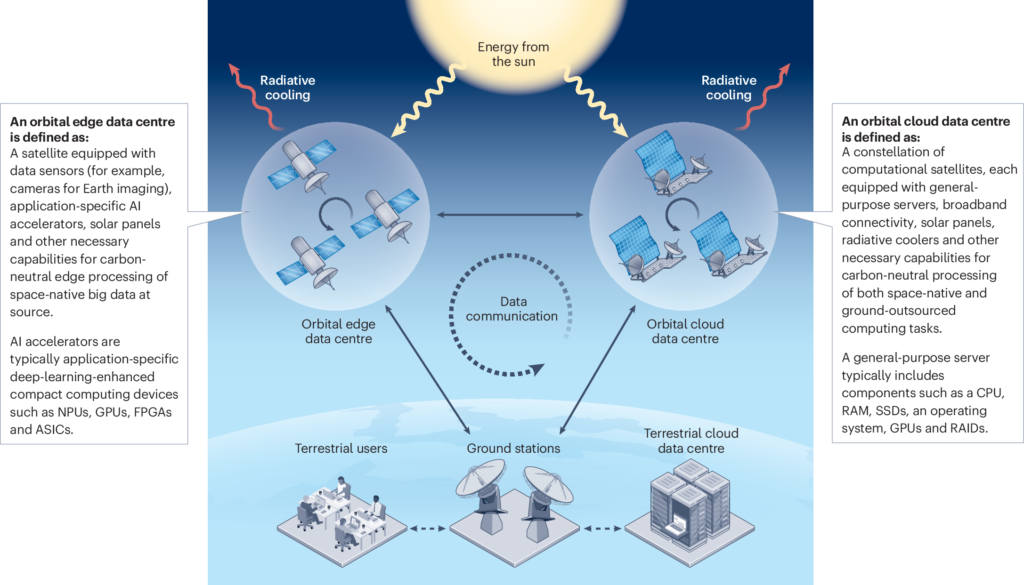
SpaceX is quietly sketching out a roadmap that feels less like a corporate deck and more like the opening chapter of a gritty hard-sci-fi novel. They aren’t just looking at satellites; they are aiming for a planetary-scale computing shell—up to one million solar-powered data centers wrapped around Earth like a digital blanket.
When these reports first surfaced on The Verge, the reaction was a mix of awe and deep skepticism. But once you look past the “Bond Villain” scale of the project, the logic becomes uncomfortably sound. If SpaceX orbital data centers scale even partially, they could force a fundamental rethink of how cloud computing infrastructure is built and deployed — signaling the birth of a truly “sovereign-less” compute layer.
The play is simple yet revolutionary: Move the heavy lifting to a place where the sun never sets, the cooling is free, and you don’t have to beg local governments for land, water rights, or power permits. If even a fraction of this vision materializes, it won’t just reshape the internet; it will redefine what it means for a business to be “headquartered” anywhere on a map.
If you’re tracking how major engines adapt to AI‑native rendering, this breakdown of Samsung Debuts “Zero-Battery Sensors” Powered by Ambient Signals explores how creators are using AI‑driven tools to produce full videos without traditional recording workflows:
https://techfusiondaily.com/samsung-zero-battery-sensors-ambient-energy/
Why Space? The Logic Isn’t as Crazy as It Sounds
This isn’t a billionaire’s whim or an engineering flex. It’s a strategic response to a civilization that’s running out of room and fuses. Several long-term pressures are converging:
- Eternal Sunshine: On Earth, solar is a part-time job. In orbit, it’s an infinite buffet. No clouds, no seasons, and no night cycles mean a data center that never has to throttle down.
- The Heat Paradox: On Earth, heat is the enemy, fought with massive, water-hungry cooling towers. In the vacuum of space, while heat dissipation is tricky, you aren’t competing with local ecosystems for water. It’s a pure physics problem, solved by radiators, not by draining local aquifers.
- Zero Bureaucracy: Terrestrial data centers are bogged down by years of zoning permits and environmental impact studies. In Low Earth Orbit (LEO), the only real constraint is how fast SpaceX can launch their Starship fleet.
- AI is Eating the World: Training a single frontier-scale AI model today uses enough juice to light up a city. That demand curve is vertical. Space might be the only “grid” left that can feed the beast without causing blackouts in residential neighborhoods.

The “Computational Swarm”: Live Fast, Die Young
We aren’t talking about giant, sci-fi monoliths floating in the dark. The vision describes a computational swarm of modular micro-data centers. These are autonomous units designed with the Starlink philosophy: they are not meant to last forever.
This is “Hardware-as-a-Service” taken to its ultimate, cold extreme. In this model, repair is a dead concept. If a unit fails or its chips become obsolete after two years, it simply exits its orbit and burns up in the atmosphere like a shooting star. This allows SpaceX to iterate at the speed of Silicon Valley, refreshing the “orbital brain” with the latest chips every few years—a pace no ground-based facility could ever match.
The Massive, Terrifying Hurdles
Let’s be real—the red flags are as vast as the vacuum itself. None of this is guaranteed, and the risks are unprecedented:
- Orbital Traffic Jams: Adding a million objects to LEO is a nightmare for space safety. One bad collision could trigger the Kessler Syndrome, creating a cloud of shrapnel that locks us on Earth for generations and destroys the very infrastructure we just built.
- Legal No-Man’s Land: Who owns the data when it’s hovering 300 miles above a country that has banned it? We are looking at a future where “data sovereignty” becomes an abstract ghost, and jurisdiction is determined by who has the best encryption, not who has the local police force.
- Security and Control: How do you guard a server flying at 17,000 mph? Cybersecurity is one thing, but physical tampering or state-sponsored kinetic ASAT (anti-satellite) attacks turn the cloud into a literal battlefield.
Final Thought: Redefining the “Cloud”
If SpaceX succeeds, the word “Cloud” will finally stop being a marketing metaphor and become a literal description of where our collective intelligence lives. It is a move that would apply immense pressure on giants like Microsoft Azure or Google Cloud, whose infrastructure remains tethered to an increasingly expensive and fragile Earth.
SpaceX isn’t just building rockets anymore; they’re building the first de-territorialized computer. They are positioning themselves to be the gatekeepers of the AI age, operating in a realm where the laws of gravity are more relevant than the laws of men. The digital world is about to be rewritten—from the top down.
Sources:
The Verge — “SpaceX wants to put 1 million solar-powered data centers into orbit”
SpaceX Official — Starlink and Starship Missions
Originally published at https://techfusiondaily.com

6 thoughts on “SpaceX Wants to Launch 1 Million Solar-Powered Data Centers Into Orbit — The Most Ambitious Cloud Project Ever Attempted”