

Fun Fact
The first crypto perpetual swap wasn’t launched by a major exchange or a regulated institution. It came from a small derivatives platform in 2016 that most of the industry ignored at the time — right until perpetuals quietly became the backbone of crypto liquidity and speculation. By the time institutions noticed, the market had already moved on.
Ripple Prime is moving into on-chain perpetuals, and it’s not as optional as it sounds
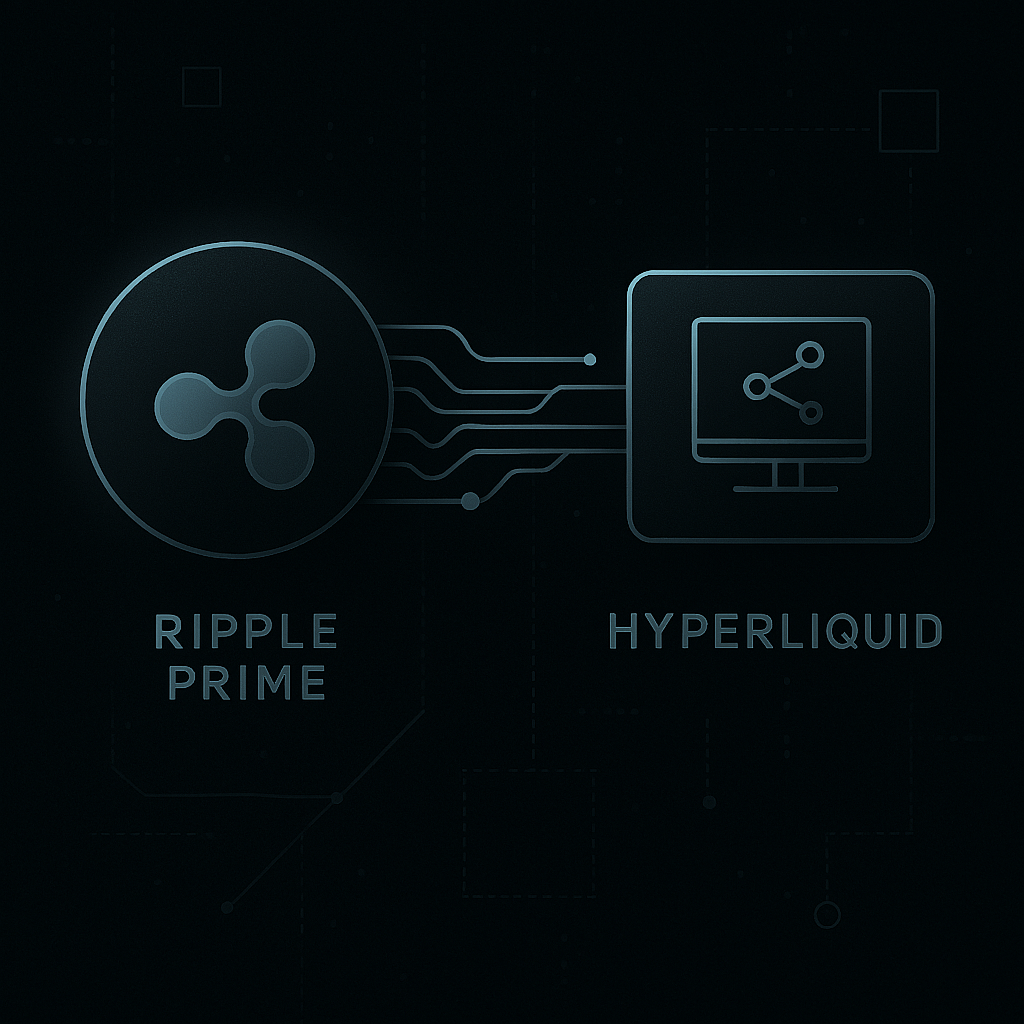
Ripple Prime entering on-chain perpetuals through an integration with Hyperliquid isn’t just another crypto partnership announcement. It’s a delayed acknowledgment of where real liquidity lives today — and where it has lived for years.
Ripple built its reputation around enterprise payments, banking corridors, and regulatory alignment. That narrative worked in conference rooms and compliance discussions, but it never defined crypto markets. Liquidity didn’t wait for permission. It moved on-chain, into derivatives, into perpetuals, and into venues optimized for speed rather than approval.
This integration feels less like innovation and more like adaptation under pressure.
Hyperliquid represents the market Ripple once dismissed
Hyperliquid didn’t win by promising institutional adoption. It won by shipping performance. On-chain order books, sub-second execution, and a derivatives engine that holds up when volatility spikes — not in theory, but in practice.
That matters because most “on-chain” trading infrastructure collapses the moment conditions get real. Congestion, latency, failed transactions — all the things glossy whitepapers skip. Hyperliquid earned attention by surviving those moments.
For years, this was exactly the type of platform Ripple stayed away from. Permissionless, fast-moving, unconcerned with fitting neatly into regulatory narratives. The fact that Ripple Prime is now integrating here says more about market gravity than strategy decks.
Perpetuals are the market — whether Ripple likes it or not
Perpetuals aren’t a side product in crypto. They are the market’s nervous system. They drive price discovery, shape trader behavior, and often determine where capital flows before spot markets react.
Ripple spent a long time framing payments as crypto’s “real” use case. But the market chose leverage, speculation, and 24/7 liquidity instead. That choice wasn’t philosophical — it was practical. Traders go where execution is fast and capital is efficient.
Ripple Prime stepping into on-chain perpetuals is Ripple admitting, quietly, that ignoring derivatives meant ignoring the center of crypto gravity.
The part Ripple won’t emphasize publicly
This move isn’t about expanding product offerings. It’s about access.
Institutional clients increasingly want exposure to on-chain derivatives without the friction of legacy infrastructure. Off-chain liquidity has thinned. Regulatory clarity remains uneven. And on-chain execution has finally reached a level where institutions can no longer dismiss it as experimental.
Hyperliquid offers Ripple something it never built internally: a venue where institutional-sized flows can interact with crypto-native liquidity without sacrificing speed.
That’s not a partnership of equals. It’s a dependency.
If you’re tracking where crypto narratives are heading in 2026, this piece on BlockchainFX’s presale momentum is a useful read for how investors are positioning around AI-driven trading and early-stage tokens:
https://techfusiondaily.com/blockchainfx-ai-trading-presale-2026/
A familiar pattern from Ripple’s past
I remember when Ripple argued that banks would lead crypto adoption and speculative markets would fade. That institutions would bring order, and permissionless systems would remain niche.
Instead, the opposite happened.
Crypto-native platforms scaled faster, adapted quicker, and absorbed liquidity while institutional adoption stalled in regulatory loops. Hyperliquid is a product of that reality — a system built for traders who don’t wait for approval cycles.
Ripple Prime integrating with it feels like Ripple finally acknowledging that the market evolved without waiting for enterprise validation.
Cultural friction is the real risk
Technically, the integration makes sense. Strategically, it’s overdue. But culturally, it’s uncomfortable.
Ripple’s identity is built around compliance, partnerships, and predictability. Hyperliquid’s identity is built around speed, autonomy, and operating without centralized permission. Those worlds don’t naturally align.
The risk isn’t whether the integration works. The risk is whether Ripple can operate in an environment where it doesn’t control the rails, the narrative, or the rules.
Maybe this is evolution. Or maybe it’s necessity dressed up as strategy.
What this actually means for the market
For traders, Ripple Prime’s entry adds institutional weight to on-chain perpetuals. For institutions, it blurs the line between regulated finance and crypto-native infrastructure even further.
And for Ripple, it marks a shift away from selling a vision of crypto — toward participating in the market as it actually exists.
Execution now matters more than messaging.
The uncomfortable truth behind the announcement
This move reinforces a broader pattern in crypto: the failure of singular narratives. One chain, one platform, one regulatory path — none of it held.
Liquidity fragmented. Execution diversified. Power shifted to venues that worked under stress.
Ripple Prime integrating with Hyperliquid isn’t a bold new chapter. It’s Ripple accepting that the market’s center of gravity has already moved — and that survival now means operating where liquidity actually lives, not where it’s most comfortable to explain.
Sources
MyCryptoMania — reporting on Ripple Prime’s Hyperliquid integration
Industry analysis
Public blockchain data
Originally published at https://techfusiondaily.com