
Fun Fact
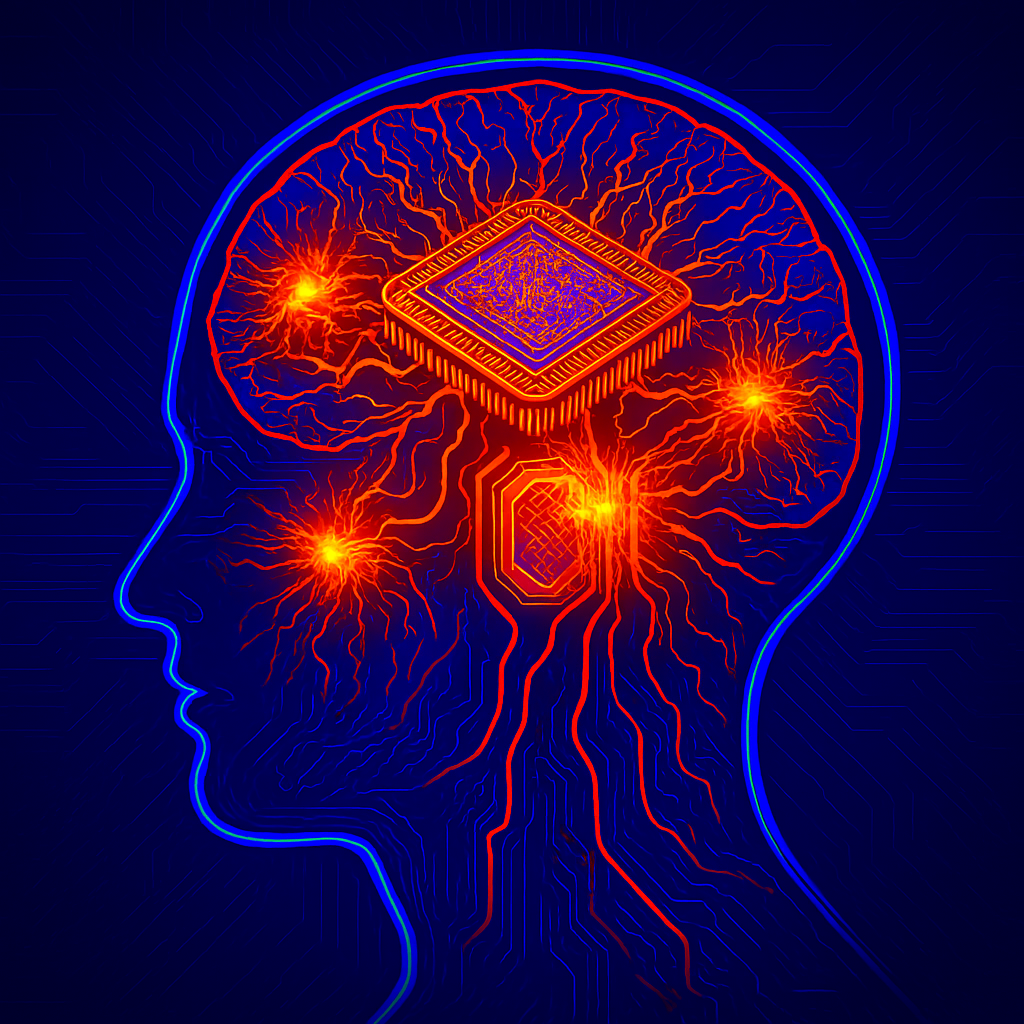
Neuromorphic chips don’t just “process” information — they feel it. Their electrical behavior mimics real neurons, including spikes, pauses, and spontaneous learning.
Introduction
For decades, traditional computing has relied on a rigid architecture: processors executing linear instructions, memory stored separately, and a constant flow of data that consumes massive amounts of energy. But that era is reaching its limits.
Modern artificial intelligence demands something faster, more efficient, and far closer to how the human brain works. That’s where the next technological revolution begins: neuromorphic chips.
Inspired directly by biology, these processors don’t just calculate — they learn, adapt, and process information the way real neural networks do. Companies like Intel, IBM, Qualcomm, and several startups are betting big on this technology, hoping to redefine how machines think, react, and evolve.
What Is a Neuromorphic Chip?
A neuromorphic chip is a processor designed to imitate the behavior of neurons and synapses in the human brain. Instead of executing sequential instructions, these chips:
- process information in parallel
- consume extremely low power
- learn from patterns
- respond to stimuli in real time
This architecture is fundamentally different from CPUs and GPUs. Neuromorphic chips use spiking neural networks (SNNs) — systems where data is transmitted as electrical pulses, just like in biological brains. These spikes allow for asynchronous communication, meaning the chip only activates when necessary, drastically reducing energy consumption.
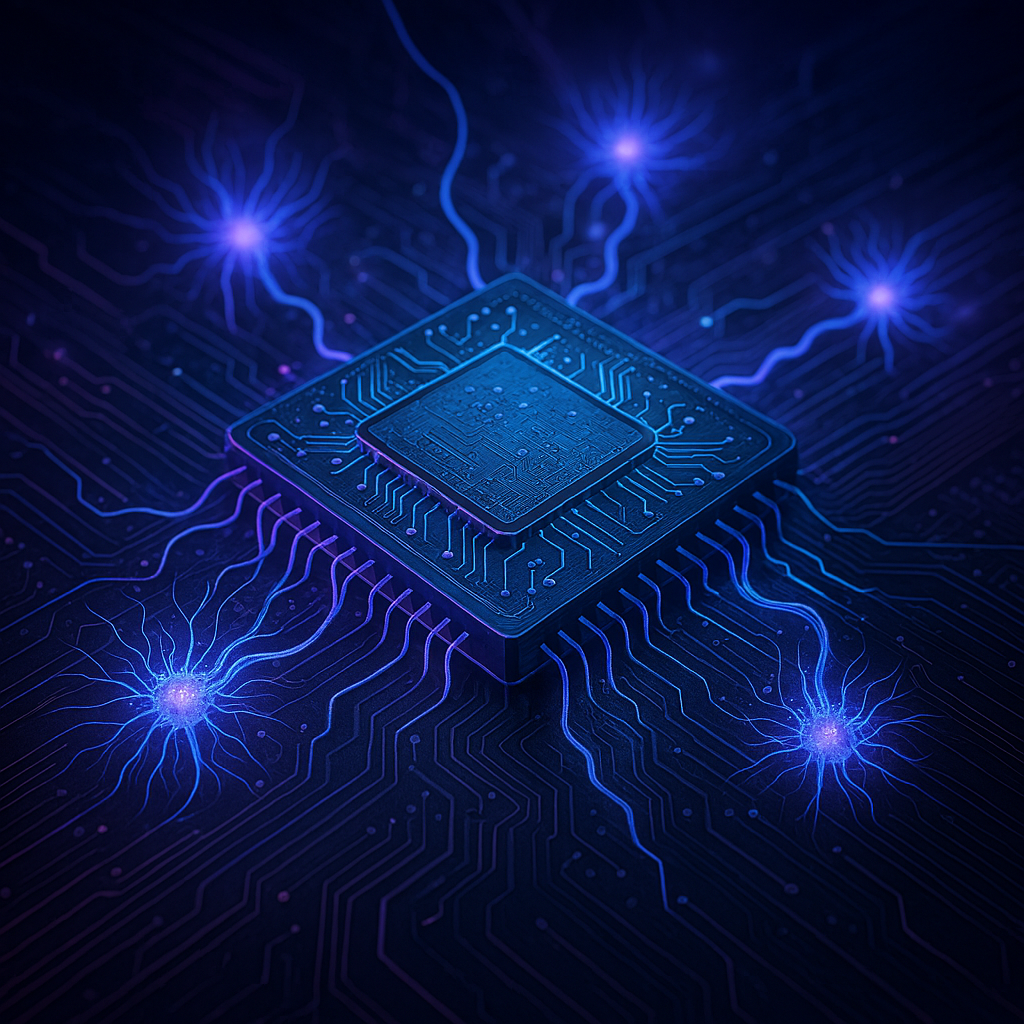
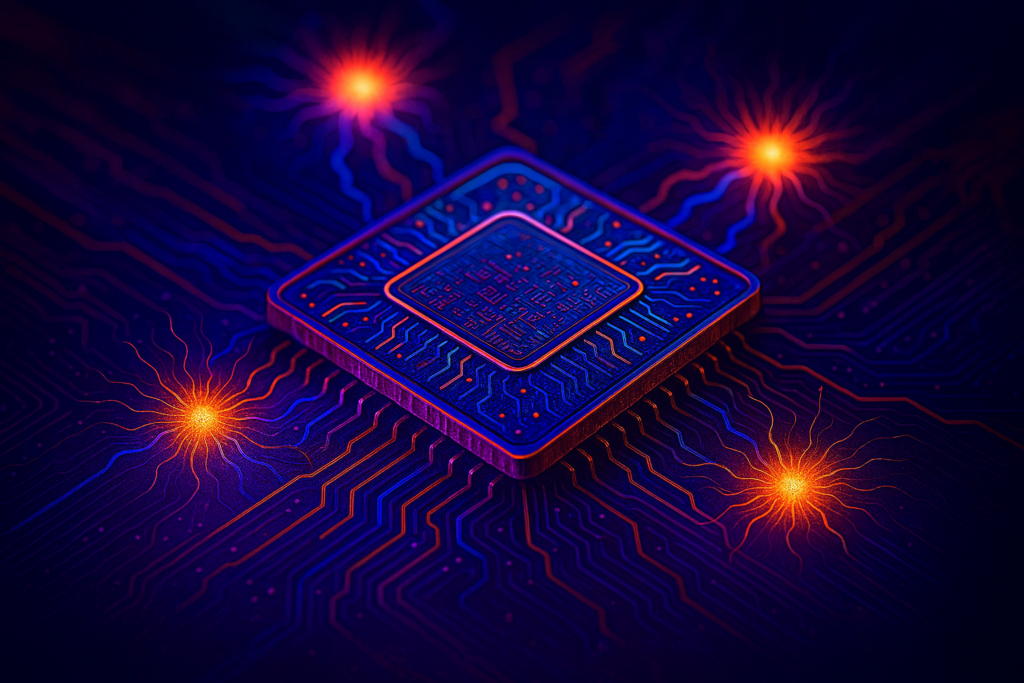
[Insert horizontal image here: a futuristic chip with glowing neural connections, cyberpunk style]
Why Are They Revolutionary?
Neuromorphic chips can perform tasks that overwhelm traditional processors, especially in environments where speed, efficiency, and adaptability matter. Their advantages include:
- Ultra‑low energy consumption
- Real‑time learning and adaptation
- Massive parallel processing
- Biologically inspired decision‑making
Unlike GPUs, which brute‑force calculations, neuromorphic chips operate more like a living brain — firing signals only when needed. This makes them ideal for edge computing, where devices must process data locally without relying on cloud infrastructure.
In tests, neuromorphic chips have shown the ability to recognize patterns, navigate environments, and make decisions with minimal training. They don’t need massive datasets or cloud access — they learn on the fly.
Real‑World Applications Already Emerging
Neuromorphic technology is no longer theoretical. Early prototypes are already being tested in:
• Autonomous robots
Robots that can react instantly to their environment without cloud processing. These machines can learn from terrain, obstacles, and human interaction in real time.
• Smart prosthetics
Artificial limbs that adapt to a user’s movement patterns. Neuromorphic chips allow for more natural motion and faster response times, improving quality of life.
• Edge AI devices
Cameras, sensors, and wearables that learn locally without draining battery life. This opens the door to smarter homes, cities, and industrial systems.
• Self‑driving vehicles
Real‑time decision‑making with far lower energy requirements than current systems. Neuromorphic chips could reduce latency and improve safety.
• Medical diagnostics
Systems that detect anomalies by learning from biological signals. For example, chips that monitor heart rhythms and predict arrhythmias before they happen.
The Companies Leading the Race
Several major players are pushing neuromorphic computing forward:
Intel – Loihi 2
Intel’s second‑generation neuromorphic chip features over one million neurons and improved learning capabilities. It’s designed for real‑time robotics, smart sensors, and adaptive control systems.
IBM – TrueNorth
One of the earliest large‑scale neuromorphic architectures, TrueNorth mimics over one million neurons and 256 million synapses. It’s been used in research for vision, speech, and autonomous navigation.
Qualcomm – Zeroth
Focused on mobile and embedded neuromorphic applications, Zeroth aims to bring brain‑like learning to smartphones and wearables.
BrainChip – Akida
An Australian startup developing neuromorphic chips for edge AI. Akida supports real‑time learning and is already being tested in smart cameras and industrial sensors.
SynSense
A Swiss‑Chinese company working on ultra‑low‑power neuromorphic processors for consumer electronics and smart homes.
How Neuromorphic Chips Learn
Unlike traditional AI models that require massive datasets and centralized training, neuromorphic chips use local learning rules like Spike‑Timing Dependent Plasticity (STDP). This means they adjust their behavior based on the timing of incoming spikes — just like biological neurons.
This allows for:
- unsupervised learning
- continuous adaptation
- contextual awareness
- energy‑efficient inference
In practice, a neuromorphic chip can learn to recognize a face, navigate a room, or detect anomalies without ever connecting to the cloud.
Why This Matters for the Future of AI
Today’s AI systems rely heavily on massive data centers powered by energy‑hungry GPUs. Neuromorphic chips could change that by enabling:
- AI that runs locally on small devices
- dramatically lower energy consumption
- faster, more natural decision‑making
- systems that learn continuously instead of being retrained
This shift could make AI more accessible, sustainable, and integrated into everyday life. Imagine smart glasses that learn your habits, or medical devices that adapt to your body in real time — all without sending data to the cloud.
The Road Ahead
Neuromorphic computing is still in its early stages, but the momentum is undeniable. As hardware improves and software frameworks evolve, these chips could become the foundation of:
- next‑generation robotics
- brain‑inspired AI
- ultra‑efficient smart devices
- new medical technologies
- autonomous systems that truly think
Challenges remain: programming neuromorphic chips requires new tools, and standardization is still evolving. But the potential is massive.
The future of computing may not look like a faster CPU or a bigger GPU — it may look like a silicon brain.