
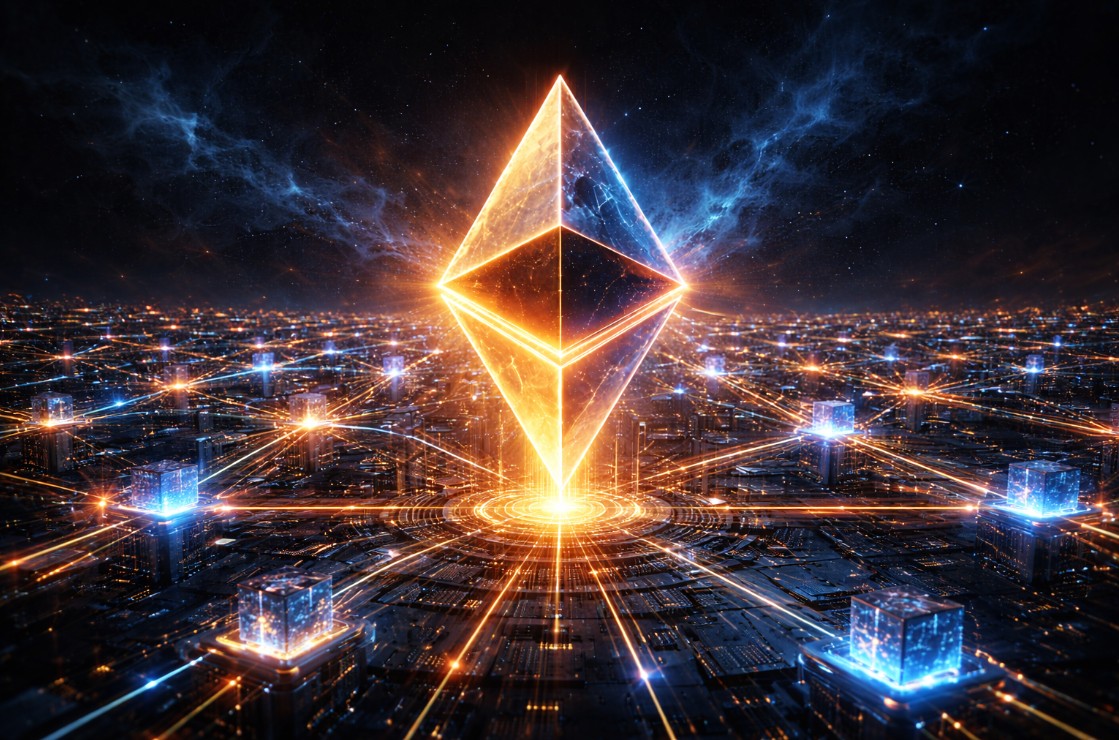
Fun Fact: Ethereum names its upgrades by combining the host city of its annual Devcon conference with a star name. Glamsterdam fuses “Amsterdam” with “Gladys” — a star in the asteroid belt. The previous fork was called Fusaka. The next one after Glamsterdam is already named Hegotá.
Ethereum Glamsterdam is the upgrade that could finally silence the loudest criticism the network has faced for years. Scheduled for the first half of 2026 — with June as the tentative target — it introduces parallel transaction processing, on-chain block building, and a projected 78.6% reduction in gas fees across both simple transfers and complex smart contract calls. The gas limit rises from 60 million to 200 million per block. Throughput targets 10,000 transactions per second, roughly ten times what Ethereum handles today.
This is not a Layer 2 story. The previous two hard forks — Pectra and Fusaka, both delivered in 2025 — focused on scaling rollups and reducing L2 costs. Glamsterdam targets the base layer itself. That distinction matters more than it sounds.
What’s Actually Changing
The upgrade is built around two headline EIPs that Vitalik Buterin outlined in late February. The first is EIP-7732, which moves block-building directly into the Ethereum protocol rather than relying on external relays and MEV-Boost infrastructure. Right now, validators outsource block construction to specialized actors through trusted third-party relays. That arrangement works, but it creates a centralization bottleneck and a point of potential censorship that lives entirely off-chain. ePBS brings that process on-chain, making builders first-class protocol participants with signed bids and protocol-enforced accountability.
The second is EIP-7928, which introduces Block-Level Access Lists — pre-declared maps of which accounts and storage slots a transaction will touch before execution begins. Today, Ethereum nodes discover this information during execution, forcing sequential processing because they can’t safely run transactions in parallel without knowing whether they’ll conflict. BALs solve that. With state access declared upfront, nodes can process non-conflicting transactions simultaneously across multiple CPU cores. That’s where the throughput jump comes from — not from bigger hardware, but from actually using the hardware that’s already there.
The Gas Fee Number Worth Understanding
The 78.6% gas reduction headline comes primarily from a gas repricing package that adjusts how operations are priced relative to their actual computational cost. A separate EIP — EIP-2780 — proposes reducing the base fee for a simple ETH transfer between existing accounts by up to 71%, making native payments meaningfully cheaper for everyday use.
The important caveat: Glamsterdam doesn’t guarantee lower fees through some automatic mechanism. It expands capacity and reprices operations more accurately. When network congestion drops relative to available capacity, fees follow. If Ethereum usage keeps growing — which is the entire point of scaling it — the fee reduction depends on capacity growing faster than demand. That’s the bet, and it’s not unreasonable, but it’s worth stating clearly.
If you want the deeper angle on why “smart money” narratives keep collapsing under stress, this piece breaks down The “Institutional” Myth: Why Crypto’s Biggest Bulls Are Finally Freaking Out and what it signals when the loudest believers start hedging their own story:
https://techfusiondaily.com/institutional-myth-crypto-bulls-freaking-out/
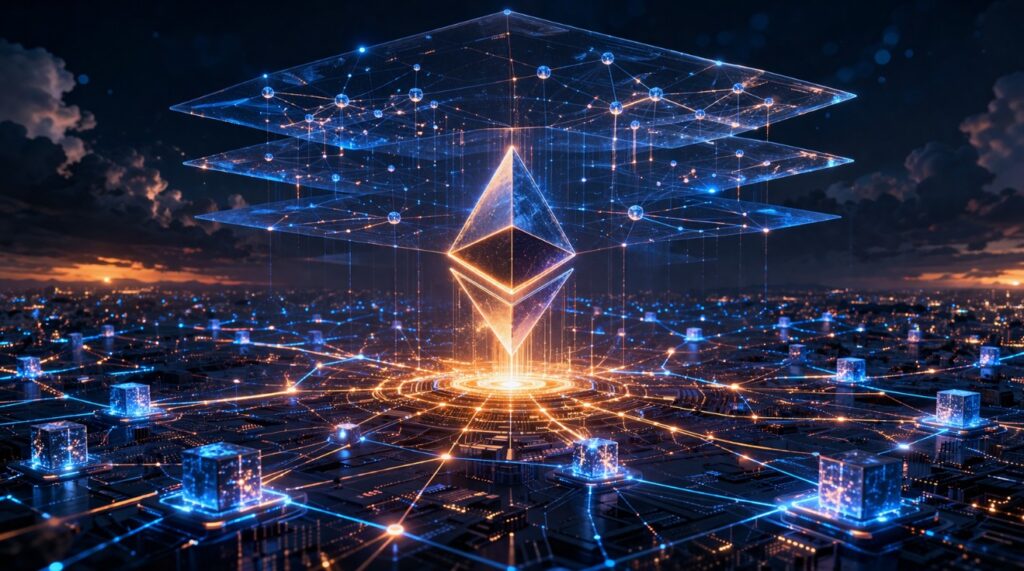
Why This Is an L1 Story, Not an L2 Story
The last two years of Ethereum development have been overwhelmingly focused on making rollups cheaper. That worked — L2 fees dropped dramatically after Dencun in 2024, and Solana lost some of its cost argument against Ethereum’s ecosystem. But base layer fees stayed high, and the narrative that Ethereum L1 itself was too expensive to use for anything except large transactions never went away.
Glamsterdam addresses that directly. Higher gas limits, parallel execution, and gas repricing all happen at L1. For DeFi protocols that can’t or won’t run on rollups for security or liquidity reasons, this matters. For institutional participants who need L1’s security guarantees for settlement, this matters. And for the argument that Ethereum is losing ground to high-throughput chains like Solana, a base layer capable of 10,000 TPS changes the conversation.
The Risks Are Real
Ethereum has a history of delaying major upgrades — The Merge itself was pushed back multiple times over several years. Glamsterdam’s scope is larger than Pectra or Fusaka, and the interaction between ePBS and BALs introduces complexity that hasn’t been tested at mainnet scale. The June 2026 target could realistically slip to Q3 or Q4. The Ethereum Foundation has flagged that over 25 additional EIPs are under consideration for inclusion, and scope creep is a documented concern from at least one major engineering team.
There’s also the MEV question. ePBS makes block production more transparent and removes trusted relays — but it doesn’t remove the underlying economic incentive for MEV extraction. It just moves the game on-chain and makes the players visible. Whether that’s better or worse for regular users depends on how the builder market evolves under the new rules, and nobody has a clean answer yet.
If Glamsterdam ships on time and performs as designed, Ethereum enters H2 2026 with a base layer that’s faster, cheaper, and structurally more decentralized than anything it’s had before. That’s a different network than the one people have been writing off for the last two years.
Sources
Ethereum.org — Official Glamsterdam upgrade documentation and EIP specifications, 2026
Phemex Blog — Ethereum Glamsterdam upgrade technical analysis, March 2026
Originally published at TechFusionDaily by Nelson Contreras
https://techfusiondaily.com