
Fun Fact: Pearl Abyss made its name building Black Desert Online — one of the most predatory monetization models in MMO history, with a cash shop that became notorious for pay-to-win mechanics. When Crimson Desert’s marketing director said “there is not a cosmetic cash shop” and “this is a premium experience, full stop,” the gaming community’s cautious optimism wasn’t cynicism. It was memory.
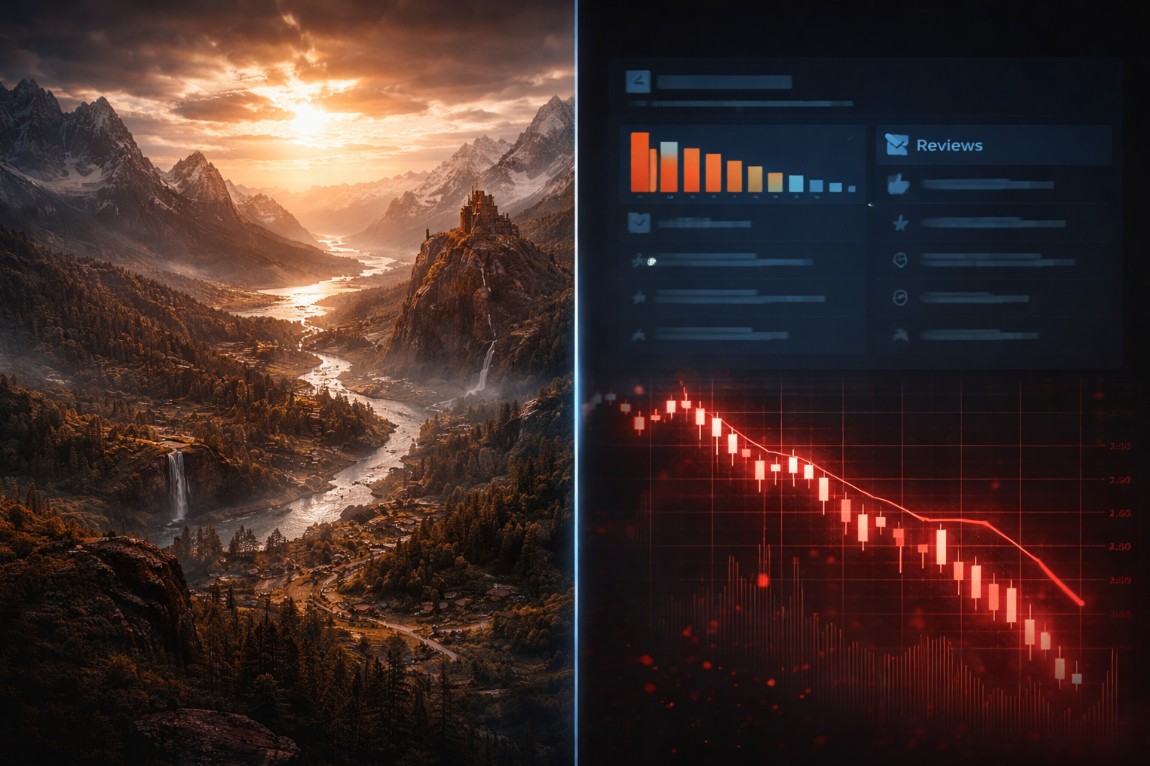
Crimson Desert launched on March 19 with 239,000 concurrent players on Steam, $20 million in pre-launch sales, and the top spot on Steam’s bestseller chart. Pearl Abyss stock dropped 28.96% the same day.
Both things are true. Neither cancels the other out. And together they tell a more interesting story than either number does on its own.
What the Numbers Actually Say
The commercial performance is real. Pearl Abyss spent seven years developing Crimson Desert, and the pre-launch momentum was genuine — 400,000 copies sold before release, 2.2 million Steam wishlists, and pre-launch revenue that outpaced Kingdom Come: Deliverance 2 by four times and Clair Obscur: Expedition 33 by nearly ten. Those aren’t inflated numbers. Players wanted this game.
The critical reception is also real. Metacritic average sitting at 78, Steam reviews at “Mixed” with over 41% negative across more than 11,000 ratings, and a consensus that landed in roughly the same place across most outlets: visually impressive, combat system with genuine strengths, open world that delivers on scale — and controls that are genuinely frustrating, an inventory system that fights the player, and a storyline that one critic described as something where “initial excitement gradually gives way to a dull sense of routine.”
The stock drop happened because investors had priced in something closer to a genre-defining release. They got a solid but uneven one. That gap is expensive when you’re a publicly traded Korean studio and your stock has been partially valued on the expectation that this game would be your flagship franchise for the next decade.
The Controls Problem Is the Real Story
The most consistent complaint across reviews, Steam feedback, and player discussion isn’t performance or graphics — both of which have been broadly praised, with the game reportedly running at 60fps on hardware as modest as an RTX 4060. The complaint is the control scheme.
Players describe it as unresponsive in ways that feel deliberate but don’t quite land. Combat has moments that work, but the input system between those moments creates friction that builds over time. The inventory UI compounds this — cluttered, unintuitive, and requiring more cognitive load than an action RPG should demand when you’re in the middle of navigating a large open world.
The executive at Pearl Abyss who told outlets the control system is “worth the learning curve” is probably right that some of this is intentional design. The problem is that intentional design and good design aren’t the same thing, and a $70 price tag means players arrive with expectations calibrated accordingly. When the controls feel like a puzzle rather than a tool, the game’s genuine strengths in world-building and combat spectacle get buried under the friction.
Crimson Desert isn’t the only game rewriting expectations in 2026. This breakdown of Hollow Knight Silksong Game Pass 2026: it finally happened, and now Team Cherry just made it harder to leave explores another launch that caught the gaming world off guard:
https://techfusiondaily.com/hollow-knight-silksong-game-pass-2026/
What Pearl Abyss Gets Right
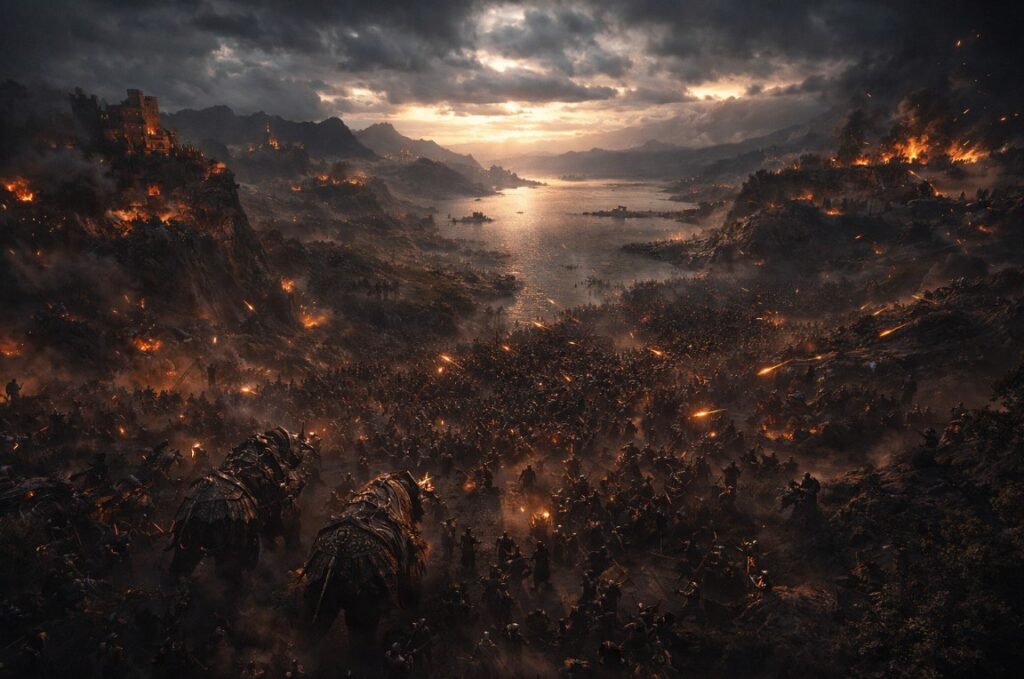
The visuals are not being argued about. The open world of Pywel is genuinely impressive — large-scale battles, dynamic environments, and a level of environmental detail that justifies the hardware requirements. The game’s performance optimization has been broadly praised as a rarity in modern AAA launches: no traversal stutters, no texture pop-ins, stable framerates across a wide range of hardware configurations.
The no-microtransactions commitment deserves acknowledgment. For a studio that built its reputation on one of gaming’s most aggressive monetization models, shipping a premium single-player experience with no cash shop attached is a meaningful decision — and one that clearly influenced the pre-launch sales momentum. Players voted with their wallets before reviews dropped, and part of what they were buying was the promise that this wasn’t a live service disguised as an RPG.
That promise was kept. The game that shipped has problems, but predatory monetization isn’t one of them.
Where This Goes From Here
Pearl Abyss has been responsive in patches — several inventory and UI issues were addressed before launch day even ended. That speed is encouraging and suggests the studio is treating this as a product to be iterated on rather than a shipped-and-forgotten release.
The question is whether the underlying design issues — particularly the control scheme and the story’s tendency toward repetition — are patchable problems or structural ones. UI can be fixed in updates. A combat input system that players describe as fundamentally unintuitive takes longer to rebuild, if it gets rebuilt at all. A storyline that loses momentum in its second act isn’t something a patch addresses.
Crimson Desert shipped as a solid game with significant rough edges and a marketing cycle that set expectations higher than the release could meet. Whether it becomes something more than that depends entirely on what Pearl Abyss does with the next few months of updates — and whether the players who bounced off the controls in the first week give it another chance when those updates arrive.
Sources
SteamDB — Crimson Desert player counts and review data, March 2026
Alinea Analytics — pre-launch sales estimates and Steam performance data, March 2026
Originally published at TechFusionDaily by Nelson Contreras
https://techfusiondaily.com