
Fun Fact: The largest IPO in history before SpaceX was Saudi Aramco in 2019, which raised $29.4 billion at a $1.7 trillion valuation. SpaceX is targeting $75 billion at $1.75 trillion — more than double Saudi Aramco’s raise in a single offering. Elon Musk spent years saying SpaceX would never go public. The capital requirements for Starship and a lunar base apparently changed his mind.
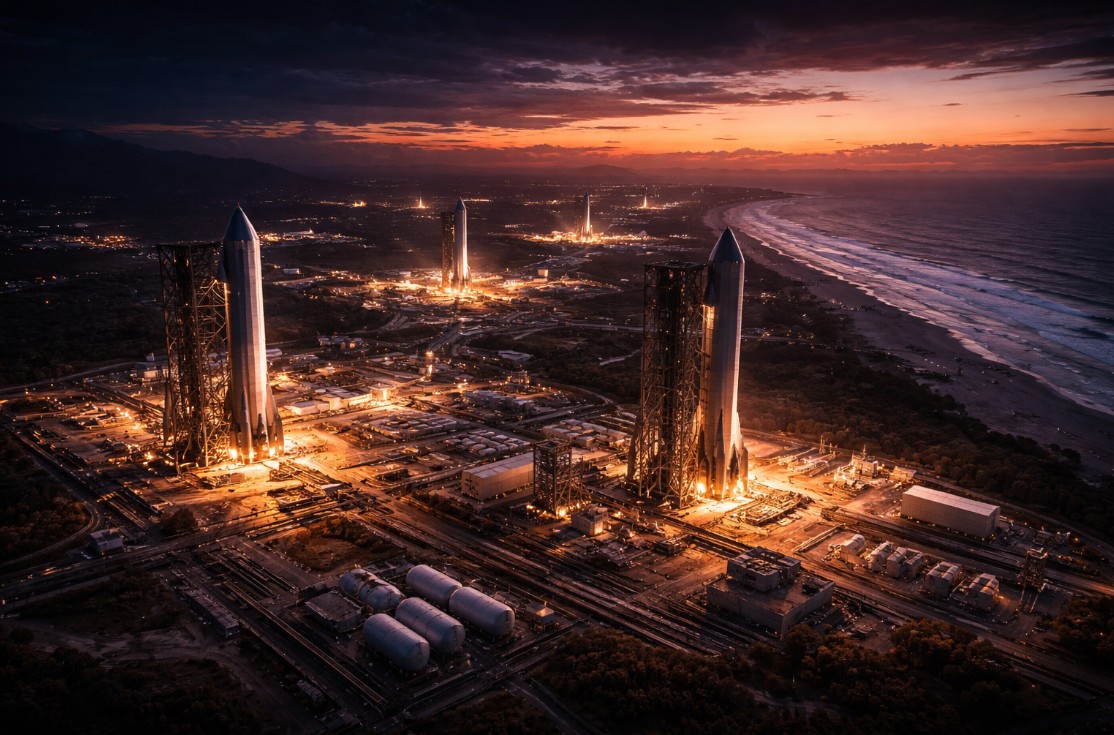
The SpaceX IPO is no longer a rumor. According to reporting from the Wall Street Journal, The Information, and CNBC, SpaceX is preparing to file its IPO paperwork confidentially with the SEC within days — targeting a June 2026 listing at a valuation of more than $1.75 trillion and a capital raise that could reach $75 billion.
At that valuation, SpaceX would become the most valuable company ever to go public — sitting above every S&P 500 company except Nvidia, Apple, Alphabet, Microsoft, and Amazon. It would also shatter Saudi Aramco’s 2019 record by a margin that would have seemed impossible five years ago.
What the SpaceX IPO Actually Is — and Isn’t
The company filing for the SpaceX IPO is not primarily a rocket company. That framing is the most important thing to understand before the S-1 lands.
SpaceX generates the bulk of its revenue through Starlink — the global satellite internet constellation that reached 9.2 million active subscribers by end of 2025, doubling its user base in 15 months. Starlink generated over $10 billion in revenue last year. Analysts project that figure could reach $24 billion in 2026. The subscription model, the global infrastructure, and the margins put Starlink in a different competitive category than aerospace. It competes with Microsoft Azure, Amazon Web Services, and Google Cloud — while also being the only company that controls its own launch vehicles and satellite constellation.
Then there’s the xAI acquisition. In February 2026, SpaceX completed an all-stock merger with Elon Musk’s artificial intelligence company xAI, which was valued at approximately $250 billion in the deal. The combined entity now includes Starlink broadband, Grok AI models, SpaceX’s launch and satellite infrastructure, and an indirect stake in X. The merger pushed the combined private valuation to $1.25 trillion and is a primary driver of the valuation jump to $1.75 trillion that the SpaceX IPO is now targeting.
Morgan Stanley and Goldman Sachs are leading underwriting roles. The filing will use a confidential SEC process that allows SpaceX to work through complex disclosures privately before the public roadshow begins. If the standard eight-week timeline holds, the public filing arrives in late May or early June — and trading begins shortly after.
Why the SpaceX IPO Is Happening Now
SpaceX spent years resisting public markets. Elon Musk was explicit about it — quarterly earnings pressure and short-term investor expectations are incompatible with the timelines required for Starship development, lunar missions, and the kind of capital-intensive infrastructure projects that define the company’s roadmap.
What changed is the scale of what comes next. The capital requirements for Starship’s “insane flight rate,” space-based AI data centers, the Golden Dome missile defense system, and lunar base infrastructure cannot be met through private placements alone. The SpaceX IPO is a capital raise first and a liquidity event second.
SpaceX has also entered the regulatory quiet period — employees have been told to refrain from commenting on or hyping the listing. That’s not a rumor signal. That’s an operational signal.
To better understand how long-term infrastructure bets are reshaping modern technology platforms, this deep dive into Why Most People Are Using ChatGPT Wrong — And the Gap Is Getting Wider explores why scale, energy, and timing are becoming decisive factors in the future of computing:
https://techfusiondaily.com/prompt-engineering-using-chatgpt-wrong/

The SpaceX IPO Numbers That Matter
The $1.75 trillion valuation headline is the number everyone will discuss. The numbers worth actually understanding are different.
SpaceX projects approximately $10 billion in EBITDA for 2026 — though that estimate carries uncertainty because of xAI’s loss contribution to the merged entity. Starlink’s revenue trajectory is the primary driver of institutional confidence. At $24 billion in projected 2026 revenue with high-margin subscription economics, Starlink alone could justify a significant portion of the valuation independent of the launch business.
The $75 billion capital raise, if achieved, would be deployed across Starship development, satellite constellation densification, maritime and aviation Starlink expansion, direct-to-mobile services, and space-based AI infrastructure. The use of proceeds tells you what SpaceX actually needs public markets for — not validation, but fuel.
At $1.75 trillion, SpaceX would trigger automatic inclusion considerations for major indices. S&P 500 inclusion requires profitability for four consecutive quarters — a condition SpaceX would need to meet, and one complicated by xAI’s current burn rate.
What the SpaceX IPO Means for the Broader Market
The SpaceX IPO arriving in mid-2026 would be the most consequential public market event in years — not just for space stocks but for the entire IPO pipeline.
CNBC reported that space sector stocks surged immediately on the filing news, with Rocket Lab and other publicly traded space companies seeing institutional money rotate into the sector ahead of the listing. A successful SpaceX debut at these valuations would validate the entire space-AI infrastructure investment thesis and likely accelerate IPO timelines for OpenAI and Anthropic, which are both watching the process closely.
The risks are real. A $1.75 trillion valuation in the middle of a global energy shock and ongoing geopolitical pressure on AI supply chains is an aggressive ask from public markets. The xAI integration adds complexity to disclosures that the SEC is already scrutinizing. And Musk’s relationship with public markets — including his management of Tesla and his acquisition of X — will be a factor in how institutional investors price the offering.
The SpaceX IPO is not just a corporate event. It’s a test of whether public markets in 2026 are prepared to price a company that is simultaneously a launch provider, a global internet operator, an AI infrastructure business, and the primary vehicle for humanity’s expansion into space — all at once, all in the same S-1.
If they are, the offering will redefine what a public company can be. If they aren’t, SpaceX will be the most anticipated IPO that ever repriced on its first day of trading.
Sources
Wall Street Journal — SpaceX confidential SEC filing report, March 2026
Fast Company — SpaceX IPO timeline and filing details, March 2026
Originally published at TechFusionDaily by Nelson Contreras
https://techfusiondaily.com