

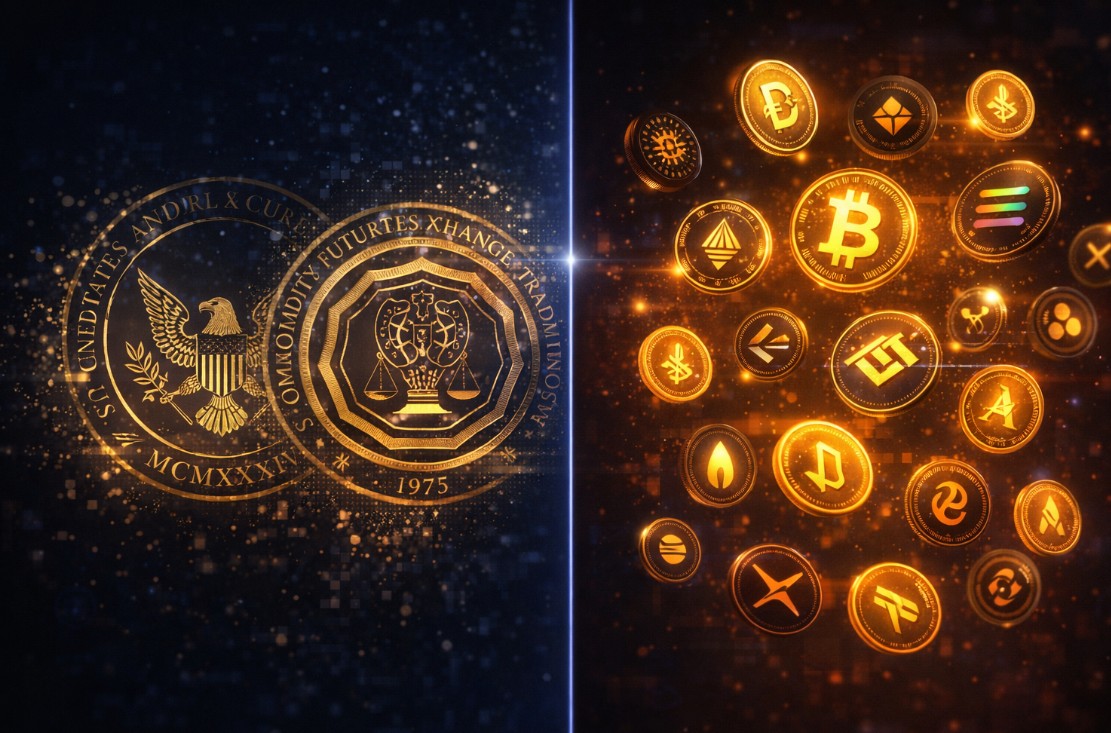
Fun Fact: Ripple spent four years and hundreds of millions of dollars in court fighting the SEC over whether XRP was a security. On March 17, 2026, the SEC put XRP on a list of assets that are definitively not securities — without a single additional lawsuit required. The legal system giveth, and the regulatory system eventually taketh back.
SEC CFTC crypto commodities classification finally arrived on March 17, 2026 — and it came in the form of a 68-page joint interpretation that named 16 digital assets as digital commodities under federal law, ending more than a decade of regulatory ambiguity that had kept institutional capital sitting on the sideline.
This isn’t guidance. It isn’t a staff opinion buried in a footnote. It’s a binding final rule signed by both agencies, carrying the full weight of federal law.
What the Rule Actually Says
The joint interpretation establishes a five-category token taxonomy: digital commodities, digital collectibles, digital tools, stablecoins, and digital securities. Only that last category falls under SEC oversight. Everything else — including the 16 named assets — sits outside securities regulation.
The 16 assets formally classified as SEC CFTC crypto commodities are Bitcoin, Ethereum, Solana, XRP, Cardano, Chainlink, Avalanche, Polkadot, Stellar, Hedera, Litecoin, Dogecoin, Shiba Inu, Tezos, Bitcoin Cash, Aptos, and Algorand.
The CFTC now has clear jurisdiction over spot markets for all 16. SEC enforcement no longer applies. SEC Chairman Paul S. Atkins put it plainly at the DC Blockchain Summit on Tuesday: “We’re not the securities and everything commission anymore.”
The rule also addresses activities that have existed in legal grey zones for years. Protocol staking, protocol mining, and airdrops are explicitly classified as falling outside securities law. Token wrapping is addressed. The taxonomy tells builders, exchanges, and institutions exactly how to treat these activities — which is more than they’ve had at any point in the last ten years. This SEC CFTC crypto commodities framework is the most comprehensive regulatory clarification the industry has ever received.
Why the Inclusion of DOGE and SHIB Is the Most Telling Detail
The list is notable for what it includes at the bottom as much as what it includes at the top.
Bitcoin and Ethereum being classified as commodities surprises nobody — that was the prevailing assumption for years. Solana, Cardano, Chainlink, and the major infrastructure tokens getting clarity is significant but expected given the direction regulatory winds have been blowing.
Dogecoin and Shiba Inu on a joint SEC CFTC crypto commodities final rule is something else entirely. Both assets launched as memes. Neither had a formal team with a roadmap in the traditional sense. SHIB in particular was created anonymously and distributed largely through viral social media activity. The fact that both are now formally classified as digital commodities — with the same legal standing as Ethereum — confirms that regulatory classification is based on how an asset functions on its network, not what it was originally created for. That distinction matters for every community-driven token that has been living under securities risk for the past several years.

If you want the deeper angle on why “smart money” narratives keep collapsing under stress, this piece breaks down The “Institutional” Myth: Why Crypto’s Biggest Bulls Are Finally Freaking Out and what it signals when the loudest believers start hedging their own story:
https://techfusiondaily.com/institutional-myth-crypto-bulls-freaking-out/
What This Unlocks Institutionally
The regulatory overhang that kept large allocators cautious has been removed for all 16 assets. Banks, asset managers, and exchanges now have a defined framework to work within. The practical implications are direct: expect expanded ETF applications under CFTC oversight, new custody services for assets that previously carried securities compliance risk, and broader capital allocation into tokens that now have a recognized legal status.
Coinbase has been pushing for exactly this SEC CFTC crypto commodities framework since at least 2022, when it filed a formal petition asking the SEC to write crypto regulations. The response at the time was to sue crypto companies instead. The shift in tone between then and Tuesday’s announcement is difficult to overstate.
The CLARITY Act — the digital asset market structure bill that would enshrine this taxonomy into statute — still needs to pass the Senate Banking Committee and then the full Senate. The March 17 interpretation is not permanent law until that legislation completes its path through Congress. But the joint release from both agencies sends a signal about the direction of travel that the legislative timeline is unlikely to reverse.
What’s Still Not Resolved
This rule draws a clean line for the 16 named assets. Everything not on the list remains in the grey zone, and that distinction will define how institutional money moves through the broader crypto market going forward. The taxonomy creates clarity at the top of the market cap rankings — and simultaneously highlights how much regulatory uncertainty still exists for the thousands of assets that didn’t make the list.
SEC Chairman Atkins indicated the agency has dozens of additional proposals ready, including a formal rule on the innovation exemption expected within the next two weeks. The March 17 SEC CFTC crypto commodities interpretation is a foundation, not a conclusion.
The question that matters now isn’t whether these 16 assets have regulatory clarity — they do. The question is whether Congress delivers the permanent legislative framework before the next administration has an opportunity to walk any of this back.
Sources
SEC official press release — joint interpretive guidance on crypto asset classification, March 17, 2026
CFTC official press release — joint harmonization initiative and digital commodity classification, March 17, 2026
Originally published at TechFusionDaily by Nelson Contreras
https://techfusiondaily.com


One thought on “The SEC and CFTC Just Drew the Line the Crypto Industry Has Been Waiting a Decade For”