
Fun Fact
A backend engineer once told me, “servers don’t die because of traffic; they die because of internal political decisions.”
He said it after a launch collapsed in 12 minutes. Watching what’s happening with Helldivers 2 today, that line came back like a déjà vu nobody asked for.
The surge is real — and the cracks are starting to show
Helldivers 2 servers buckle again amid a massive player surge, and this time the symptoms are hard to ignore. Player concurrency climbed sharply once more, pushing matchmaking from a functional system into something closer to a digital lottery.
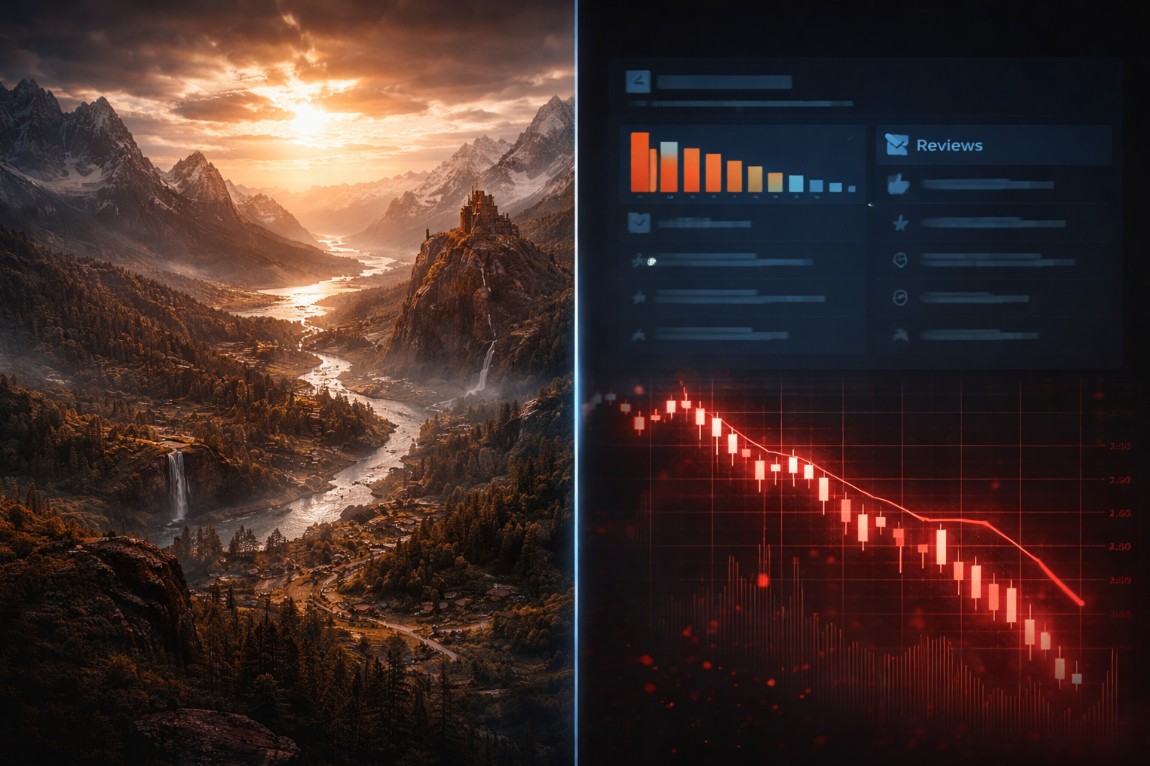
Public player metrics on platforms operated by Steam show clear spikes during peak hours. Right alongside them, community reports of login issues, stalled matchmaking, and unstable sessions started stacking up. That correlation is rarely accidental.
Reddit is flooded with screenshots of 40-minute queues.
And the most unsettling part?
No one seems surprised anymore.
What matters here isn’t just that more people are playing.
It’s the kind of failures that appear when pressure builds. These aren’t quirky edge-case bugs. They’re saturation signals — the ones that show up when everything works… right up until it doesn’t.
A spike that feels less like growth and more like a stress test
This doesn’t feel like a planned event.
There was no major patch, no seasonal rollout, no carefully staged beat to justify the load. It feels like the kind of organic surge infrastructure teams quietly fear — unpredictable, unannounced, and indifferent to capacity planning.
I remember a 2020 deployment where a studio underestimated traffic out of what leadership called “budget prudence.” It ended with an emergency rollback and a hotfix nobody wanted their name on. What’s happening now smells like that same mix of surprise, denial, and quiet panic.
From the player side, this kind of chaos can feel almost charming.
From the server side, it’s a long night that keeps getting longer.
The servers didn’t just struggle — they failed in predictable ways
Reports followed a familiar pattern: long queues, missions failing to load, rewards disappearing, squads dissolving without warning. There was no dramatic blackout. No single catastrophic crash.
Instead, something worse.
Progressive degradation.
That’s what happens when multiple backend layers saturate at once — authentication, matchmaking, persistence, telemetry — and each one starts shoving the problem downstream. It’s not drama. It’s physics applied to software. When demand exceeds design assumptions, fragility spreads fast.
The way these systems failed wasn’t surprising.
The scale was.
If you’re tracking how major engines adapt to AI‑native rendering, this breakdown of Unreal Engine 6’s Neural Assets explores how Epic Games is applying similar concepts to optimize next‑generation game pipelines:
https://techfusiondaily.com/unreal-engine-6-neural-assets-explained/
The uncomfortable question: is this sustainable?
This is where the conversation gets awkward. What happens when a game’s success starts outpacing the infrastructure designed to support it?
The answer usually isn’t technical.
It’s economic.
Scaling server capacity costs real money. A lot of it. And no studio wants to pay for headroom it might not need in two weeks. So teams aim for a compromise: enough capacity to survive, not enough to coast. When growth spikes beyond that buffer, the system creaks.
Maybe I’m being cynical, but when a title keeps pulling in massive surges and server issues show up in lockstep, it’s rarely coincidence. It’s architecture. It’s planning. It’s budgeting. It’s someone staring at red dashboards while another voice says, “This wasn’t in the forecast.”
The bigger picture: when success becomes a liability
There’s a detail most people gloss over: Helldivers 2 doesn’t feel like a bloated, marketing-driven live service. It feels like a game that got too popular, too fast.
That kind of success is messy.
Growth isn’t linear. It’s chaotic, unpredictable, and occasionally destructive. When backend systems aren’t built for that kind of explosion, every new peak becomes another potential failure point.
The team at Arrowhead Game Studios is learning that in real time.
So is the community.
And the next surge probably won’t be gentler.
Sources
Steam player concurrency data
Arrowhead Game Studios community communications
Public server status reports
Originally published at https://techfusiondaily.com