

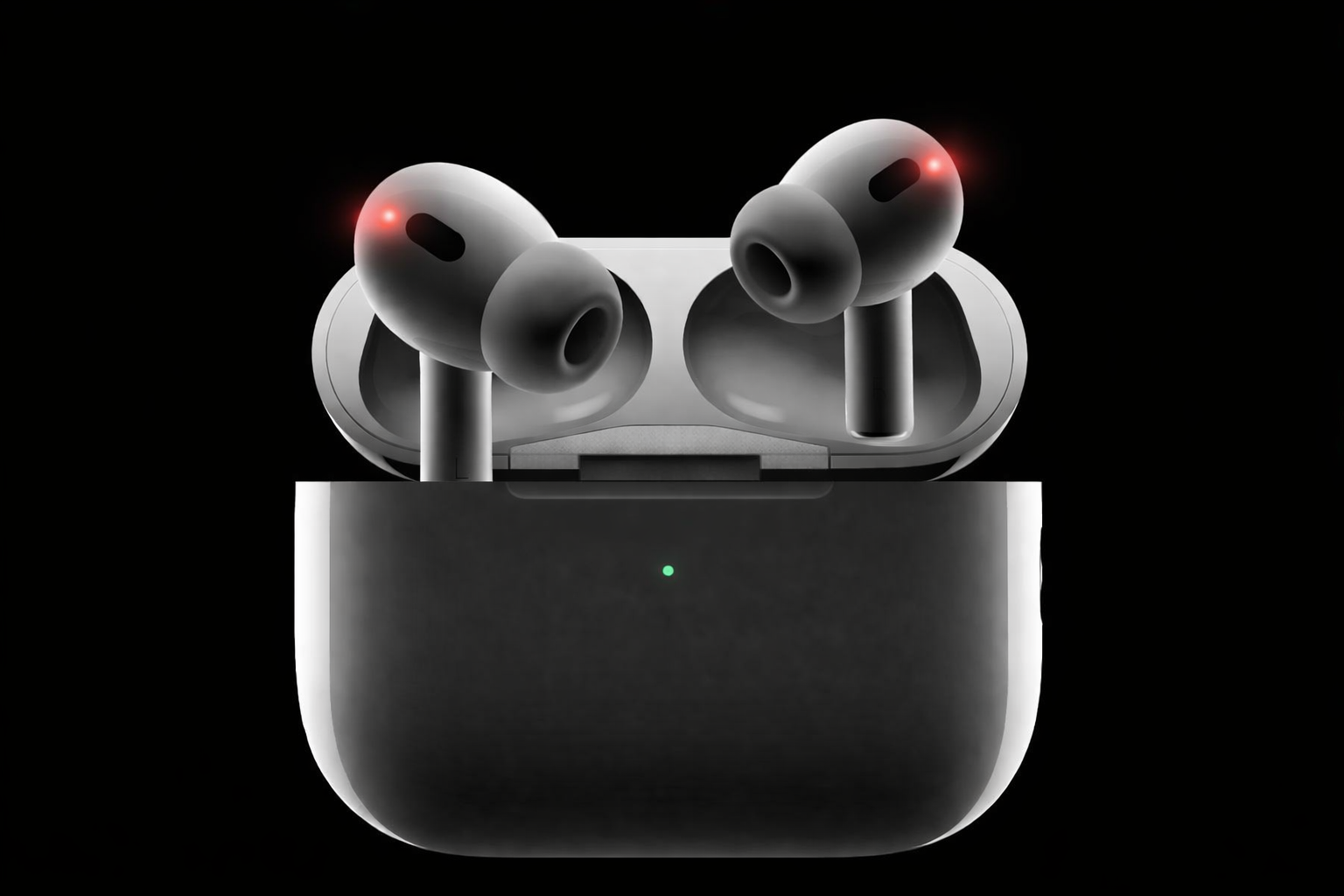
The Most Radical Upgrade Since AirPods Pro
Fun Fact
AirPods are the best-selling wearable product in Apple’s history. If they were a standalone company, their revenue would already rival that of many Fortune 500 firms.
That alone explains why Apple keeps experimenting quietly around them — even when the ideas sound strange at first.
AirPods Are No Longer Just About Sound
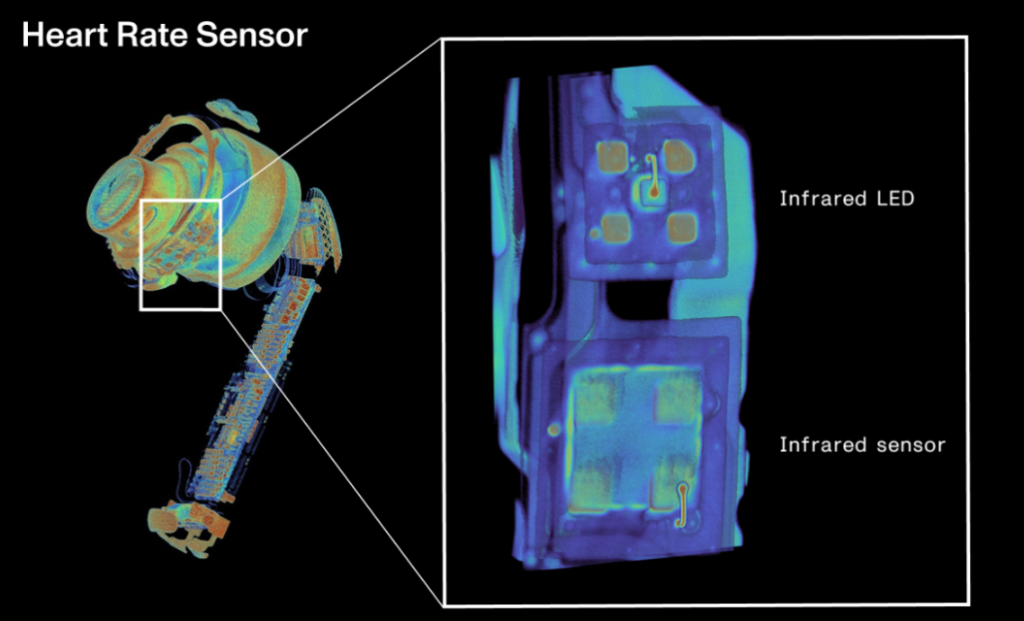
AirPods with cameras are at the center of Apple’s latest wearable experiments. According to a recent report from Bloomberg, the company is testing AirPods equipped with infrared cameras and optical sensors.
Not cameras for photos. Not video. And definitely not something you’d ever post online.
These sensors are designed to interpret the environment rather than record it. Movement, proximity, direction, and subtle gestures — all fed into Apple’s AI and accessibility systems.
That changes the role of AirPods in a meaningful way. They stop being passive audio hardware and start acting like an interaction layer, something that sits quietly between you and the world.
If Vision Pro represents Apple’s idea of where screens are going, these AirPods feel like the missing half of that equation.
What Apple Is Actually Experimenting With
According to Mark Gurman, Apple is testing AirPods that rely on Face ID–style infrared sensors. The technology itself isn’t new for Apple. The placement is.
Instead of asking users to tap, swipe, or speak out loud, Apple appears to be exploring more subtle forms of interaction — small hand movements, slight changes in head position, brief pauses.
The goal doesn’t seem to be adding more controls.
It’s about making interaction fade into the background.
That’s a very Apple instinct, and it usually appears long before the final product does.
Accessibility Is Where This Gets Interesting
The most compelling angle here isn’t convenience. It’s accessibility.
Apple has invested heavily in accessibility over the years, often turning niche features into mainstream ones. In this case, infrared sensing could allow AirPods to provide discreet spatial cues to users with low vision.
“There’s a door two steps ahead.”
“Someone is approaching from your left.”
Those examples don’t sound futuristic. They sound practical.
And that’s often how Apple introduces its most meaningful changes.
To better understand the infrastructure and strategic pressures shaping the AI arms race, this deep dive into Nvidia Freezes $100B OpenAI Deal: What It Really Means explores why capital, compute, and control are becoming inseparable in next-generation AI development:
https://techfusiondaily.com/nvidia-freezes-100b-openai-deal-2026/
Designed to Work With Vision Pro, Not Replace It
Supply-chain analyst Ming-Chi Kuo suggests these sensor-equipped AirPods are being designed to work closely with Apple Vision Pro and future spatial computing devices.
No single device can fully understand an environment on its own. Distributing sensors across multiple points — ears, eyes, wrist — creates a more reliable picture of what’s happening around you.
In that setup, AirPods don’t become the star of the system. They become infrastructure. Quiet, invisible, and easy to forget until they’re gone.
When Could This Actually Ship?
Kuo points to 2026 as a possible mass-production window, roughly aligning with the AirPods Pro refresh cycle.
These models aren’t expected to replace the current Pro lineup. Instead, Apple may introduce a higher-end tier positioned above today’s AirPods Pro, both in capability and price.
If that happens, AirPods stop looking like a single product and start behaving more like a family.
Why Apple Is Putting Sensors in Your Ears
Zooming out, this move starts to make more sense.
AI systems still struggle with context. Touch controls don’t scale well. Voice commands can feel awkward in public. And spatial computing depends on understanding the environment, not just rendering it.
Infrared sensors in AirPods touch all of those problems at once. They give AI environmental awareness, enable gesture-based interaction, and strengthen Apple’s spatial computing ecosystem — while reinforcing accessibility as a core design priority.
It also helps that wearables remain one of Apple’s fastest-growing categories.
The Challenges Apple Can’t Ignore
None of this comes without friction.
Even if no images are recorded, the idea of “cameras in your ears” will make some users uneasy. Apple will need to communicate clearly what these sensors do — and what they don’t do.
Battery life is another concern. Infrared sensing consumes power, and AirPods users notice every lost minute.
Then there’s cost. A sensor-heavy model could easily push beyond $399, changing expectations around what AirPods are supposed to be.
Finally, Apple will need to explain why AirPods suddenly need this technology, without it sounding like a solution in search of a problem.
What This Really Signals
If these AirPods reach the market, they won’t just represent another hardware update.
They point to a future where devices understand their surroundings, where AI reacts to context instead of commands, and where wearables become subtle extensions of perception.
Apple tends to introduce these shifts quietly. When they arrive, they rarely feel radical.
They feel normal.
And then, almost immediately, indispensable.
Sources
- Bloomberg — Mark Gurman
- 9to5Mac — Ming-Chi Kuo
- Financial Times
Originally published at https://techfusiondaily.com