

Fun Fact
Epic Games introduced Blueprint visual scripting in 2014 to help non-programmers build gameplay logic. A decade later, the company is applying a similar philosophy to asset creation — this time powered by AI.
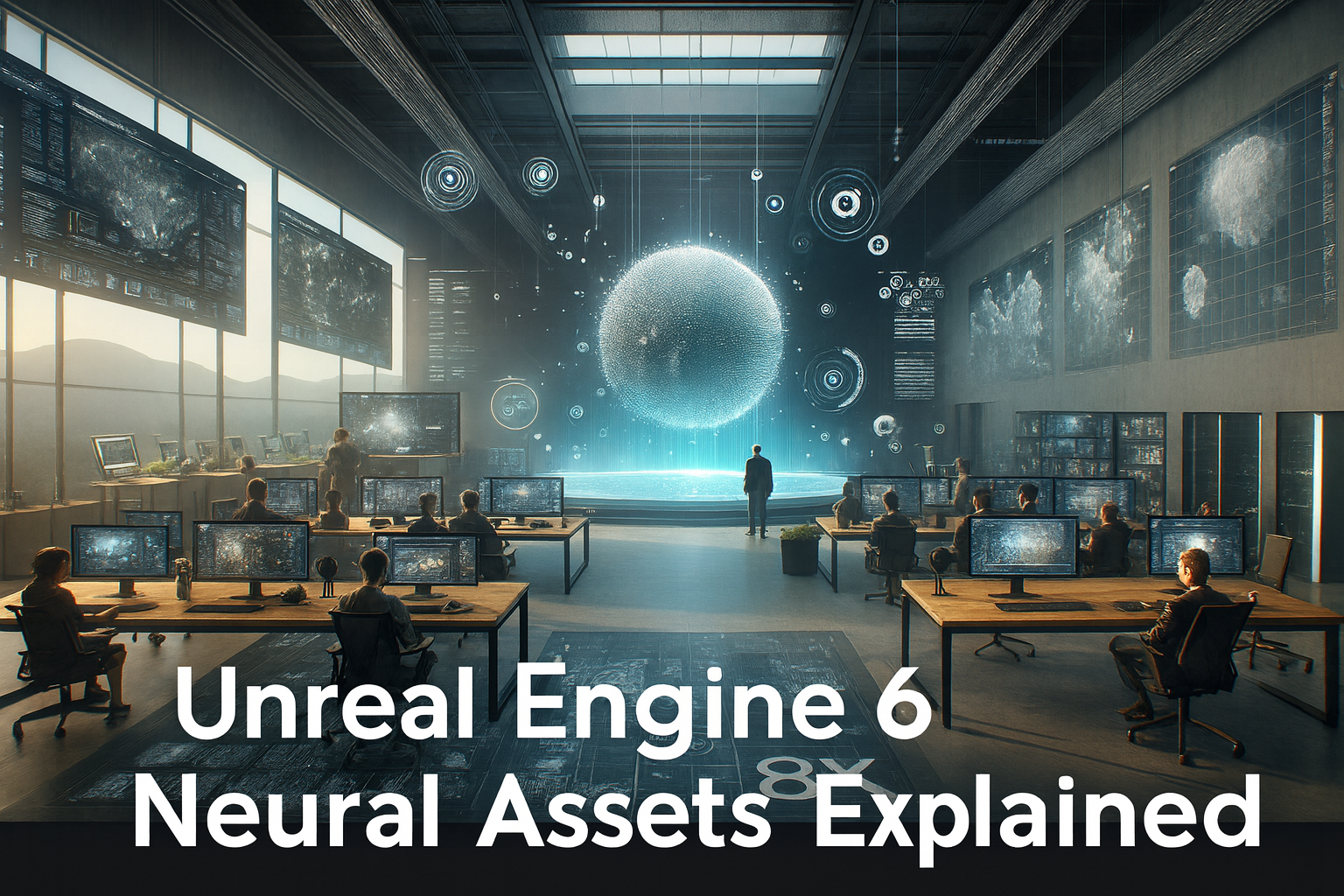
Epic Games previewed one of the most discussed features expected in Unreal Engine 6: Neural Assets, a new class of game resources partially driven by artificial intelligence models trained to adapt to their environment in real time.
While Epic has not disclosed full technical details, the concept points to a significant shift in how worlds, characters, and objects are produced inside the engine. Neural Assets are designed to reduce manual repetition without replacing artistic control — accelerating production rather than automating creativity.
Instead of manually creating dozens of variations of the same object — rocks, vegetation, textures, background elements — Neural Assets can dynamically adjust based on lighting, weather, distance, or artistic style. The approach blends procedural generation with AI models trained specifically for interactive content.
A New Layer in the Asset Pipeline
Epic described Neural Assets as adaptive components capable of modifying their appearance or behavior without manual intervention. These are not AI-generated assets created from scratch. They are hybrid resources: artist-authored assets enhanced by models trained to understand context.
In practical terms, this means:
- less time spent creating asset variations
- fewer manual adjustments across biomes or levels
- reduced optimization overhead
- greater visual consistency in large-scale worlds
For studios building open-world games or live-service titles, this could eliminate weeks of repetitive work. For smaller teams, it may be the difference between a feasible project and an impossible one.
Why This Matters for Developers
Game development has become slower, more expensive, and more complex. Studios are expected to ship larger worlds, higher fidelity, and constant updates — often with tighter budgets and timelines.
Unreal Engine 5 introduced Nanite and Lumen to reduce technical bottlenecks. Unreal Engine 6 appears to extend that philosophy into art production itself.
Neural Assets address three critical pressure points:
1. Scalability
Modern open worlds require thousands of unique objects. Manually authoring them is unsustainable. Neural Assets allow a single resource to adapt across multiple contexts.
2. Visual Consistency
AI-driven adjustments help maintain coherent materials, colors, and details across large environments — a task that typically demands constant human oversight.
3. Faster Iteration
Changing an art direction mid-development is notoriously painful. Neural Assets could allow the engine to recalculate variations automatically, reducing rework.
This is not about replacing creativity. It’s about removing friction.
The Industry Context: AI as a Production Tool, Not a Gimmick
AI integration in game engines isn’t new, but until now it has mostly lived at the surface level — animation assistance, NPC behaviors, or prototyping tools.
Unreal Engine 6 moves AI deeper into the production pipeline itself.
Unity is experimenting with generative workflows. Adobe and Autodesk are doing the same in creative software. Epic, however, has a structural advantage: it controls the engine, the marketplace, and the surrounding ecosystem. That allows AI features to be integrated more cohesively.
The real question isn’t whether the industry will adopt these systems — it’s how quickly.+
What Epic Didn’t Say (But Developers Want to Know)
The preview left several important questions unanswered:
- What models power Neural Assets?
- Are they trained locally or in the cloud?
- How is intellectual property handled for AI-modified assets?
- How is quality control maintained at scale?
- What is the performance impact inside the engine?
These details matter. Professional adoption depends as much on legal clarity and technical transparency as on raw capability.
For now, Neural Assets represent a direction — not a finished product.
A Tool for Artists, Not a Replacement
Epic was careful to emphasize that Neural Assets are not designed to replace artists. AI does not build worlds on its own. Instead, it:
- generates controlled variations
- adjusts contextual details
- optimizes resources
- maintains coherence
- reduces repetitive labor
Artists still define style, intent, and visual direction. AI simply accelerates the process — much like intelligent tools already used in film and VFX pipelines.
The Future of Collaborative Creation
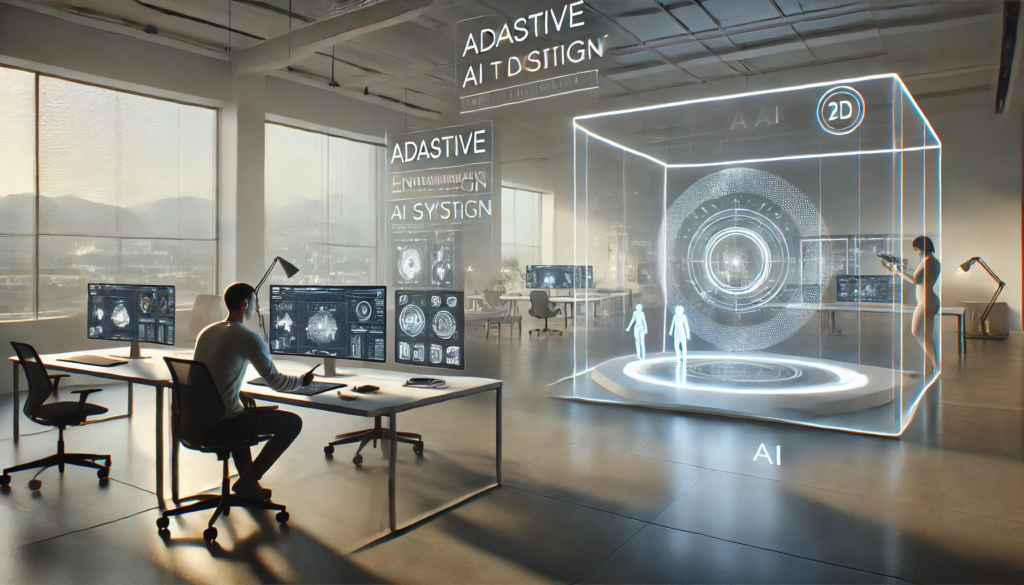
One of the more profound implications of Neural Assets is the way they reshape the relationship between humans and tools. In traditional pipelines, artists sculpt every detail and engineers ensure performance. Neural Assets introduce a third partner in the creative loop: adaptive algorithms that can co-author content based on predefined intent and evolving constraints.
This collaboration isn’t about surrendering control — it’s about negotiating with the system. Artists can input a design language or visual logic, and the AI responds with hundreds of variations that honor the original style. It’s not unlike working with a junior artist who understands the project’s vision and proposes options, but without fatigue or time limitations.
This could also influence how remote teams work. With AI-enhanced assets that self-optimize, collaboration across time zones becomes more fluid. A texture defined in Los Angeles may auto-adapt to lighting rules set in Seoul, without requiring another manual pass.
As AI becomes more embedded in tools, the definition of authorship may expand. In the best scenarios, Neural Assets won’t just accelerate development — they’ll elevate the creative conversation between humans and machines.
The Bigger Picture: Faster Production, Smaller Teams, Bigger Worlds
If Neural Assets perform as promised, they could significantly impact:
- independent studios
- AA teams with limited budgets
- open-world developers
- projects that require rapid iteration
The industry is at a breaking point: costs are rising, timelines are stretching, and expectations keep increasing. Tools like this aren’t optional — they’re becoming essential.
Unreal Engine 6 doesn’t just aim to be more powerful. It aims to be more efficient.
Will Neural Assets Redefine How Games Are Built?
It’s too early to say whether Neural Assets will be revolutionary or simply another tool in Unreal Engine’s expanding arsenal. But the direction is clear: AI is moving from a supporting role into the core of content creation.
If Epic can integrate these systems without sacrificing artistic control, it could reshape how worlds, levels, and large-scale content are produced.
The question now is simple:
Will Unreal Engine 6 be the engine that finally turns AI into a standard production layer in game development?
Sources
Epic Games Developer Briefings (2026)
Industry Analysis Reports (2026)
Originally published at https://techfusiondaily.com


2 thoughts on “Unreal Engine 6 Introduces Neural Assets — A New Phase in Game Development Efficiency”