
Fun Fact
LG’s first “wallpaper-style” TV launched in 2017. It was ahead of its time. Nine years later, the idea returns—leaner, brighter, and far closer to the vision the company originally had.
LG Previews Its Thinnest OLED Yet — And It Signals the Rise of “Invisible Displays”
LG Wallpaper TV 2026 made waves at CES with a radical new OLED design that aims to vanish into your living room — not dominate it.
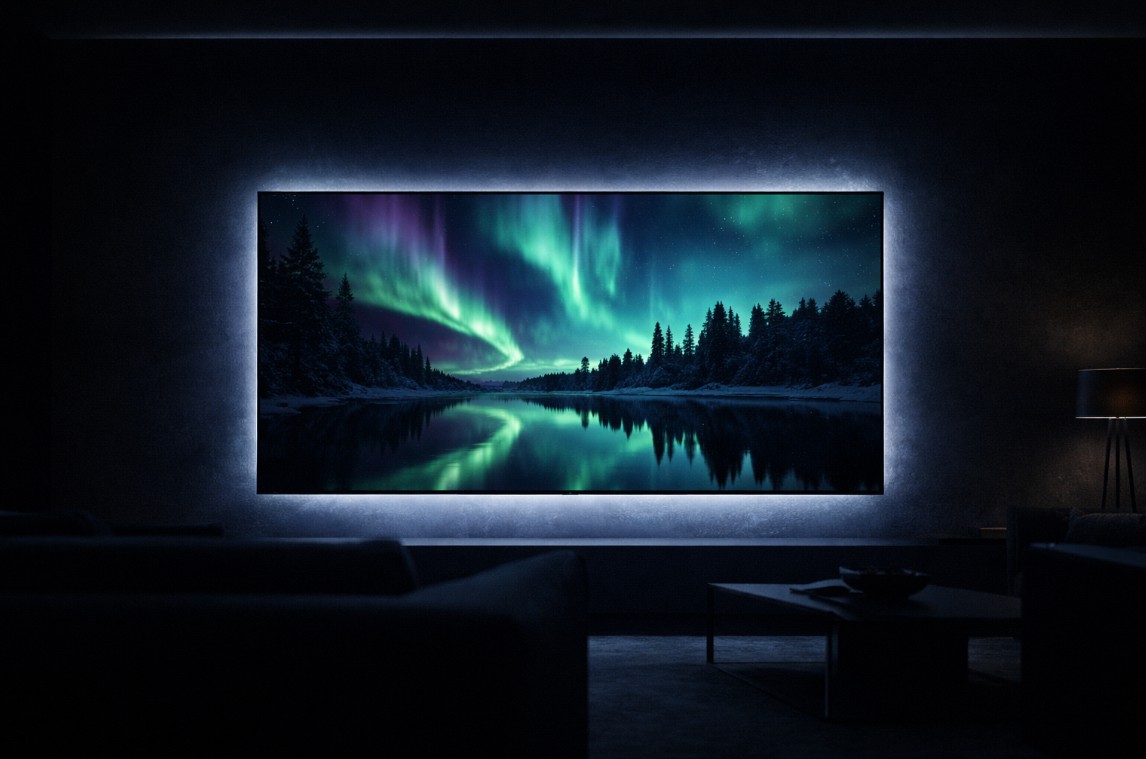
LG used CES 2026 to showcase a next-gen prototype that could redefine premium home entertainment: the return of its Wallpaper TV, now known as the LG OLED W6. This ultra-thin OLED panel blends seamlessly into the wall—so much so that it’s barely visible when powered off.
Though the W6 isn’t available for purchase yet, and LG didn’t commit to a release window, its debut ignited a wave of interest not just in new hardware, but in a new philosophy of screen design.
A TV That Wants To Disappear, Not Dominate
The LG OLED W6 is built around a redesigned ultra-thin OLED panel, engineered for reduced thickness without compromising structural rigidity. LG kept specs close to the chest—no full brightness numbers, contrast ratios, or chipset details—yet emphasized improvements in:
- peak brightness
- energy efficiency
- panel uniformity
- flush wall-mount integration
The panel behaves less like consumer tech and more like architectural finish. It’s a TV that doesn’t aim to dominate a room with design—it wants to vanish into it.
And now, with technology finally catching up, LG’s original vision from 2017 can be realized. The W6 feels like the version they always intended to build: thinner, smarter, more robust, and purposefully invisible.
Powered by α11 AI Gen3: Zero-Lag 4K for Gamers
One of the most significant—but easily missed—additions in the W6 prototype is the inclusion of LG’s new α11 AI Gen3 processor. This chipset plays a pivotal role in reducing latency during wireless 4K video transmission, which has long been a concern, especially for competitive gamers and real-time streamers.
Previous iterations of wireless TVs often suffered from minor delays between input and output. The α11 chip solves that by delivering a near-zero latency experience, making the W6 viable for gaming setups without compromising performance. It’s not just a display innovation—it’s a leap in low-lag entertainment that brings wireless viewing closer to parity with wired connections.
A Prototype That Signals a New Premium Category
LG didn’t announce a price or release date, and there’s no listing on Amazon or other retailers. That alone confirms the device is still in a pre-market phase. But the timing makes sense. LG often uses CES to preview hardware that ships later in the year, especially in the premium OLED segment.
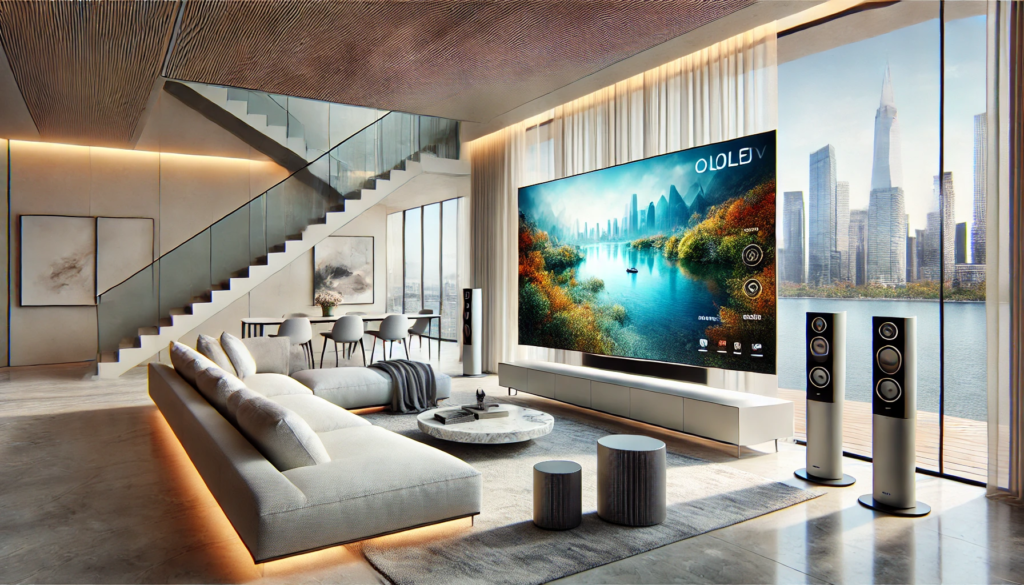
What stands out is not just the design, but the direction it represents. If this model reaches the market, it could help define a new category of ultra-thin displays that prioritize spatial integration over traditional industrial design. Instead of competing for attention with bezels, stands, and thickness, the focus shifts to a screen that becomes part of the environment.
This aligns with a broader movement across CES 2026: transparent displays, flexible panels, and screens that attach directly to surfaces. The industry seems to be moving toward a future where the hardware fades away and only the image remains.
The Market Context: A Race Toward “Invisible Hardware”
The push toward next-gen TV design with ultra-thin and low-visibility displays isn’t happening in isolation. Several manufacturers showcased concepts that follow the same philosophy:
- transparent OLEDs designed for living rooms
- rollable displays that retract when not in use
- modular panels that blend into walls
- ultra-thin microLED prototypes
LG’s Wallpaper W6 fits neatly into this trend. It’s not trying to be the brightest or the largest. It’s trying to be the least noticeable. And that shift is meaningful. As homes adopt more screens—TVs, tablets, smart displays, AR devices—the idea of reducing visual clutter becomes a competitive advantage.
For LG, this prototype is also a strategic move. The company has long positioned itself as the leader in OLED display innovation. By pushing the category toward “invisible displays,” LG reinforces its role as the brand that defines what premium screens look like, not just how they perform.
If you’re following how cloud infrastructure is pushing beyond Earth’s physical limits, this analysis of SpaceX Wants to Launch 1 Million Solar-Powered Data Centers Into Orbit examines why space-based compute is no longer just science fiction:
https://techfusiondaily.com/spacex-orbital-data-centers/
What LG Didn’t Say (But Matters)
The company avoided discussing several key details:
- durability of such a thin panel
- long-term burn-in mitigation
- audio integration (likely external or soundbar-dependent)
- pricing strategy
- installation requirements
These omissions are expected at the prototype stage, but they also highlight the challenges ahead. A TV this thin will require careful mounting, likely professional installation, and a clear strategy for cable management. LG’s demo unit used a nearly invisible connector ribbon, but it’s unclear if that will make it to the final product.
These unanswered questions hint at both the ambition and technical challenges ahead.
Industry Reaction: Why It Matters
Designers and tech reviewers at CES 2026 responded with cautious excitement. While many praised the aesthetic vision, others pointed out that invisible design still needs to deliver tangible improvements in usability, reliability, and performance.
For consumers, the W6 represents the promise of cleaner, more intentional living spaces. For the industry, it’s a potential trigger for rethinking how we interact with large-format screens—not just when they’re on, but when they’re not.
Conclusion
The Wallpaper TV W6 isn’t just another OLED refresh. It represents a shift in how TV manufacturers think about the role of the display in the home. For years, the industry has focused on higher resolution, better HDR, faster processors, and larger sizes. Those improvements still matter, but they’re incremental.
The next frontier is environmental integration—screens that don’t look like screens until they’re in use. If LG succeeds, it could push competitors to rethink their premium lineups. Samsung, Sony, and TCL have all explored thin or transparent concepts, but none have committed to a commercial product that blends into the wall as aggressively as LG’s prototype.
It’s too early to know whether the Wallpaper W6 will ship this year, or whether it will arrive as a limited-release premium model. But the prototype shown at CES suggests LG is serious about pushing the category forward.
If the final version maintains the thinness, improves brightness, and solves installation challenges, LG could redefine what a high-end TV looks like—and more importantly, what it doesn’t look like.
If LG is right, the future of premium displays won’t be about what you see when the screen is off — it will be about what you don’t.
Sources
LG CES 2026 Showcase
Industry Analyst Briefings (2026)
LG Official Site
Originally published at https://techfusiondaily.com