
Fun Fact
Apple’s A20 Pro reportedly uses a packaging technique originally developed for high‑performance AI servers, not smartphones.
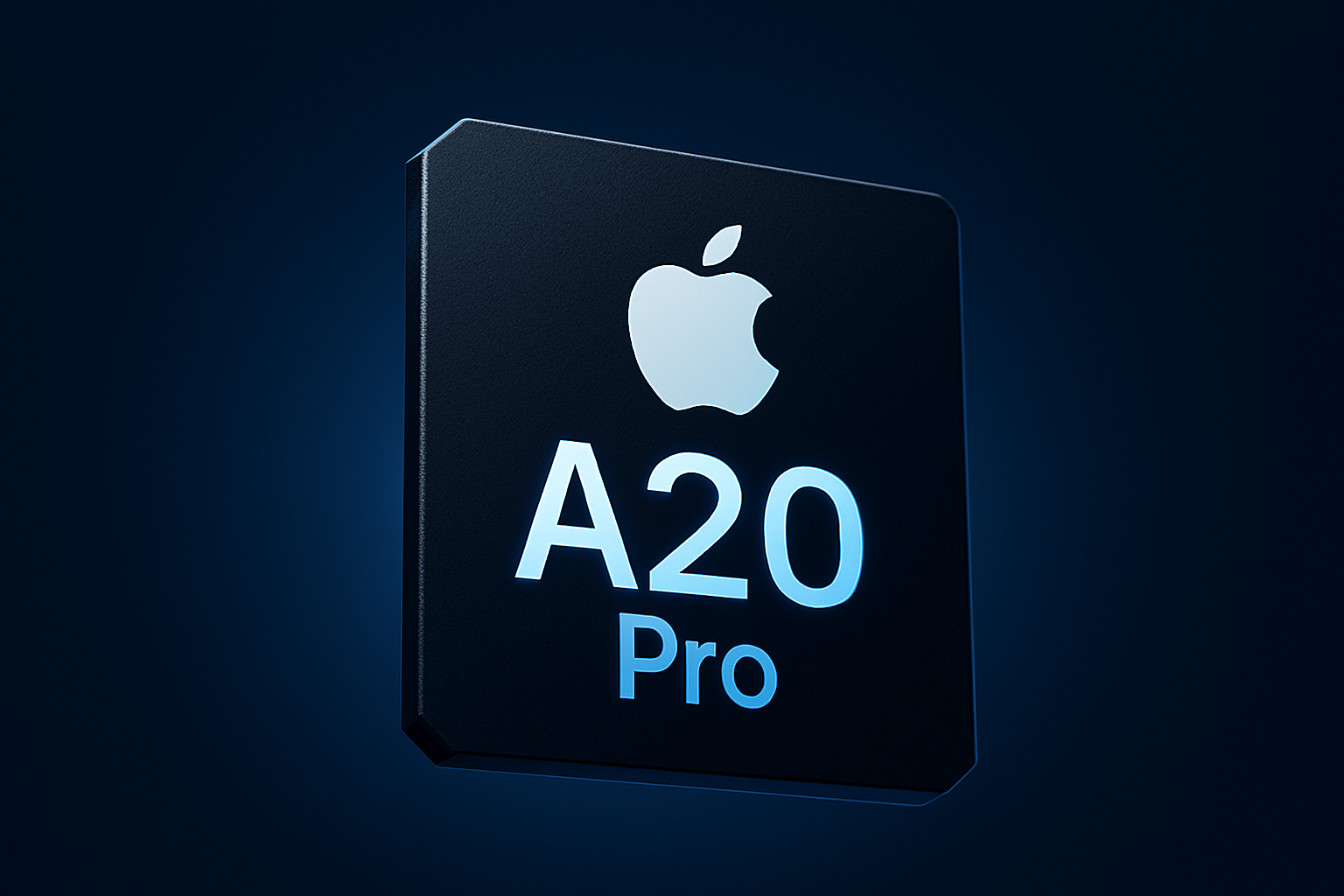
Apple is preparing one of the most significant architectural shifts in the history of the iPhone. The upcoming A20 Pro, expected to debut later this year, is not just another annual upgrade — it represents a fundamental redesign of how Apple builds its chips, how the iPhone manages power, and how on‑device AI will operate for the next decade.
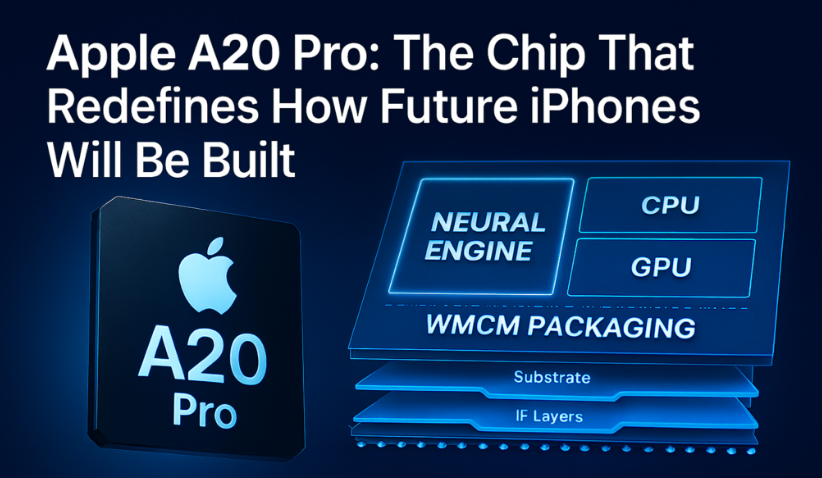
While Apple has always pushed silicon innovation, the A20 Pro marks a turning point. It introduces a new packaging method known as Wafer‑Level Multi‑Chip Module (WMCM), a technology typically reserved for high‑end AI accelerators and data‑center hardware. By bringing this approach to mobile, Apple is signaling a future where the iPhone becomes less of a phone and more of a compact AI workstation.
A New Architecture for a New Era of AI
For years, Apple’s A‑series chips have dominated mobile performance benchmarks. But the A20 Pro is different — not because it’s faster (it will be), but because it’s built for a world where AI workloads are no longer optional.
WMCM packaging allows Apple to stack and interconnect components with unprecedented density. Instead of treating the CPU, GPU, and Neural Engine as separate blocks, the A20 Pro integrates them into a tightly coupled system that reduces latency and increases bandwidth between modules.
This matters because modern AI tasks — from real‑time language processing to on‑device generative models — require rapid communication between compute units. The A20 Pro is designed to eliminate bottlenecks that traditional smartphone chips still struggle with.
In practical terms, this means:
- Faster on‑device AI responses
- Lower energy consumption during heavy workloads
- More complex models running locally without cloud dependency
- Better thermal stability under sustained performance
Apple is essentially future‑proofing the iPhone for the next wave of AI‑driven apps.
The iPhone Fold and iPhone 18 Pro Will Be the First Beneficiaries
Multiple reports suggest that the A20 Pro will debut in two major devices:
- iPhone Fold — Apple’s long‑awaited entry into the foldable market
- iPhone 18 Pro — the next flagship in the traditional lineup
Both devices will rely heavily on AI‑enhanced features:
- Adaptive multitasking
- Real‑time image and video enhancement
- Local generative AI for text, voice, and media
- Advanced battery optimization
- Personalized on‑device intelligence
The A20 Pro’s architecture is built to support these experiences without sacrificing battery life — a critical challenge for foldables and high‑performance phones.
.
Energy Efficiency: The Silent Revolution
While performance gains always make headlines, the real breakthrough may be in energy efficiency.
WMCM packaging reduces the distance that electrical signals must travel between components. Shorter distances mean:
- Less heat
- Lower power consumption
- More consistent performance under load
Apple is reportedly targeting double‑digit efficiency improvements, which could translate into:
- Longer battery life during AI tasks
- Cooler operation during gaming
- More stable performance for video editing and creative workflows
This aligns with Apple’s long‑term strategy: build devices that rely less on cloud processing and more on local intelligence.
A Neural Engine Built for On‑Device Generative AI
The A20 Pro is expected to feature Apple’s most advanced Neural Engine yet, with:
- Higher TOPS (trillions of operations per second)
- Expanded matrix multiplication units
- Improved memory bandwidth
- Lower latency for real‑time inference
This is crucial because Apple is preparing to introduce Apple Intelligence 2.0, a major upgrade to its AI ecosystem.
With the A20 Pro, iPhones will be able to:
- Run larger language models locally
- Generate images without cloud servers
- Process voice commands instantly
- Personalize AI behavior based on user habits
- Maintain privacy by keeping data on‑device
Apple’s privacy‑first approach becomes far more powerful when the hardware can support it.
A Strategic Move in the Silicon Arms Race
Apple’s competitors — Qualcomm, Samsung, and MediaTek — are all racing to optimize their chips for AI. But Apple’s vertical integration gives it a unique advantage.
By controlling:
- Chip design
- Operating system
- Hardware
- Software ecosystem
Apple can tailor the A20 Pro to real‑world use cases instead of chasing benchmark numbers.
This is the same strategy that allowed Apple Silicon to dominate the laptop market. Now, Apple is applying that formula to mobile AI.
The Bigger Picture: iPhones as AI‑Native Devices
The A20 Pro is not just a chip — it’s a statement.
Apple is preparing for a future where:
- AI is embedded in every app
- Devices operate independently of the cloud
- Privacy becomes a competitive advantage
- Smartphones evolve into personal AI companions
The A20 Pro is the foundation for that future.
Conclusion
As Apple shifts toward AI‑native hardware, the A20 Pro raises an important question:
Will the next generation of smartphones be defined more by their intelligence than by their design or features?
Sources
- Apple supply chain reports
- Semiconductor industry analysis
- WMCM packaging research papers