
Introduction
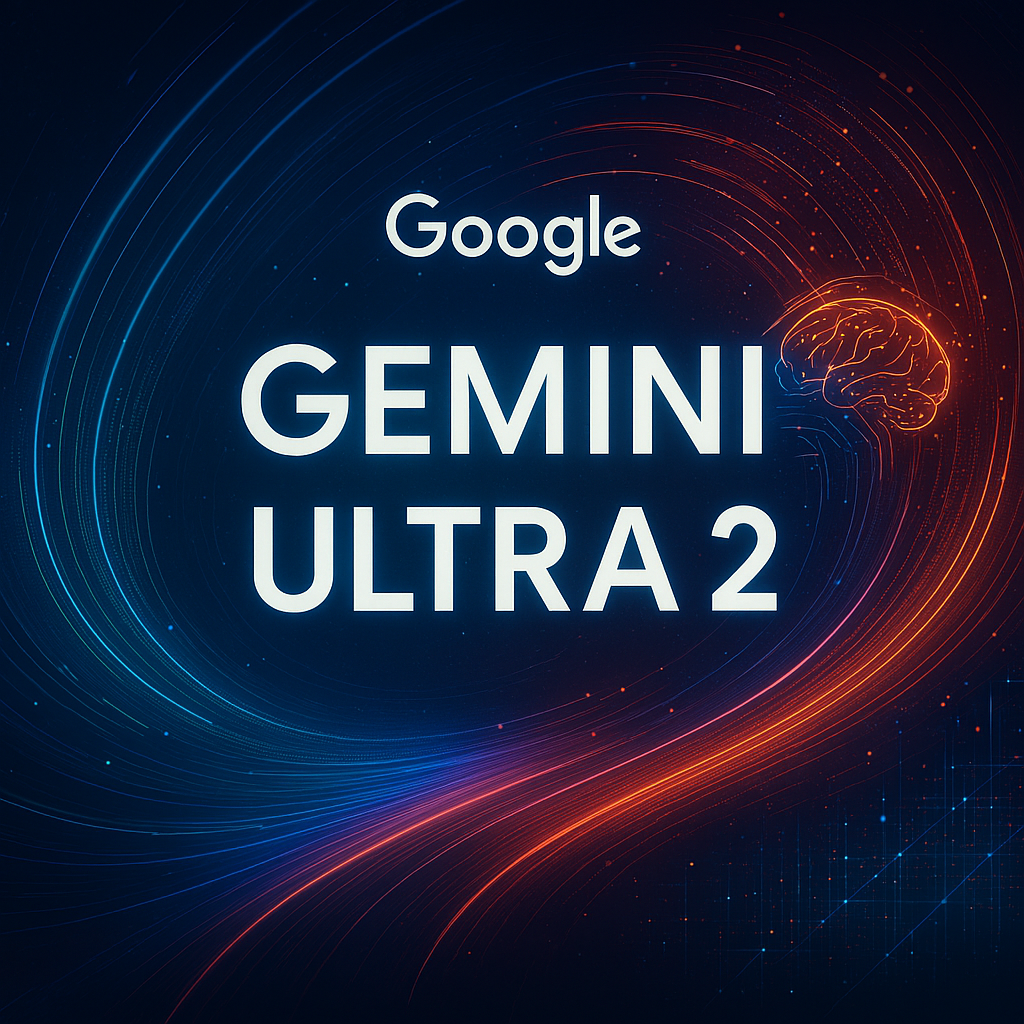
Google has officially introduced Gemini Ultra 2, the newest version of its flagship multimodal AI model, marking one of the most significant upgrades in the company’s AI roadmap. Designed to compete directly with OpenAI’s next‑generation systems, Gemini Ultra 2 brings improvements in reasoning, memory, multimodal understanding, and real‑time interaction across devices.
The announcement highlights Google’s renewed focus on AI infrastructure, with Gemini Ultra 2 positioned as the core intelligence layer for Android, Chrome, Workspace, and future hardware. Early benchmarks suggest substantial gains in code generation, long‑context comprehension, and multimodal reasoning. Google describes this release as a “foundational shift” toward AI systems capable of handling complex workflows with minimal human intervention.
The company emphasized that Gemini Ultra 2 is not just a larger model—it is a more efficient, more context‑aware, and more adaptable system designed to operate across consumer devices, enterprise environments, and cloud‑based applications. This positions Google to strengthen its presence in the rapidly evolving AI ecosystem.
Key Details
A New Architecture for Long‑Context Intelligence
Gemini Ultra 2 introduces a redesigned architecture capable of handling up to 2 million tokens of context. This allows the model to process:
- full books
- long research papers
- multi‑hour transcripts
- complex codebases
- large datasets
This long‑context capability enables Gemini Ultra 2 to maintain coherence and accuracy across extended interactions, making it ideal for research, legal analysis, and enterprise‑level automation.
Major Improvements in Multimodal Reasoning
The new multimodal engine allows Gemini Ultra 2 to analyze and interpret:
- images
- videos
- audio
- documents
- real‑time sensor data
Google claims the model can synchronize information across modalities with higher precision, enabling more accurate interpretations of complex visual and audio inputs. This makes it particularly useful for scientific visualization, medical imaging, and advanced robotics.
Deep Integration Across Google’s Ecosystem
Gemini Ultra 2 will power a wide range of Google products, including:
- Android AI features such as on‑device summarization and contextual assistance
- Chrome’s AI writing and reading tools
- Workspace smart assistants for Gmail, Docs, and Sheets
- YouTube content analysis tools for creators
- Google Cloud AI services for enterprise customers
This integration strategy reflects Google’s goal of embedding AI deeply into everyday workflows.
Enhanced Safety and Alignment
Google highlighted several improvements in safety:
- reduced hallucinations
- more transparent reasoning
- improved filtering for sensitive content
- better alignment with user intent
The company says Gemini Ultra 2 is its most reliable model to date, especially in technical and scientific domains.
Developer‑Focused Enhancements
Developers will gain access to:
- a faster Gemini API
- lower inference latency
- improved memory handling
- more efficient multimodal pipelines
These upgrades aim to make Gemini Ultra 2 easier to integrate into mobile apps, web platforms, and enterprise systems.
Industry Impact
A Direct Challenge to OpenAI and Microsoft
Gemini Ultra 2 arrives at a critical moment in the AI race. With Microsoft pushing Copilot Runtime and OpenAI preparing its next‑generation models, Google’s upgrade signals a clear intention to remain a top competitor.
The expanded context window and multimodal capabilities could attract:
- enterprise developers
- research institutions
- content creators
- mobile manufacturers
Google’s strategy appears focused on embedding AI into every layer of its ecosystem, from smartphones to cloud infrastructure.
Strengthening Google Cloud’s Position
Gemini Ultra 2 will be available through Google Cloud, giving enterprises access to:
- scalable inference
- fine‑tuning tools
- multimodal workflows
- long‑context processing
This could help Google close the gap with AWS and Azure in the enterprise AI market, especially for companies seeking advanced multimodal capabilities.
Impact on Mobile and Consumer Devices
With Gemini Ultra 2 integrated into Android, users can expect:
- faster on‑device AI
- improved summarization
- better voice interactions
- enhanced photo and video analysis
This positions Android as a strong competitor to Apple’s upcoming AI‑powered iOS features.
Influence on Content Creation and Media
Gemini Ultra 2’s multimodal engine could transform:
- video editing
- podcast transcription
- content summarization
- educational tools
- accessibility features
Creators may benefit from more accurate scene detection, audio analysis, and automated editing tools.
Expert Insights
Analysts Highlight the Importance of Long‑Context Models
Industry experts note that long‑context models are becoming essential for:
- legal document analysis
- financial modeling
- scientific research
- software engineering
- enterprise automation
Gemini Ultra 2’s ability to handle millions of tokens positions it as a strong candidate for these use cases.
Developers Praise the New API Efficiency
Early testers report:
- lower latency
- faster streaming responses
- improved memory handling
- better multimodal synchronization
These improvements could accelerate adoption across mobile and web applications.
Researchers See Potential for Scientific Breakthroughs
Scientists believe Gemini Ultra 2 could assist in:
- analyzing large genomic datasets
- interpreting complex diagrams
- modeling climate simulations
- processing astronomical data
The model’s multimodal capabilities make it suitable for interdisciplinary research.
What Happens Next
Google plans to roll out Gemini Ultra 2 gradually:
- Developers get access first
- Android integration follows
- Workspace updates arrive later in Q1
- Cloud enterprise features expand throughout 2026
The company also hinted at future hardware optimized for Gemini Ultra 2, potentially including new Pixel devices and AI‑accelerated Chromebooks.
Google is expected to release additional tools for fine‑tuning and custom model training, giving enterprises more flexibility in deploying AI solutions tailored to their needs.
Fun Fact
Gemini Ultra 2’s training dataset includes one of the largest collections of multimodal scientific diagrams ever assembled, enabling it to interpret complex visual information with near‑expert accuracy.